


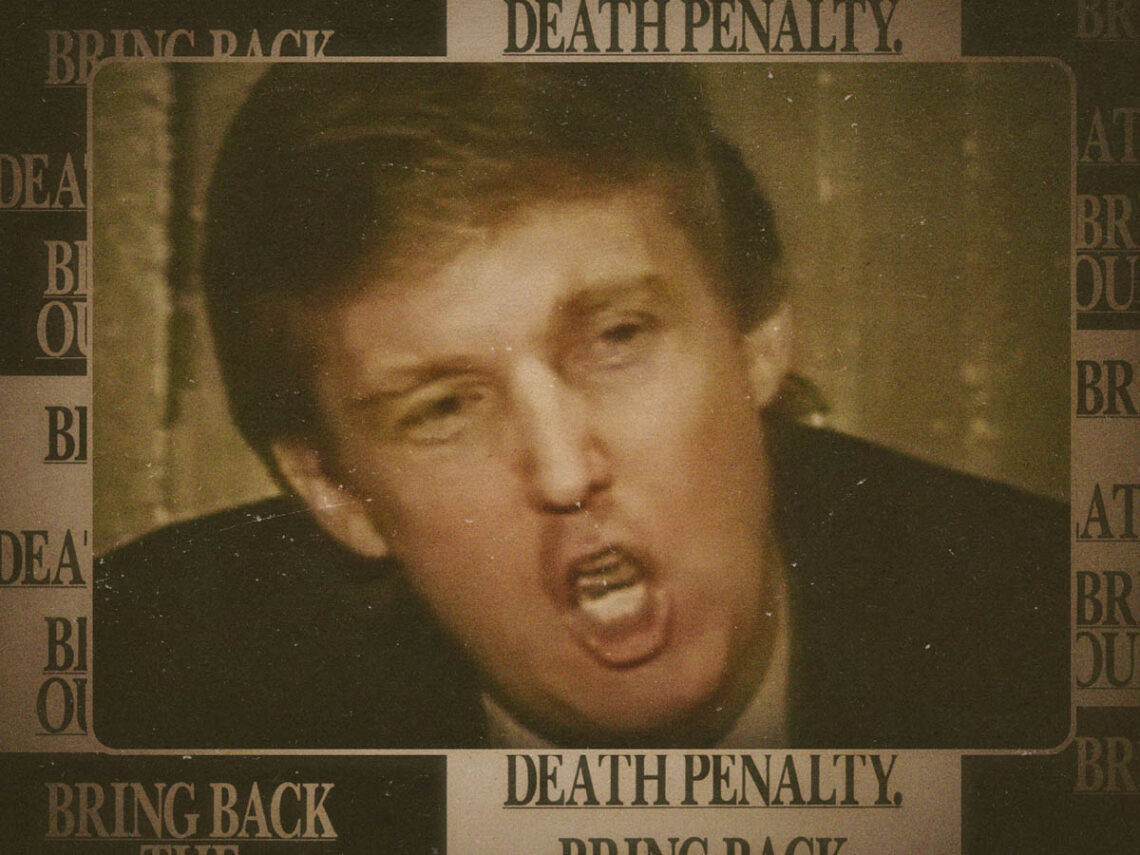
The Central Park Five: How a murder case made Donald Trump a political figure
Donald Trump has a strange, intense relationship with New York City.
Despite the tyrant pissing most of his days away down in Mar-a-Lago playing golf with members of the class of people mentioned in the Epstein files multiple times rather than doing his fucking job, the man likes to think of himself as a dyed-in-the-wool New Yorker. To be more fair to him than he’s ever deserved, he’s not entirely wrong about that. The Trump family have been based in New York ever since they were known as the Drumpf family, and thus, he seems to think he’s beloved there.
It’s a constant fantasy of the GOP every time he’s stood for election that he would somehow flip New York, despite it being blue as the sky itself. As if the fact that he was born and raised there is more important than him standing against everything New York City stands for. Only a man as completely out of touch and narcissistic as Donald John Trump could believe that an entire city and a state could love him, but the truth is that most New Yorkers have hated him for decades.
Of course, his history of being despised by the real people of the city could begin with Woody Guthrie singing songs about how his father should be thrown down a well for being a racist shitbag, but the smoking gun for real New Yorkers is the Central Park Five incident. Something that no one should forgive Trump for or forget, but certainly not New Yorkers, as it showed the city just what Trump thought of its own inhabitants.
He didn’t hate all of them, just the ones that weren’t as rich as he was.
What did Trump have to do with the Central Park Five?
Every aspect of the Central Park Five case is horrific.
On April 19th, 1989, 28-year-old investment banker Trisha Meili was physically and sexually assaulted as she went for a jog through Central Park. She survived the assault, but only just, left in a coma in the aftermath. On the same evening, five teenagers between the ages of 14 and 16 were arrested on the other end of Central Park and were beaten into signing a confession that implicated each member of the group in Meili’s assault.
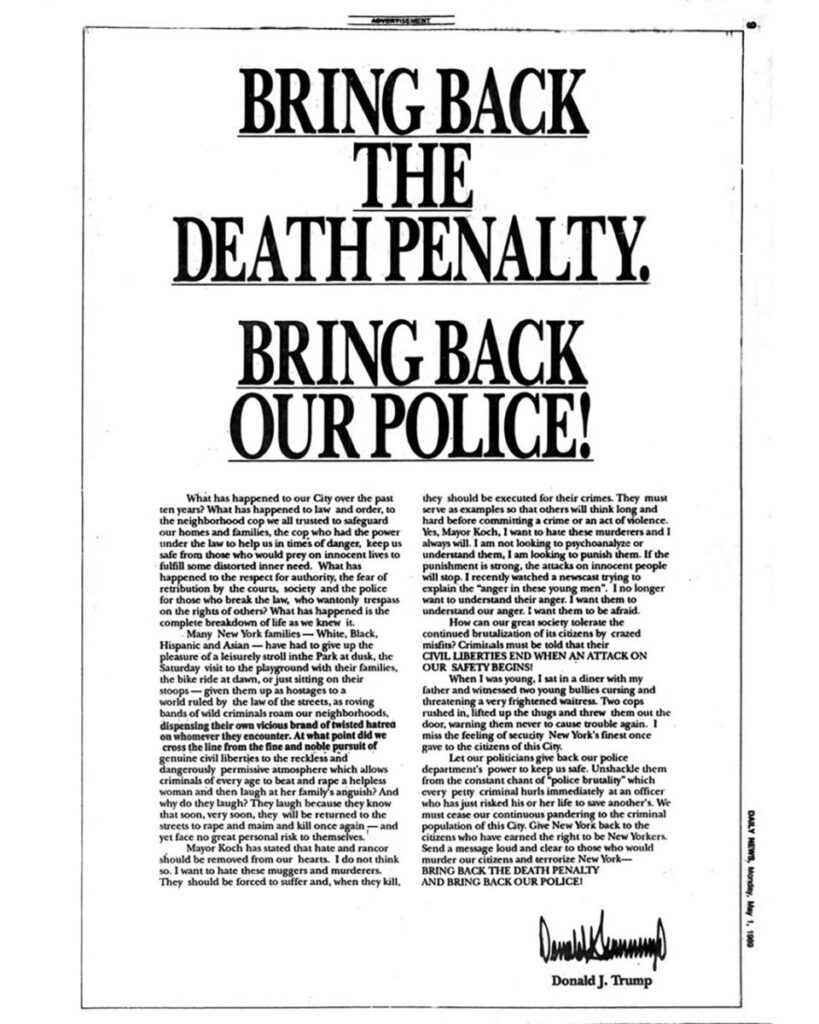
The city erupted in the aftermath, but Trump had the clout (not to mention the money) to pay $85,000 to take out a full-page advert in four of the city’s biggest newspapers calling not for justice in this horrific case, but for all of these children to be sentenced to death. It didn’t matter that each of them had clearly been coerced into making their statements. It didn’t matter that the case against them was so flimsy that there was no DNA evidence linking them to Meili. None of it mattered. The thought of Black and Latino children dying was more than enough for Trump to call for it so publicly.
Thanks to the firestorm of controversy that Trump stoked with the adverts, the boys were found guilty.
It certainly wasn’t because of the case against them, since there basically wasn’t one. That didn’t matter, though; the damage Trump had sought to inflict with the adverts had been done. None of the children was sentenced to death, though, and this put Trump on the warpath, demanding, at immense cost to the taxpayer, that the New York legal system reinstate the death penalty. He got his wish in 1995, then it was banned again in 2007, after executing no one.
In 2002, after the boys had served seven years in prison, the real perpetrator came forward. He exonerated the Central Park Five and thus, a 14-year legal battle between them and New York City began, one that was settled in their favour to the tune of $41million. Trump was scandalised, saying “settling doesn’t mean innocence” despite the fact that the actual perpetrator of the crime had confessed and could be proven to be at the scene of the crime, unlike any of the boys whose lives had been ruined.
Because justice doesn’t mean anything to Donald Trump. He just wants to see people who aren’t white dead, and now he’s president.