


The Royal Dildo: How the French Revolution was built on porn
One would assume that the best way of showing just how effective the French Revolution was is the fact that in the centuries since, the idea of a monarch still makes a Frenchman nearly as revolted as the idea of an Englishman speaking their language. Nearly.
Now, let’s be fair to the land of garlic and infrequent bathing, which is still probably the lasting legacy of the French Revolution. The fact is, y’know, it worked. However, there is something incredible about the fact that not only did the French Revolution change the face of France forever, but the people they were revolting against were also defined by it utterly. To this day, the cultural view of the likes of Louis XVI and especially Marie Antoinette is defined not by their actions, but by the propaganda levelled against them during the French Revolution.
We view them as aloof, ignorant hedonists hoarding wealth for the sake of it because they were portrayed as such by revolutionaries. The vast majority of these depictions come from widely circulated pamphlets that even today are still quite shockingly pornographic, levelling accusations of homosexuality and impotency against the king and…well, basically everything under the sun at Antoinette. Seriously, it begins at infidelity and goes everywhere from treason sex addiction to incest to bestiality and everywhere in between.
The first of these was the somewhat surreal (and actually quite tame by the standards of what would come next) pamphlet titled The Royal Dildo. This detailed how the king was an effeminate homosexual who couldn’t and wouldn’t please his wife, and thus, the queen was driven mad by her Herculean sexual appetite and could be found frantically masturbating all over Versailles. Next up was The Royal Orgy, a continuation of these themes, but more about the orgies supposedly organised by the queen that included women and her family members.
Trust the French to turn porn into praxis.
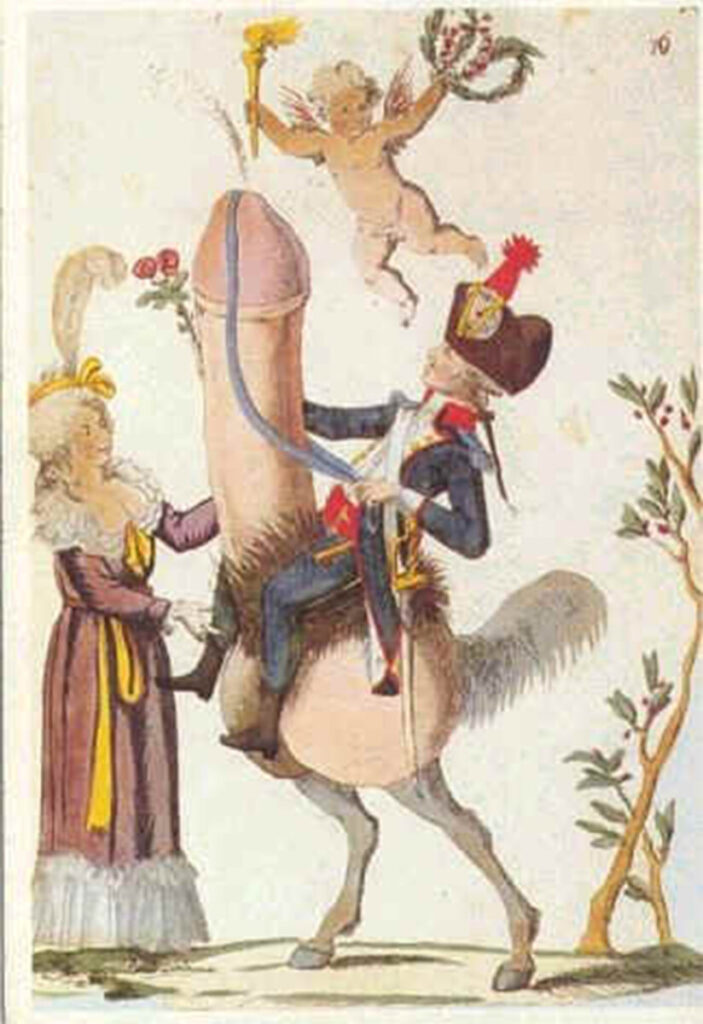
How did these pamphlets actually help the French Revolution?
Now, of course, this was all total cobblers.
True, Louis XVI was probably gay or possibly even asexual, but all reliable resources of the time paint Marie Antoinette as a kind, if slightly ditzy, young woman who genuinely wanted to help people but had all the privilege that came with incredible wealth, but none of the power. That didn’t matter, though. The revolutionaries had to turn the public against the ruling class.
An admirable thing at its core, but unfortunately, the easiest way you can get people to hate others is via misogyny. Which is what all these pamphlets were at the end of the day, and there were many, many more of them as the revolution gained strength. Stoking the public with salacious, utterly fictional accounts of a rich woman’s sex life, then getting them to express all that built-up tension that comes from being titillated by directing it at rich people.
It worked like an absolute treat. So much so that we still think of the French Royal family overthrown in the revolution as a debaucherous bunch of rich perverts. At a time when more Americans than ever seem all too happy for an American king lording over them, it says a lot about how effective the propaganda of the French Revolution was that in the centuries since, no one ever longs for the glory days of Versailles to come back around.