


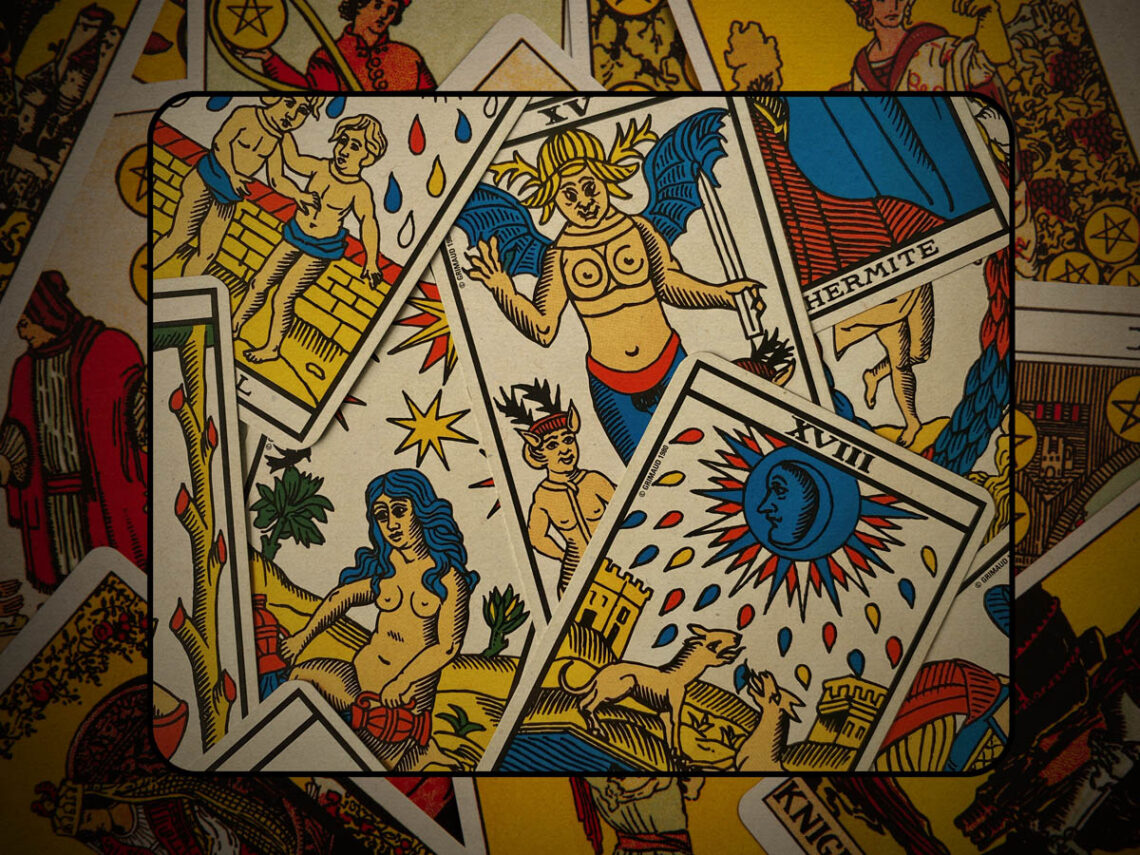
Playing for time: Tracing the origin of tarot cards
Despite being as sceptical as they come, I actually love doing my tarot.
Not because I genuinely think I’m actually divining my future, you understand. I’ve long since come to the conclusion that the universe doesn’t give a shit about any of us; it’s busy. So, I don’t think I’m genuinely tapping into some great rhythm of life showing me my way forward via the medium of a gorgeously designed deck of cards. No, instead, I think of it more like a therapy session. Tarot provides a completely unpredictable way of looking at life that, if you buy into it and don’t immediately rubbish it, might make you see things in a way you’ve never considered before.
It’s a fascinating process, and getting to know the cards, if done right, can be a great way of getting to know yourself. However, did you know that using them for divination is not their original intended use?
It’s true, much like Ouija boards are less an unholy way of communing with the spirits and more a mass-produced board game (even the name is a registered trademark of Hasbro), tarot cards began life as exactly what they look like. A card game!
This may sound strange to us Brits, being as used to the standard 52-card, French-suited card games as we are. However, tarot decks were first used in central European cultures, where trick-taking card games were the norm. More specifically, decks that resemble the decks we use today, that consist of the four standard suits (batons, coins, cups and swords), followed by 21 trump cards and The Fool, were first used in Italy in the 1300s.
These were probably an adaptation of the Egyptian Mamluk deck from the 14th century. However, if there’s anything you can count on Europeans to do, it’s take an African invention, change it very slightly and take all the credit for it.
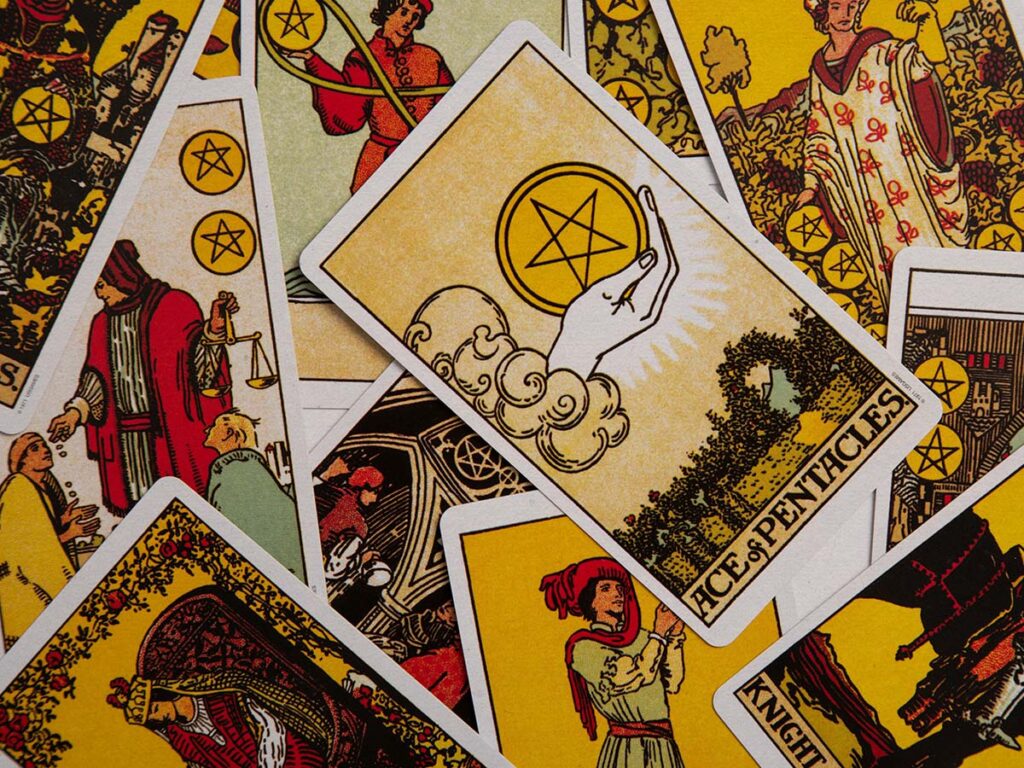
So, how did the tarot deck become what it is today?
Those 21 trump cards began the journey towards tarot cards becoming a tool of divination.
At first, the four suits were essentially the same cards that make up a normal deck of cards today, with slightly different branding. The trionfi cards, or triumph cards, were added and were given allegorical illustrations that differed slightly with every deck. These were still very much for use in gambling, yet despite the puritanism of the time, they never got outlawed the way most games were.
The printing press saw these decks become mass-produced all over Europe. However, once they got to countries without a strong tradition of trick-taking games, folks were at a loss for what to actually do with them. That is, until the decks got to France. Hilariously enough, the idea of tarot decks being a mystical, divinatory art form dating back to ancient times comes from the French trying to offload crates of Italian tarot decks. Trust the French to know a sucker when they see one, I guess.
By 1750, the meanings for each card as a tool of divination had been set by an anonymously written manuscript that the tarot decks we know today still (by and large) hold fast to. Does that cheapen them? The fact that these are very much a human creation and not a mystical tradition dating back to ancient times? To me, absolutely not. After all, even if the backstory was entirely true…they’d still just be cards. Nothing more. Nothing less. Any power they have is still given by you.
That can still make something extremely powerful, though, for better and for worse.