


Ginger Jake: why Americans drank poisoned alcohol during the 1920s
If you think that the prohibition of alcohol passed in the 1920s because it was a different, more naive time, and everyone thought it would be a good idea, you are dead wrong. While an alcohol prohibition would kneecap the economy of America today, the concept was only a slightly better idea back then.
Pretty much everyone who fought against the introduction of a blanket ban on the manufacture, sale and transportation of alcohol were proved 100% correct on all their fears within years of the ban going through. They said the job market would suffer, and suffer it did. They said it would only affect the poor because wealthy people could get around the red tape, and it did. Most of all, they said that crime rates would get much, much worse rather than better, the way that prohibitionists said they would.
And boy fucking howdy, they were bang on the money there.
Fundamentally, the anti-prohibition activists knew something that the vast majority of prohibitionists knew, but couldn’t bring themselves to admit. A full-scale booze ban wouldn’t work on the most fundamental level of all. It wouldn’t stop people from drinking alcohol. Instead, people would just turn to unsafe, unregulated and outright criminal sources for their booze. The same thing that happens whenever something people like is outlawed.
One of the best examples of this comes from the simple fact that not all alcohol is used for drinking purposes. It’s found in everything from antifreeze, lacquers, paints, printing inks and much more besides, and the prohibitionists must have thought that people wouldn’t turn to these in times of desperation. They were wrong. Chemists in particular had crates of industrial alcohol flowing through their inventories every day, and in search of a quick buck, several of them distilled the alcohol out of these items and sold it as booze.
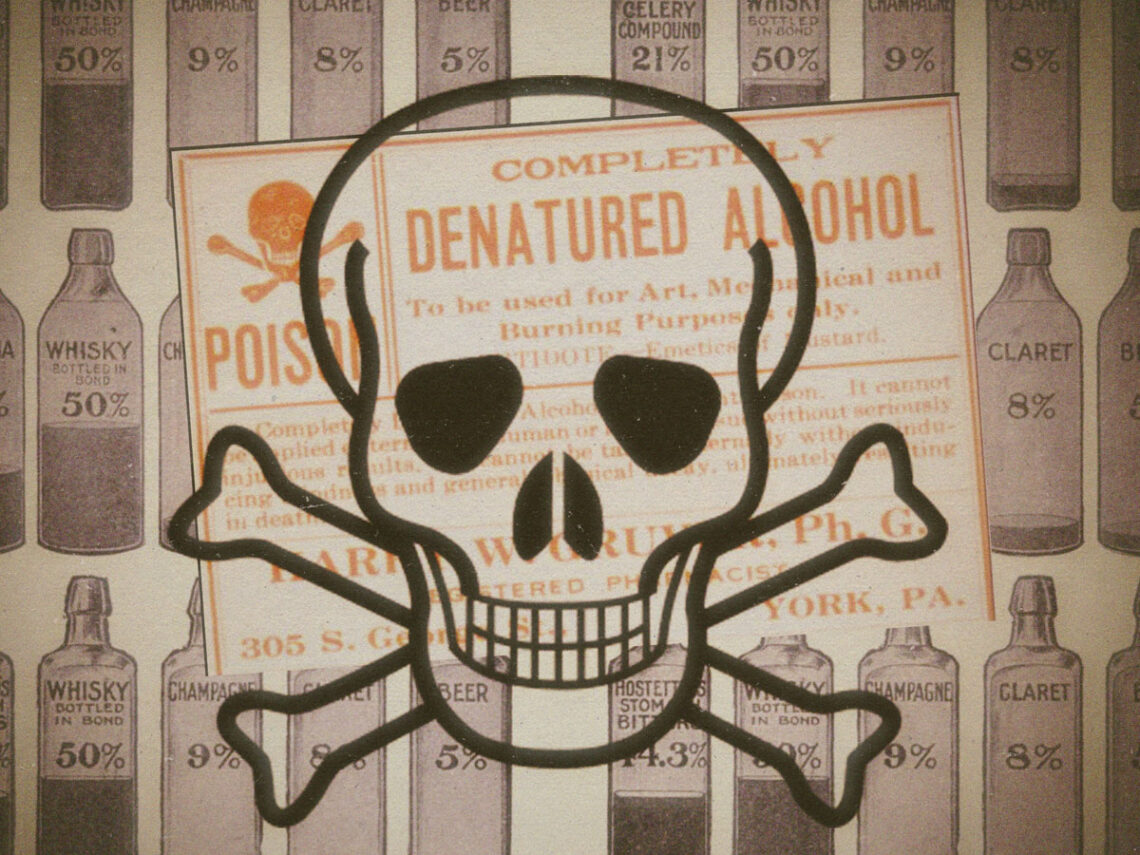
That’s right. People would rather drink antifreeze rather than adhere to the prohibition, and yet, the American government’s response to this wasn’t to rethink prohibition, but to rethink the recipe for industrial alcohol. By the mid-1920s, over 60million gallons of the stuff had been stolen, so the Treasury Department ordered manufacturers to change their industrial alcohol recipe. Making it intensely bitter to discourage people from drinking it and creating what they called “denatured alcohol”.
This worked about as well as any other part of the prohibition, to be honest. Again, this whole idea was predicated on the idea that people would give up drinking, and they quite simply wouldn’t. It just made the already desperate manufacturers of bootleg alcohol even more desperate for a quick fix. For example, people used a popular medicine called Jamaica Ginger that was made with 80% ABV alcohol as a legal high, one that got so popular it got the nickname, Ginger Jake.
The Treasury Department ordered manufacturers to replace their existing alcohol content with the disgustingly bitter, tainted new recipe, and thus, the manufacturers cut the drink with tri-ortho-cresyl phosphate. A chemical that made the medicine less bitter, but was also a powerful nerve agent in the recipe. According to reports cited by the Maryland Poison Centre, that bootleg drink alone caused up to 50’000 people to end up literally paralysed.
There’s an argument to be made that they’re the lucky ones. The Maryland Poison Centre cites that up to 10’000 people died as a result of spiked alcohol. Just part of the catastrophic mess that the prohibition of the 1920s was. One that thousands of people saw coming.