


Ripperology: why are people still obsessed with Jack the Ripper?
As an industry, true crime isn’t going anywhere any time soon. As someone who earns their bread and board writing about it these days, I can’t help but be glad to hear that. Yet that doesn’t mean I can’t see where people’s interest in the dark side of human behaviour can’t have a dark side of its own.
At its best, the act of studying crime can be a real benefit to people. One can learn a lot about society and human nature from the actions of those who violate it. You can also learn a lot about empathy and the strength of everyday people by learning about those who survived the worst actions of other humans. Yet, anyone with a passing interest in the genre knows that’s not why everyone is involved with it. That, for some people (the cynic in me wants to say most), the interest in true crime is outright ghoulish.
Before we get too judgmental here, let’s not act like there isn’t something about most people that draws us to the darker side of life. We can’t help but gawk at a car crash, it’s just part of human nature – it can always go too far, though, and when people are selling necklace charms containing pictures of murder victims on Etsy, that’s going too far, but the one thing this phenomenon isn’t is anything new. The internet might have popularised this phenomenon, but this goes back centuries.
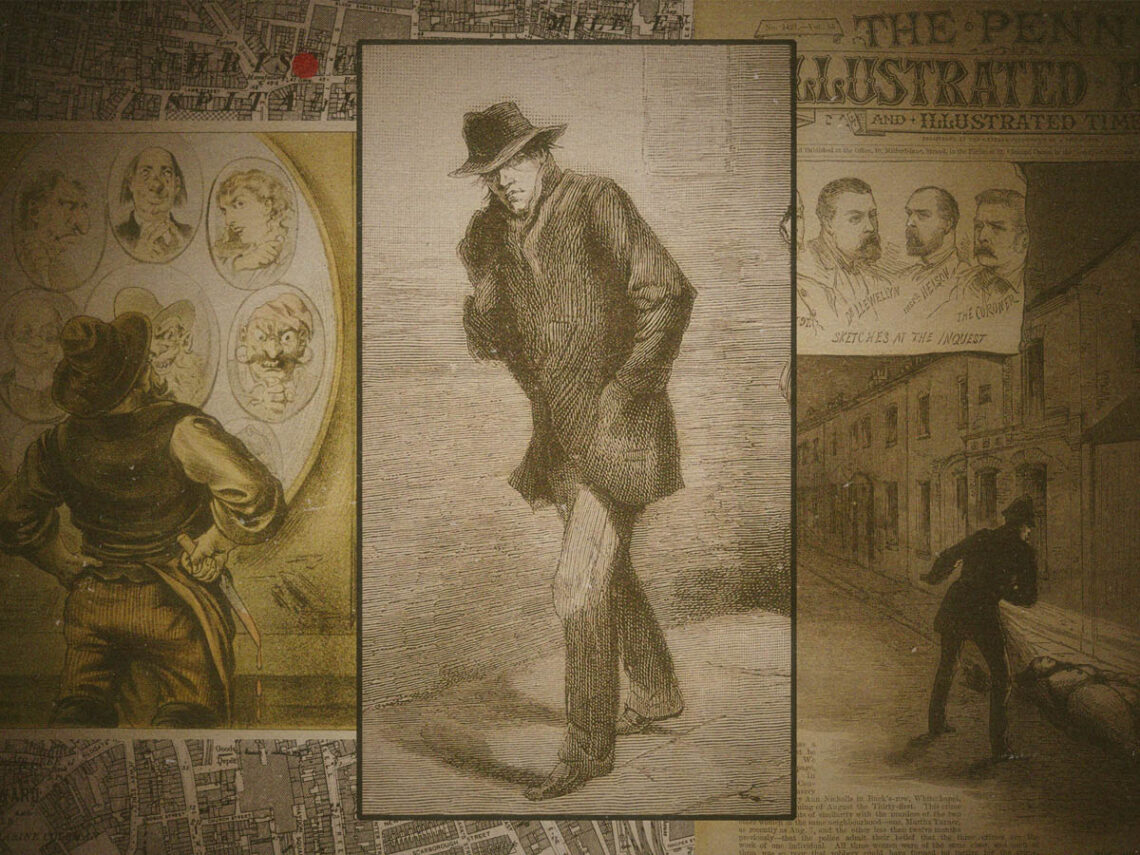
All the way back to 1888, when London became gripped by a terrifying and very real hysteria emanating from the darkest corners of Whitechapel. One cannot stress enough just how much of a national frenzy the murders committed by Jack the Ripper caused, and the reason why that is seems obvious on the surface. The murders themselves are horrific even by anyone’s standards, yet that might not be why he still commands such attention today.
After all, terrifyingly enough, people murder others brutally all the time without going down in history the way that Jack did.
Why are people still fascinated by Jack the Ripper?
The other side of the Ripper legend is, obviously, the fact that he was never caught. This, combined with the graphic nature of the crimes, is what makes him a legend and the reason why so-called “ripperologists” are dime a dozen even away from the true crime scene. At their worst, these are nothing more than glory seekers. People looking to be the “great mind” that can “finally solve the mystery of The Ripper”, sat in their studies with their Sherlock Holmes hats glued to their foreheads with flop sweat scanning the From Hell letter word by word for the thousandth time that month.
There’s an argument to be made that this was the birth of all the worst parts of the true crime scene. The people who treat this like a TV show fandom, frothing at the mouth over The Ripper’s “genius”, memorising the favourite meal of every suspect, yet for the life of them, never remembering the names of any of his victims. What makes it worse is the fact that looking in any detail at the Ripper murders can actually be a really good primer for the value of learning history.
Not the facts, not the dates, not the (probably fake) letters that were sent to the cops. No, what’s actually valuable is seeing the fact that The Ripper was never caught, not because he was some criminal mastermind, but because the police quite simply didn’t care about dead prostitutes. It’s seeing the role that mass media played in both informing the populace about the dangers of neglecting the health of the poorest people, but also stoking a mass hysteria based on xenophobia and racism.
It’s the balance you walk as someone with an interest in true crime and, really, as someone with an interest in history. Walking down the wrong path can support all the wrong people. The right path can help you understand the world at a deeper level. Make sure you know which one you’re going down.