


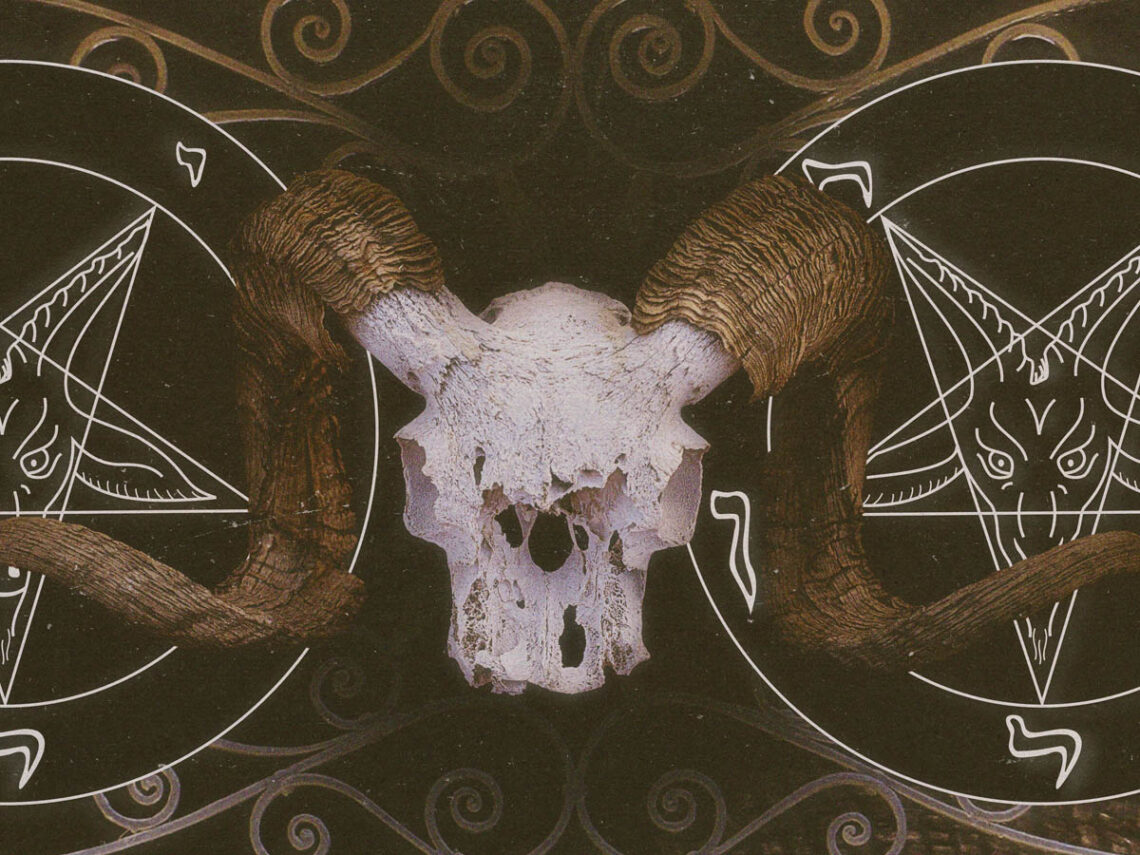
Why do goats represent Satan?
Satan has been staring us in the face the entire time.
He may slink about in secret, influencing us to be our worst selves from behind the scenes, but if we look at his depictions in art, there are a few ways we can spot the entity that is the embodiment of, and is in some tellings of our story, the reason for all the evils in the world.
All we have to do is find something whose distinguishing features include: twisting horns sprouting from their head. Cloven hoofs on the end of fur-covered, digitigrade legs. Large teeth that can cut through seemingly anything. A short, fluffy tail. An uneerving ability to maintain balance on precarious terrain. Sorry, I’m checking my notes here and seem to have confused Satan, Beezlebub, the Devil himself, with a mountain goat.
IS WHAT I WOULD BE SAYING IF THEY WEREN’T THE SAME THING.
It’s true, for some reason, for as long as there’s been a concept of a devil in Christianity, he’s been depicted in art with a number of distinguishing features cribbed from a billy goat. It’s a testament to how thoroughly embedded those ideas are in pop culture that it’s not absolutely ludicrous. Explaining this to someone who’s never heard of Satan must be like showing someone who’s never seen Fawlty Towers that clip of John Cleese twatting his Austin Countryman with a tree branch. They just have to take it on faith that it’s one of the greatest moments in TV history, never mind why.
So, why is this? Well, for one thing, goats are nothing if not spirited little fuckers who’ll get on your last nerve more times than you’d like. I’m sure many a goat farmer in this world really doesn’t need to ask why Satan is depicted as a goat, they’ve cleared them (and everything the fuckers leave behind) off their car windshields often enough that it’s plainly obvious to them. However, the historical context actually goes into what Christianity is really all about. Taking pagan iconography and making it their own.
Depictions of Satan have historically been inspired by the Greek god Pan, who gave Satan the goat-like physique that he often has in these depictions. It’s quite literally a surface-level translation, though. Pan, the Greek god of the wilderness, and while there’s more than a little of Satan in his brand of unbridled chaos (not for nothing does the word “panic” derive from him), the Greek pantheon doesn’t have a single adversary figure. If it did, it absolutely wouldn’t be Pan either.
There is a deeper message at play, though. The Bible is full of references to the idea of people being either sheep or goats. Sheep is the idea of people being part of a functioning community that knows their place, contributes in their way and goes, for lack of a more delicate way of putting it, where they’re told. Goats, as this article makes very clear, do not do that. They go where they please, acting on their own intuition and in their own self-interest.
Thus, if you’re going to make a stylised depiction of someone who’s the embodiment of acting in self-interest over the needs of the community, making them a goat is your best option.