


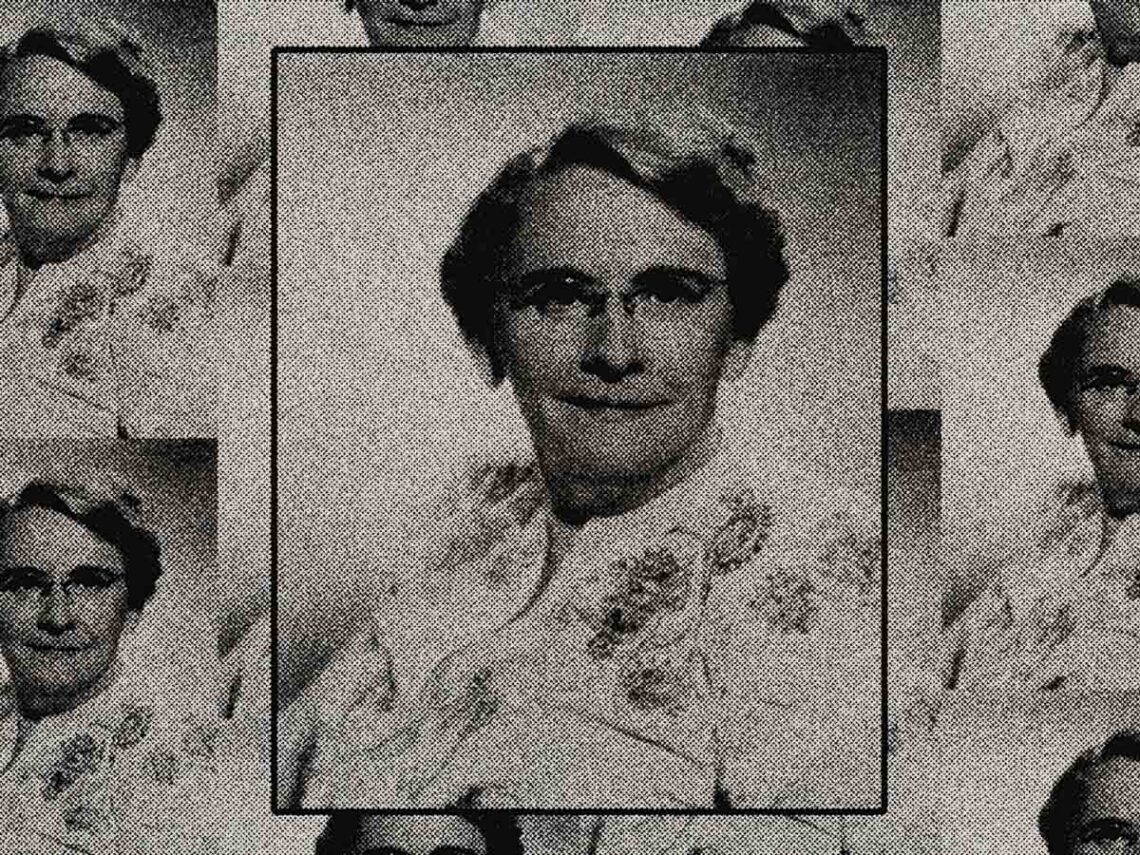
Georgia Tann: the woman who trafficked and sold 5000 babies
A glance through the history of Georgia Tann will show anyone with a strong stomach that, yes, you really do have to make laws against anything, because otherwise, people will do it. Whatever horrifying thought you’re thinking, yes, there are people who want to do that.
What’s more, there’s loads of them. Even that thing you thought of from the very darkest parts of your imagination, there are people who have a profound drive to do exactly that, and so much worse besides. Hell, a few people in Emenclaw, Washington, exploited a legal loophole in their local charter that made bestiality legal. Because no one thought to amend the local laws after the fact. Who in their right mind would be fucked by a horse after all?
However, there’s exploiting legal loopholes to indulge in your darkest fetishes, then there’s Georgia Tann. It’s one thing to do horrible things to yourself legally; it’s quite another to steal children, sell them on for profit, then bind the whole thing up in legally binding contracts in case anyone looked closer at her business. Something Tann was extremely good at since she’d actually studied law in college and passed the Mississippi bar exam to boot.
The issue was her overbearing, controlling father, who had tried to force her into a career in music. Despite being a lawyer himself, he didn’t want his daughter to follow him into the profession. Not because she wouldn’t have been good at it, you understand, but because it was unusual for women to practise law. That’s it. Forbidden from practising law and unwilling to do anything else, Tann went into the one line of work that was open for unmarried women of her time, social work.
In 1924, Tann moved to Memphis, Tennessee and took a job in the Tennessee Children’s Home Society. There, out of a belief that children should be raised in wealthy environments, she began actively trafficking children away from their parents. Targeting single mothers and poor families, she and her team would con, dupe or outright kidnap babies away from living situations they deemed “unacceptable” and trafficked them over to one of the many orphanages the society ran.

There, one of two things would happen. In some cases, these children would be sold to rich parents who knew that the company would part with any of their children for the right price. The majority of these adoptions were carried out for $7, but according to some reports, the Tann brokered some deals that cost the family upward of $5000. These weren’t rare either, with a conservative estimate alleging that between 1940 and 1950, the Society placed over 3000 kids in New York and California alone, with thousands more occurring in their southern home base.
It doesn’t feel right to call anything that comes from child trafficking “the good outcome”. Compared to what happened if the kids stayed in the Society’s orphanages, though, it was. They were cesspits of abuse and neglect, rampant with disease and staffed by unqualified workers who were trained to punish “unruly” children by ignoring them at best and physically attacking them at worst… It’s estimated that no less than 500 children died in the care of the Tennessee Children’s Home Society from 1924 to 1950.
What makes this truly horrifying is that Tann, up until her death from cancer in 1950, never thought she was doing anything other than the right thing. This was supported by friends she had in high places, like Camille Kelley, a juvenile court judge who rubber-stamped all of Tann’s “adoptions” to make them legally binding, even though they were the result of literal child trafficking. Thus, she was never brought to justice in her lifetime.
However, modern adoption was, in a way, shaped as a response to her. After the extent of the Society’s corruption came to light, sweeping reforms were made to the existing adoption system that tried to prevent a network like Georgia Tann’s from ever forming again. Because it would take a cold, cynical person to ever believe that a person like Tann could exist if she hadn’t already.
But cold, cynical people are also often right.