


Cartels and clowns: The bizarre alleged financing of a 1988 B-movie
I’ve said it before, but it really can’t be stressed enough that every single movie is a miracle in some way. No matter how bad or good it is, the fact that it was finished at all is incredible. A feat that comes from an almost herculean effort by nearly everyone involved.
Obviously, the artists involved who actually put the film together are the real heroes who deserve all the plaudits for getting a film made. More often than not, producers are viewed as the enemy, with the money-grubbing suits trying to crack down on artistic expression to make the picture more consumable for the valuable 18 to 35 age demographic.
Now, I won’t lie and say this hasn’t been the case many times in the past. But the truth is that producers can be just as dedicated to the art of making a good movie as any director, writer, or actor can be. If anything, they have one of the hardest jobs of all, raising money for the picture and doing it in any possible way and with any possible tactic they can.
While it sounds antithetical to the act of artistry, any genuine indie filmmaker you can think of is as much a producer as anything else. Think about a 20-year-old Sam Raimi sitting down with his dentist and asking for a couple of thousand dollars to make the first version of Evil Dead or Robert Rodriguez spending just over $7000 to make El Mariachi.
Those movies wouldn’t be made with screenwriting, editing, and directing skills alone; you also have to convince people with money that spending it on your artistic vision is a good idea.
In mainstream circles, that job becomes a lot easier. You go to your parent company, lay out the vision for the piece, ask for a certain budget, you get about a quarter of that, and away you go. If you’re smart, you knew they’d do that in advance and purposefully asked for so much money that a quarter of it can cover your movie pretty comfortably. Now you’re thinking like a producer. In indie circles, you have to broaden your scope. Sometimes away from the movie industry entirely and into some seriously murky waters.
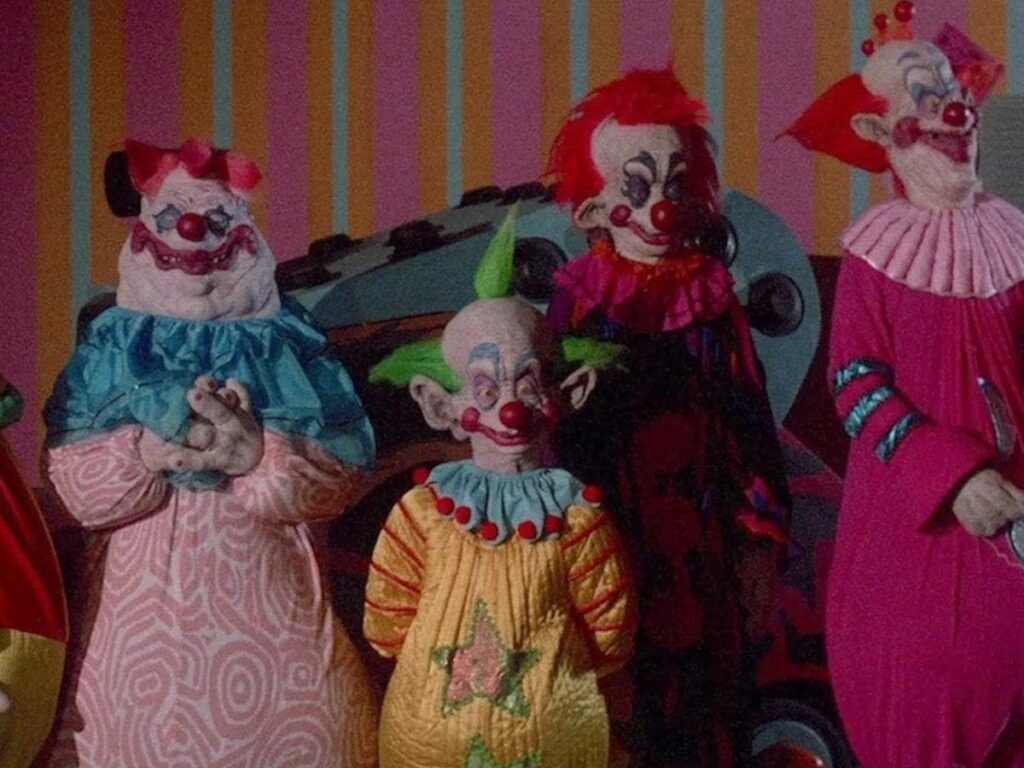
Such was the case with the 1988 B-movie Killer Klowns from Outer Space. I don’t want to blow your mind too much, but most production companies weren’t exactly willing to take a swing on a proudly campy, proudly silly sci-fi movie about murderous alien clowns.
Especially when it was a passion project of the then-30-year-old Chiodo Brothers, who had a few credits as production designers for similarly low-budget movies but nothing more than that.
According to a Reddit thread, which should be taken with a heavy pinch of salt, this led to a chunk of the money used to make the film coming from a local drug cartel looking to launder some of their ill-gotten gains. From the sounds of it, this meant that, ironically enough, the production went a lot smoother than other films like it. After all, when a hardman from the local cartel occasionally swings by the set to see that their money is being put to good use, suddenly everyone behaves themselves.
One Reddit user alleged of the film’s peculiar financing, “My brother met someone that did production on Killer Klowns from out Space. Some of the backing came from Columbian drug cartels. So off screen there were people sent by the cartels that made sure everything happened right on schedule and nothing went over budget.”
He added, “There weren’t rewrites or reshoots and it was made sure that production happened with no ego issues. While nothing happened, having people with guns look over your shoulder must have been a nightmare.”
Of course, this isn’t proven, and shouldn’t be taken as fact, but Hollywood is a strange industry where anything can happen. However, the allegation does highlight how shady practices and cartel involvement have been documented numerous times in the past.
It’s far from the only film made this way, but since the Chiodo Brothers have since worked on Pee-wee’s Big Adventure, The Simpsons, Team America: World Police and Elf, they are evidently using clean money for their projects nowadays.