


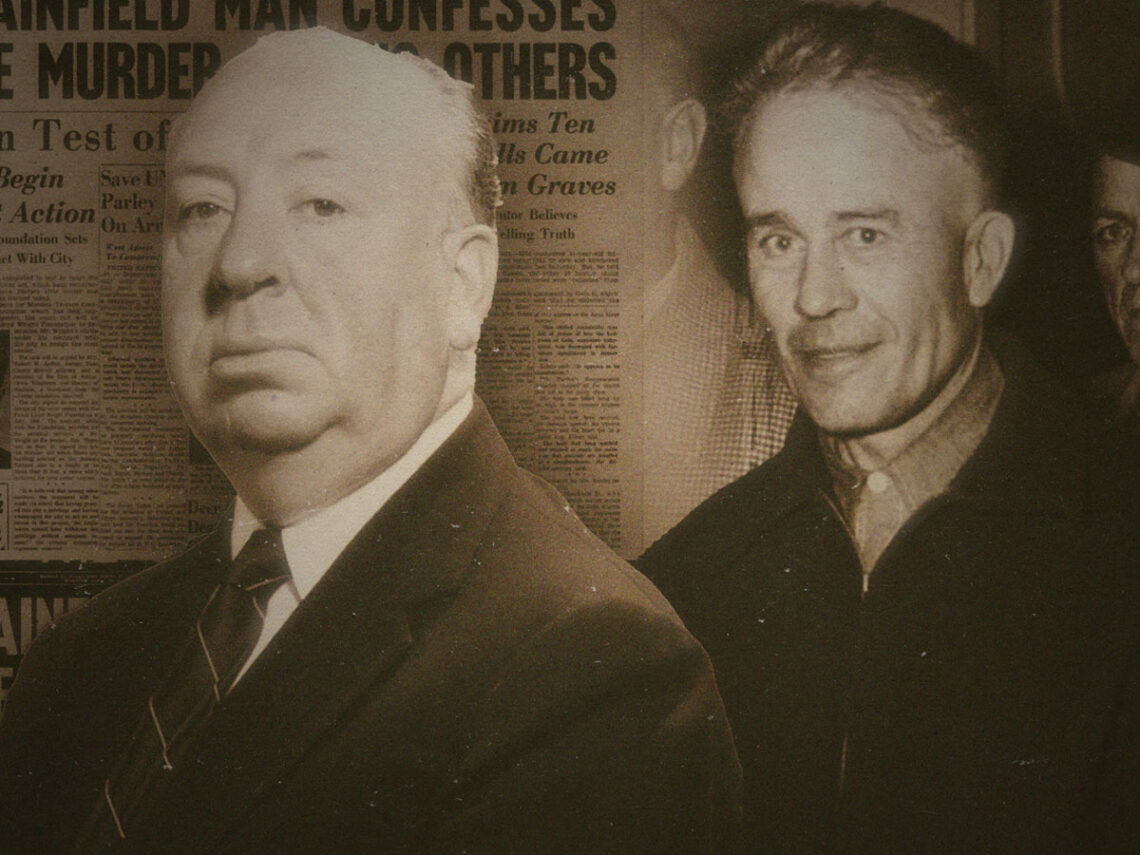
Was Alfred Hitchcock’s 1960 masterpiece really inspired by Ed Gein?
Psycho by Alfred Hitchcock is part of a select group of films whose music can be typed and still be recognisable. Come on, everybody! ZEET! ZEET! ZEET! ZEET! ZEET! ZEET! ZEET! ZEET! Duh-Duuuuhn. Duh-Duuuuhn. Duh-Duuuuhn. Now that’s poetry right there.
What’s even more telling about Psycho is that, unlike the likes of Jaws, Star Wars and Superman, the unforgettable part of its score isn’t even its main theme. Yet still, it seeped into pop culture so utterly that it’s now just as recognisable as any movie theme you care to name. This is even more incredible when you take into account that Psycho should have been a catastrophic flop – sure, it was by one of the great directors of the era, but everything else about the picture seemed destined for commercial disaster.
Ol’ Hitch was taking a colossal gamble with the film. So much so that pretty much everyone who had banked on his previous box office smashes like North By Northwest, Vertigo and Rear Window backed out the moment he pitched the film. The key problem was the fact that Psycho was an adaptation of a novel, a grotty little airport thriller of the same name. One that wasn’t even much of a hit to begin with, but had one horrific little claim to fame that followed it around like a bad smell.
Psycho was written by Robert Bloch in his hometown of Weyauwega, Wisconsin, a mere 35 miles away from him, one of the most horrific and infamous stories in the history of true crime was playing out – a man, seemingly normal and meek, led a disgusting double life as a killer of women, seemingly at the behest of his domineering mother, and at the very least, carrying out the acts as a way of feeling closer to her.
That’s right, a mere three years after the whole ghoulish affair, Hitchcock seemingly wanted to make a movie inspired by the crimes of Ed Gein.
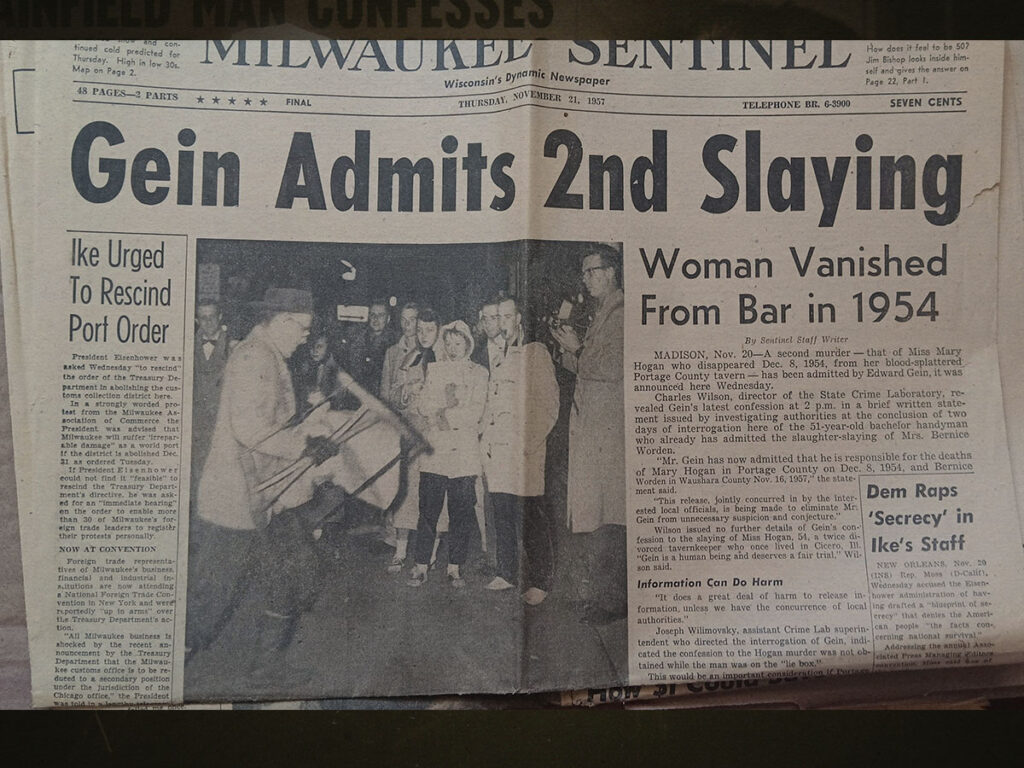
Thanks to true crime becoming an… I guess we’ll call it an entertainment medium capable of rivalling any other in the last decade or so, the story of Gein and the story of Psycho have become completely intertwined. So much so that the infamous Netflix disaster Monster: The Ed Gein Story painted both Hitchcock and Bloch as obsessed with the Plainfield Ghoul. To the point where we see multiple scenes of the two men discussing his crimes with a fervour that borders on fandom, and Monster‘s vision of Alma Hitchcock is disturbed by her husband’s fascination with him.
The truth is that neither men were particularly interested in the story of Gein. Bloch, as the author of the book, was at least aware of his crimes and wrote a cursory mention of Gein into the original novel. However, he’s since strenuously denied that his Norman Bates was written as any kind of allusion to Gein whatsoever. In fact, he had no idea of Gein’s abusive relationship with his mother and was shaken to find our close to a decade later.
Hitchcock couldn’t have been less interested in any connection to reality within the story. That was as far from his style as you could get. He just knew a good thriller when he saw one, and in Block’s novel, he’d found an absolute belter. If anything, it was the toxic relationship between mother and son that captured his attention over any connection it had to reality. Combine that with some messed-up murder scenes, and he had a recipe for a box office smash on his hands.
One that, at the time, offended all who saw it, but Hitch simply laughed all the way to the bank.