Cocaine alien and cinema myth: Behind the scenes of ‘The Man Who Fell to Earth’ with David Bowie
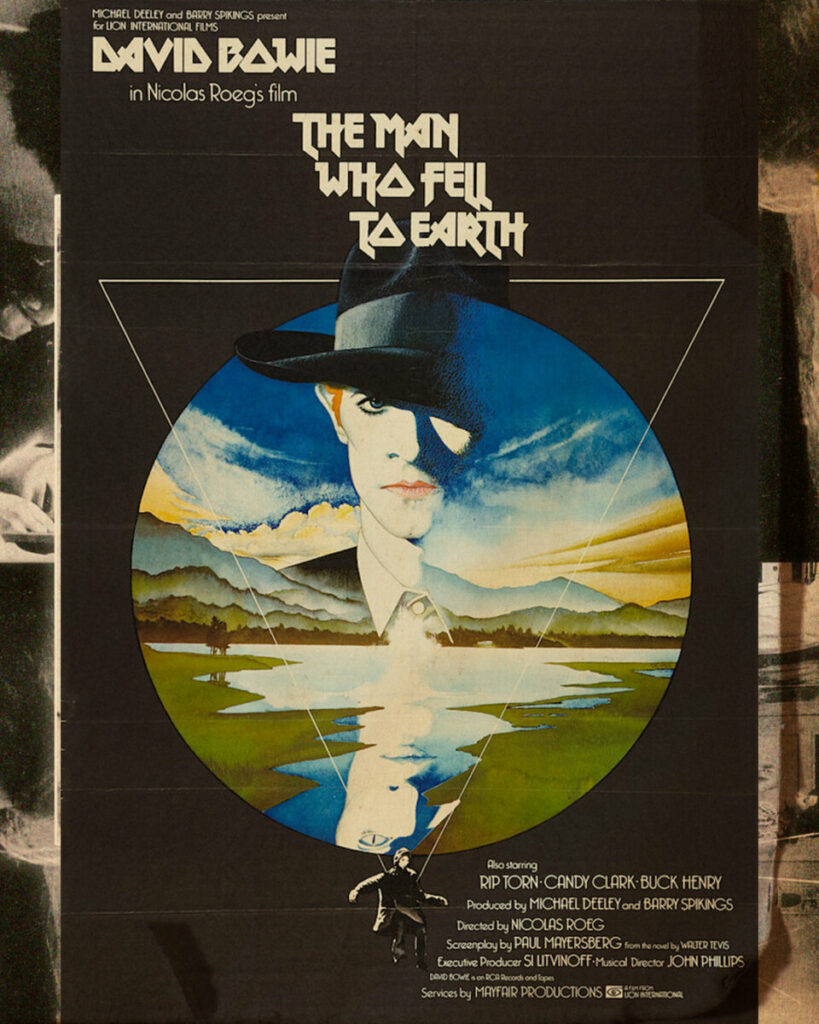
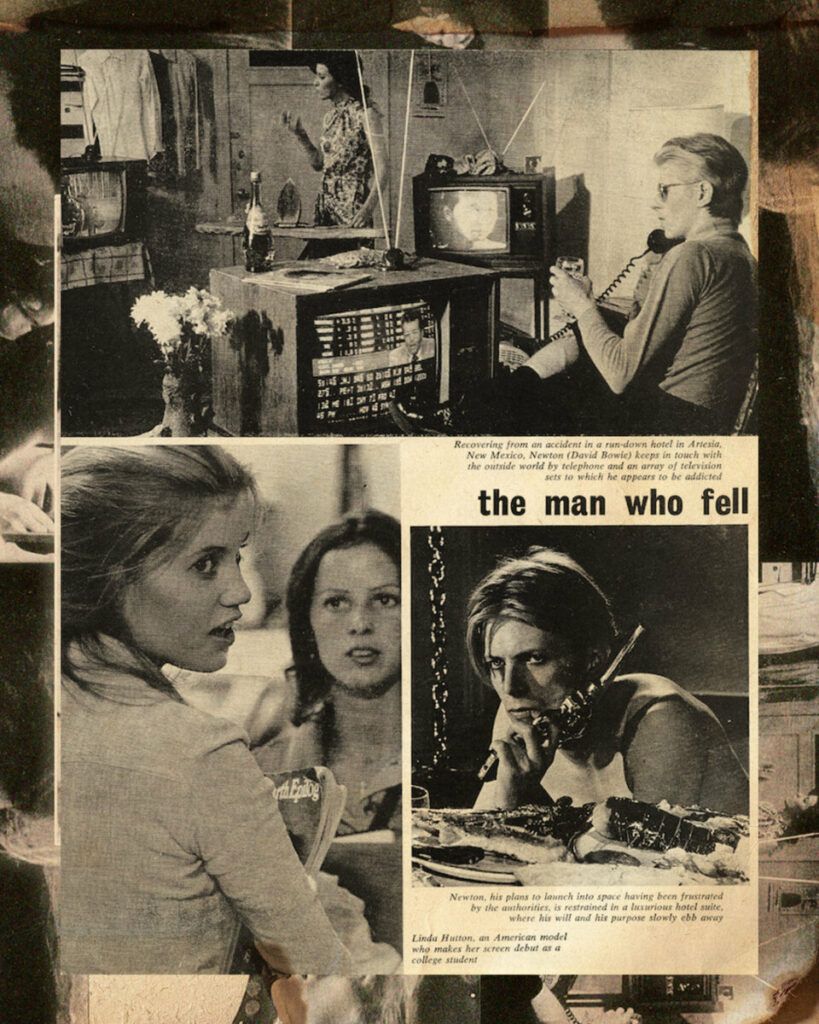
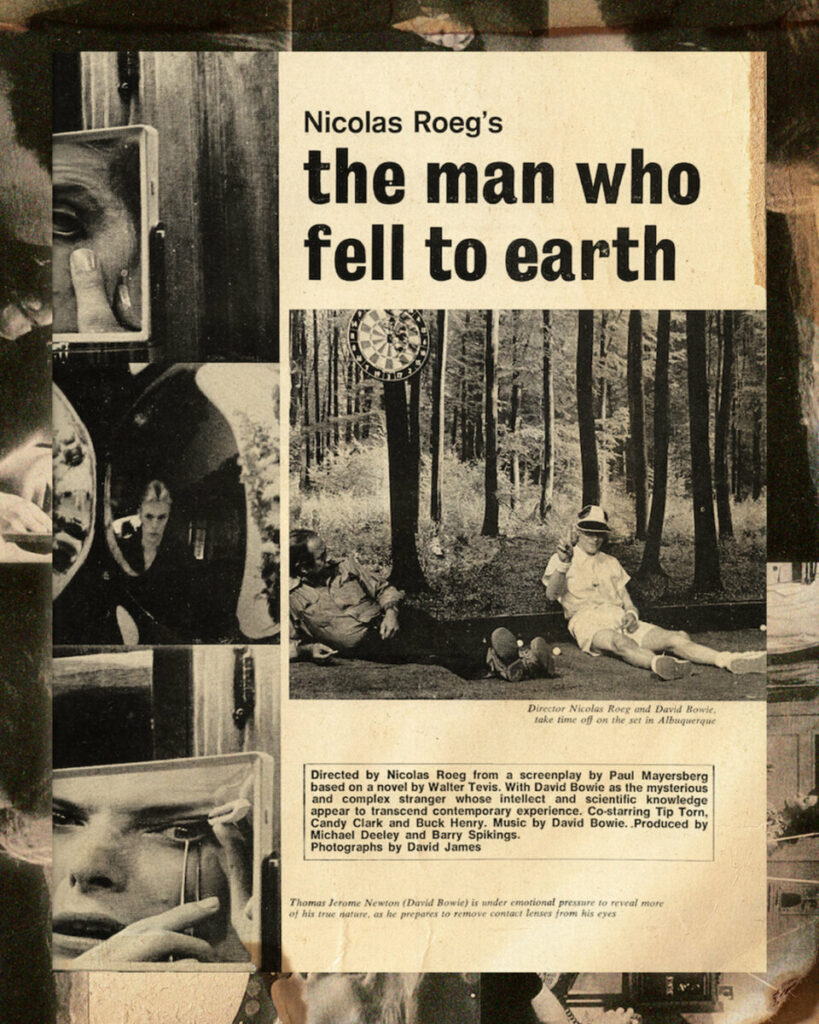
At some point in the mid-1970s, director Nicolas Roeg made the decision that he wanted to cast the great David Bowie as the lead in his next film, The Man Who Fell to Earth, the story of a humanoid alien called Thomas Jerome Newton, who comes to this world in search of water.
A copy of the script was sent to the singer, and a meeting was arranged. Roeg arrived at a recording studio in New York where Bowie was working on his next album. “David will be finished by ten, so if you come round about 9:30pm,” he was told.
Roeg wanted to cast Bowie after seeing him in the BBC Arena documentary Cracked Actor. There was something ethereal about him, something alien; he seemed isolated in the world around him, travelling in a limo, drinking milk from a carton, watching the world go by.
Roeg waited, drank a couple of martinis, met some exotic people, and wondered what was going on. Ten o’clock. No Bowie. Another call came through: “David will be finished by eleven”. Half-past eleven, no Bowie. Twelve, no Bowie. “He’ll be with you by two”. At five in the morning, Bowie finally arrived. He was pale thin and strange looking. Roeg started talking to him about the film. Did he want to do it? What did he think about the script? What about that scene where…? Bowie seemed keen, agreed with most of Roeg’s points, but was also nervous. He said he would do the film, yes, he’d be there. But he seemed more in a hurry to get Roeg out of the studio. Bowie was worried that if the director asked any more questions, he would get wise to the fact that he hadn’t, as yet, even read the script.
“Bowie’s actual social behaviour was extraordinary—he hardly mixed with anyone at all. He seemed to be alone, which is what Newton is in the film—isolated and alone.”
Nicolas Roeg
At the time, Bowie was writing his own film scripts. He had recently moved to LA with some vague idea of getting into movies. “Me and rock-and-roll have parted company,” he told Tina Brown from the Sunday Times. “Don’t worry, I’ll still make albums with love and with fun, but my effect is finished. I’m very pleased. I think I’ve caused quite enough rumpus for someone who’s not even convinced he’s a good musician. Now I’m going to be a film director.
Bowie added: “I’ve always been a screenwriter, my songs have just been practice for scripts.”
Eventually, Bowie did find the time to read the script and also watched one of Roeg’s previous films, Walkabout, a movie based on a 14-page screenplay by playwright Edward Bond. He liked both and signed up to play the role of Newton.
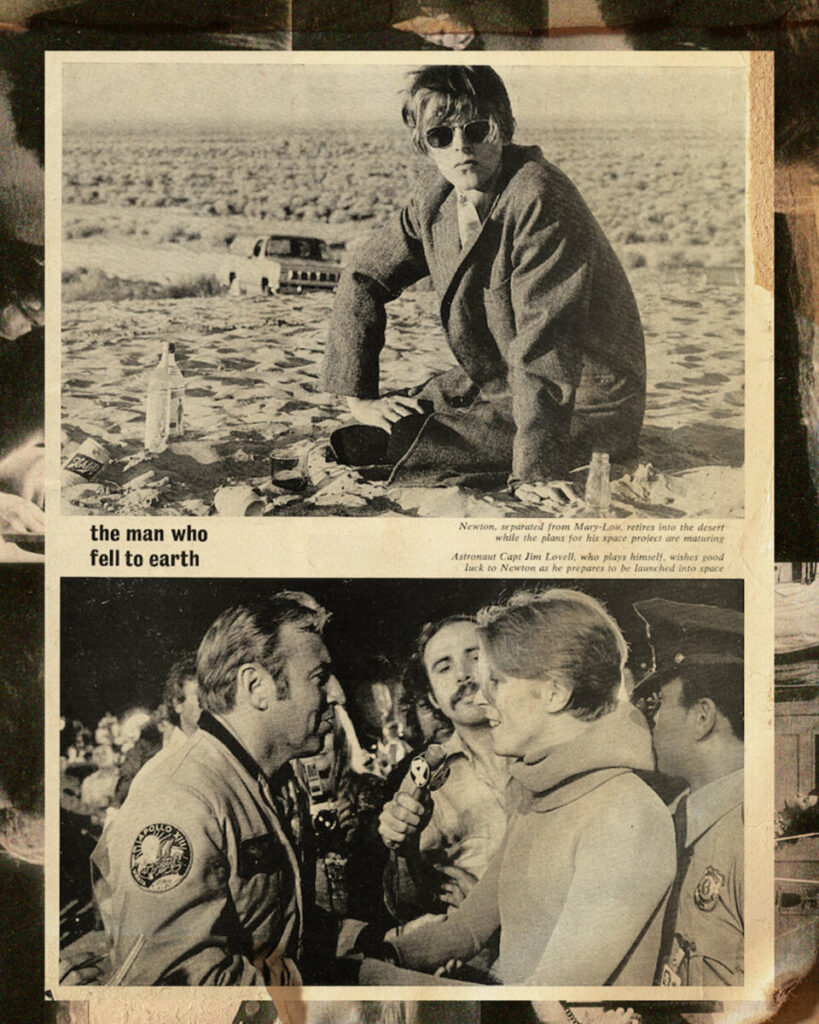
With the Starman onboard, filming for The Man Who Fell to Earth took place over 11 weeks in New Mexico starting in July 1975. According to Bowie, he was “blasted” off his tits on cocaine at the time, snorting in excess of ten grams a day. This runs counter to what his co-star Candy Clark claimed. She said Bowie gave a vow to Roeg that he would take “no drugs”. Bowie was focused, on the mark, and “luminescent”.
However, the situation was clear for all those watching on, and Bowie later fessed up: “I just learned the lines for that day and did them the way I was feeling. It wasn’t that far off. I actually was feeling as alienated as that character was. It was a pretty natural performance—a good exhibition of somebody literally falling apart in front of you. I was totally insecure with about ten grams a day in me. I was stoned out of my mind from beginning to end.”
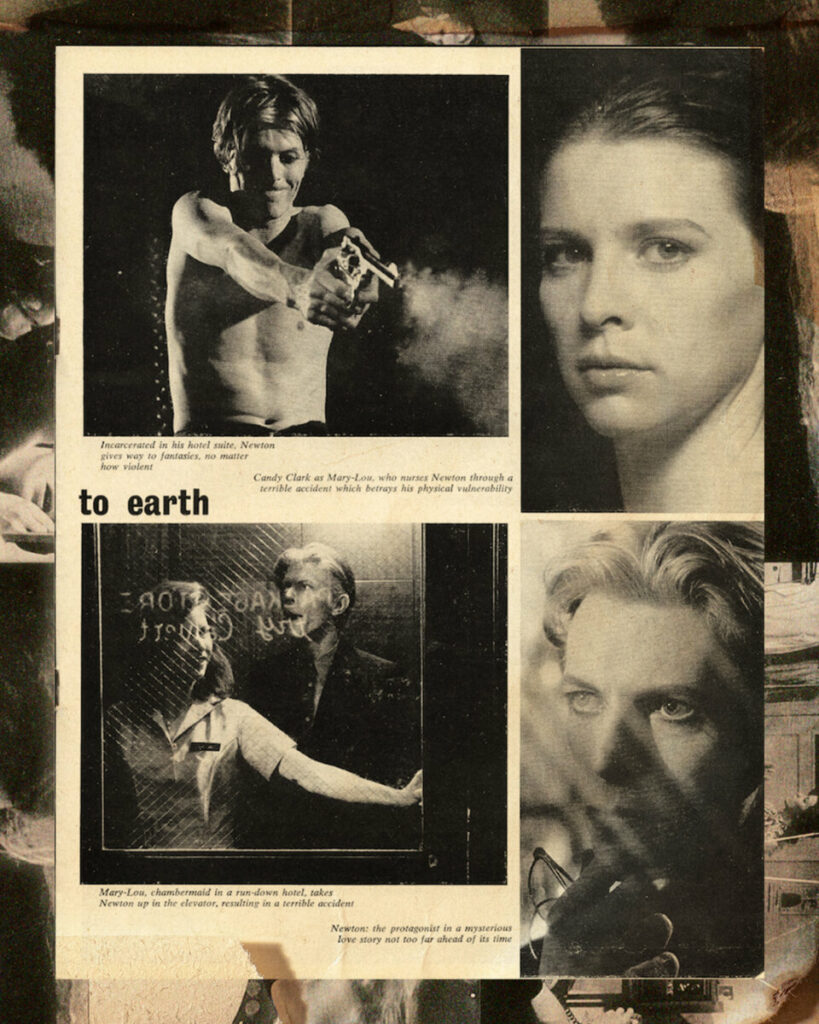
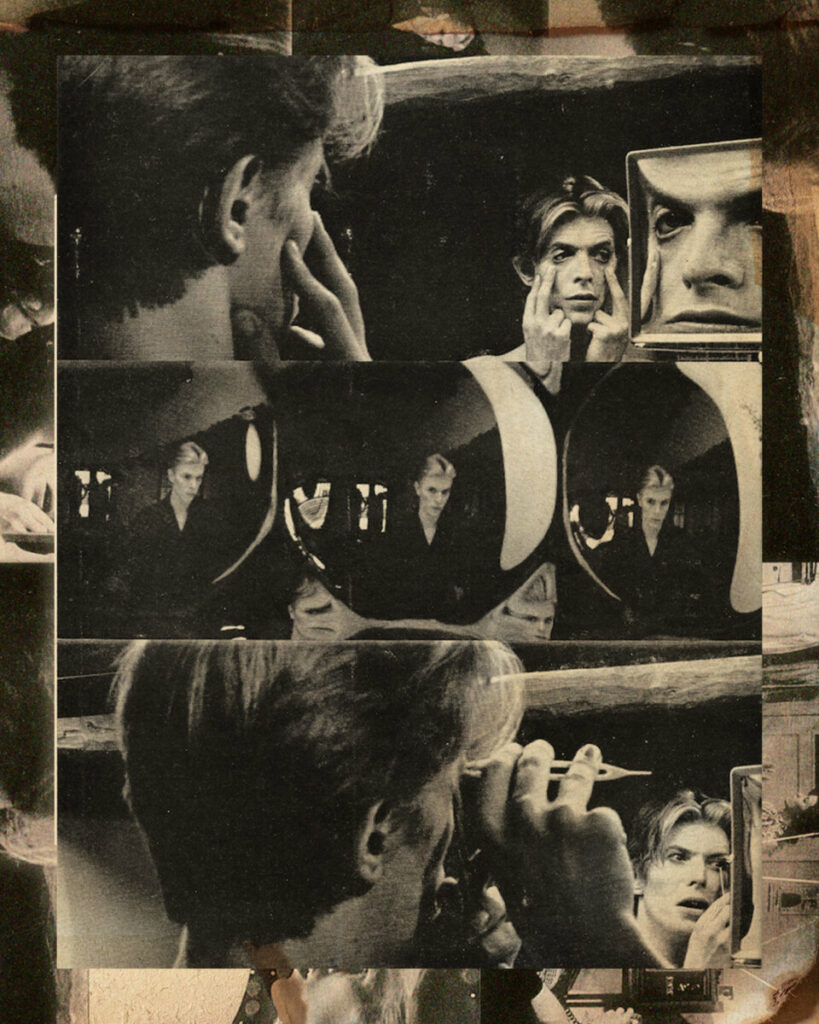
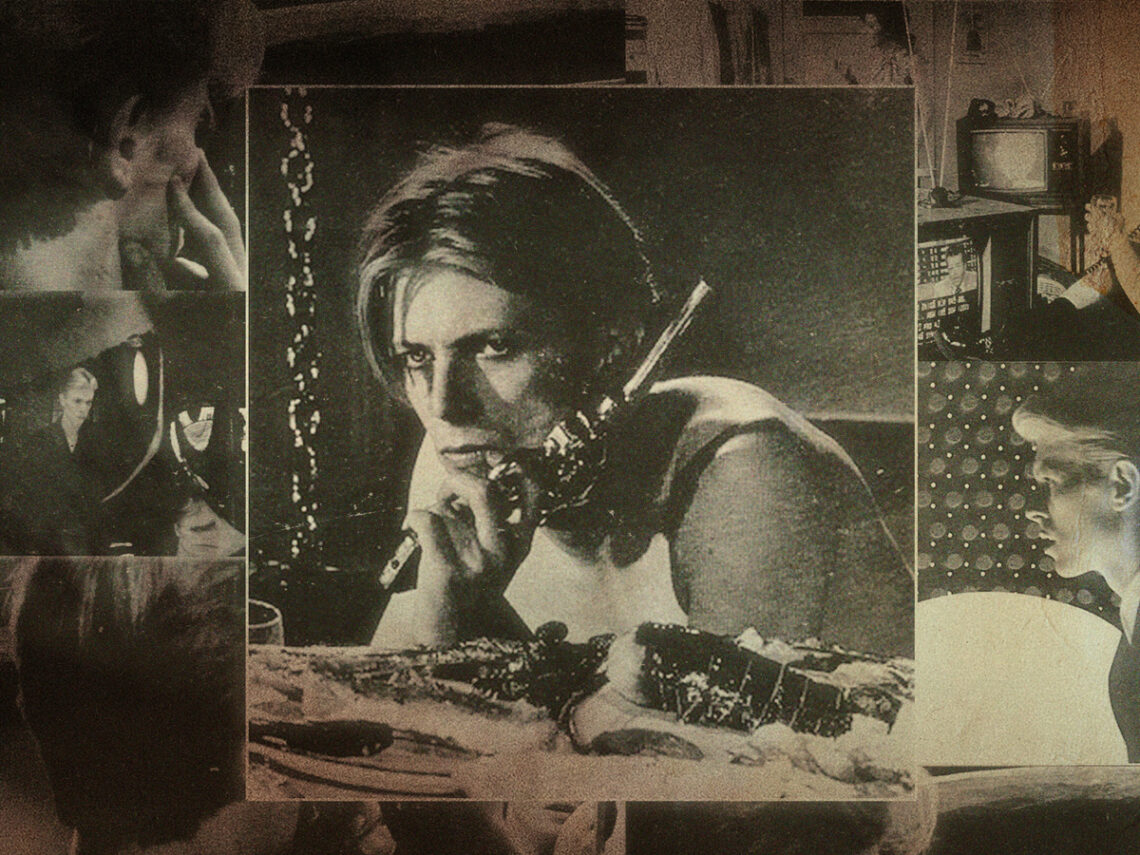
Whatever the truth, Bowie gave (arguably) his best performance. Bowie liked Roeg – they got on well together, with the singer desperate to please the director. The New York Times noted: “Mr. Roeg has chosen the garish, translucent, androgynous‐mannered rock star, David Bowie, for his space visitor. The choice is inspired. Mr. Bowie gives an extraordinary performance. The details, the chemistry of this tall pale figure with black‐rimmed eyes, are clearly not human. Yet he acquires a moving, tragic force as the stranger caught and destroyed in a strange land”.
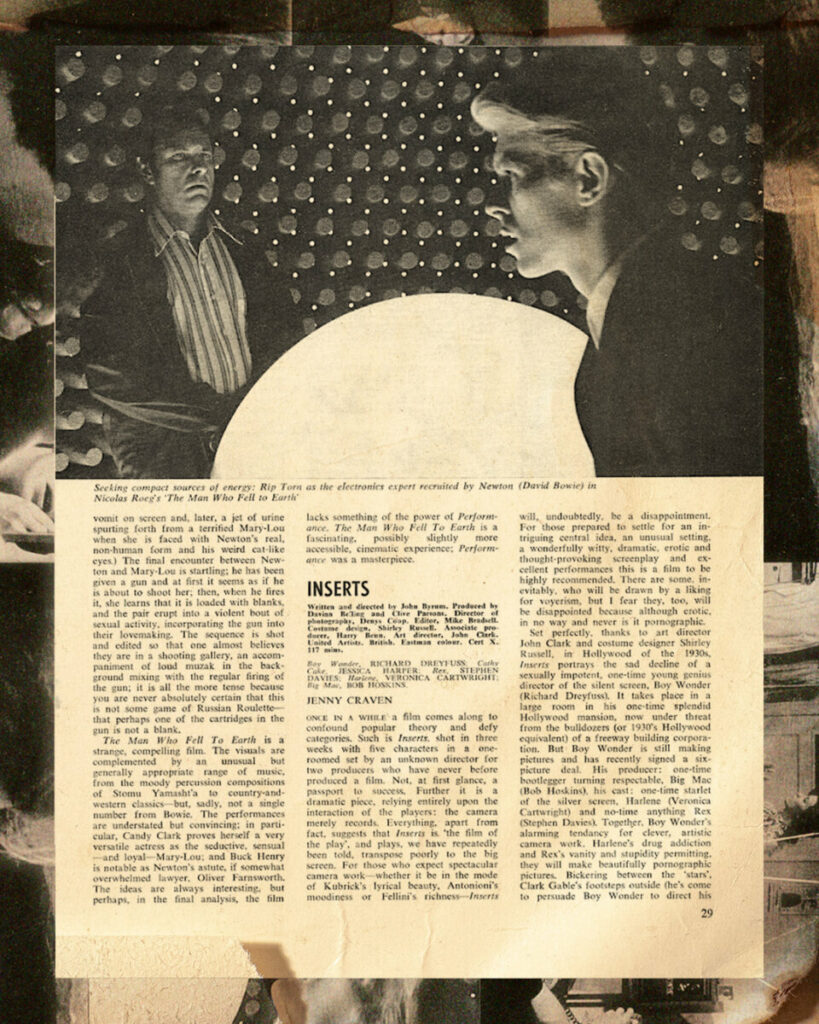
When Roeg delivered the finished film to Paramount, the studio refused to pay for it, saying it was not the movie they had agreed upon. Struggling to find a home and with a money pit seemingly growing, The Man Who Fell to Earth was eventually distributed by British Lion Films. Critical reception was mixed. Some thought it “preposterous and posturing” (Roger Ebert), others (Richard Eder) thought it “absorbing” and “beautiful”.
Of course, from its initial release, The Man Who Fell to Earth gained a cult status, and a fanbase that has grown to the point where the movie is now considered one of Roeg’s and Bowie’s best work.
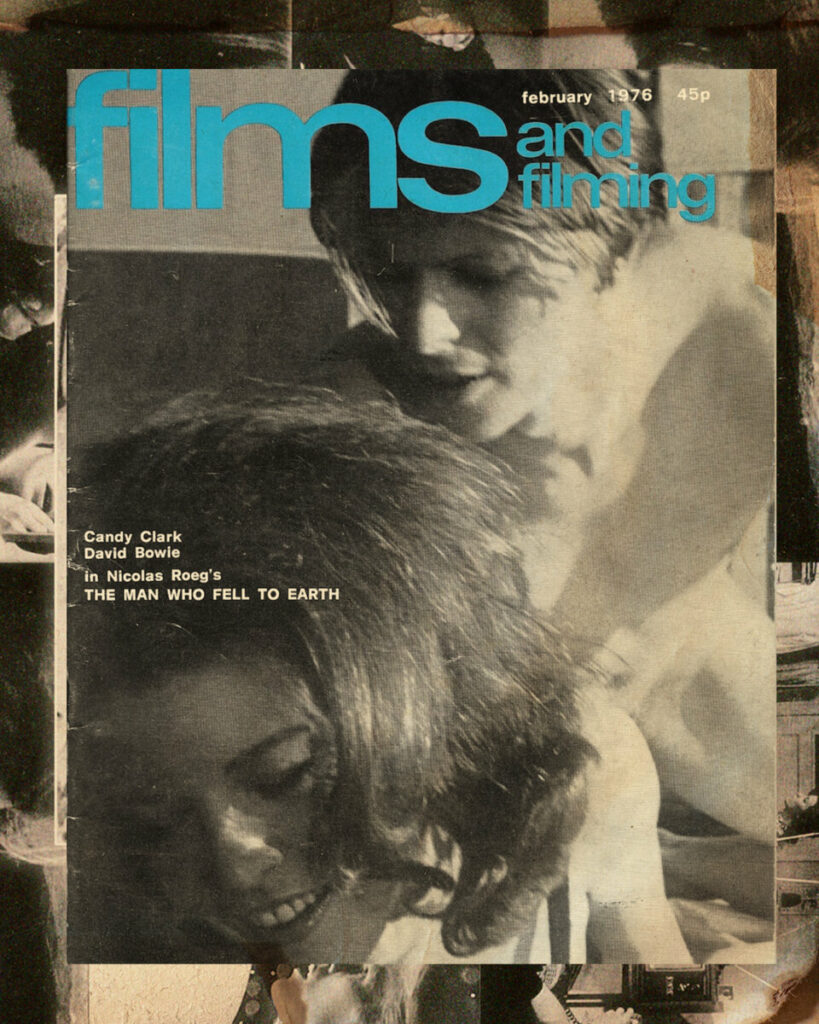
In February 1976, Films and Filming magazine gave a sneak preview of Roeg’s latest “masterpiece”, which was followed by a four-star (“not to be missed”) review in the May issue of that year. I guess the things we keep from childhood say a little something about who we are. Yet, I’m not quite sure why I’ve kept these magazines over the years, other than I thought anything by Roeg and Bowie was worth saving.
Oh, to be as wise as that now.