


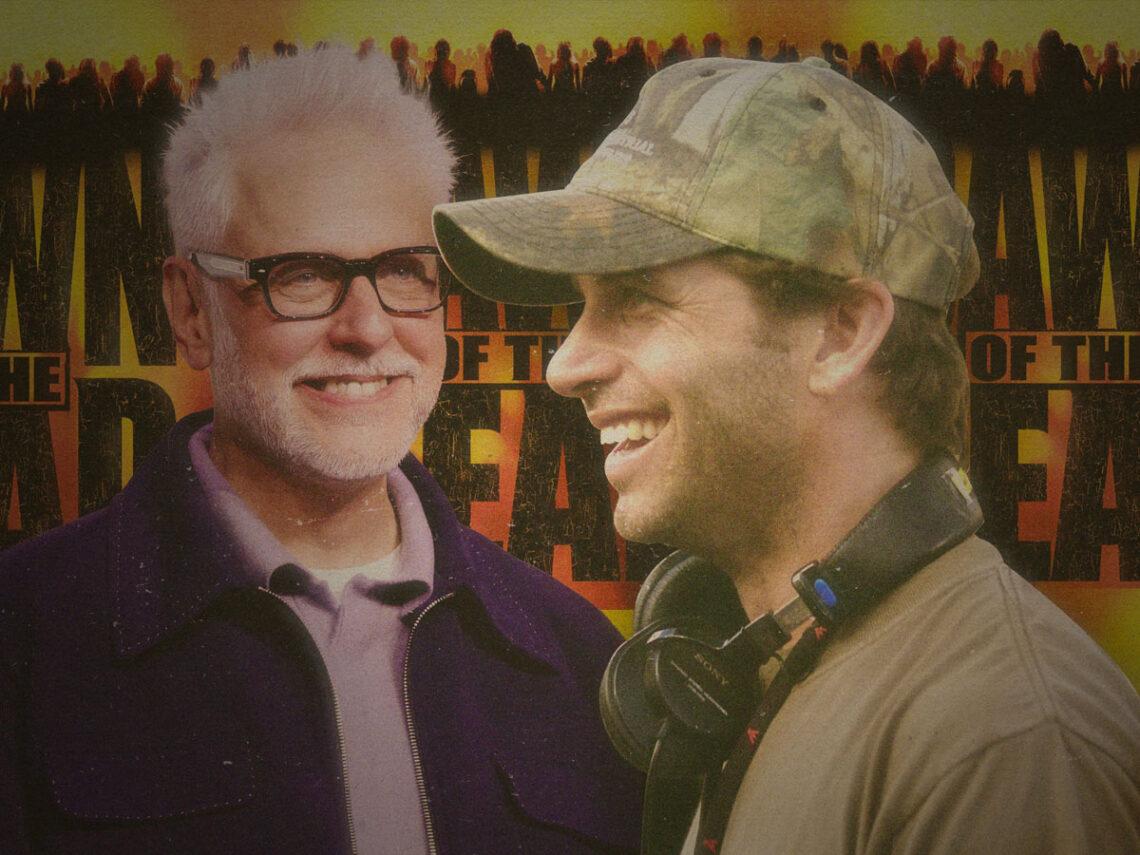
‘Dawn of the Dead’: Was James Gunn or Zack Snyder responsible for the 2004 remake?
Who gets credit for a Hollywood motion picture has been a topic of much consternation for as long as movies have been a business.
Most people would say the director. They’re the person behind the camera, whose vision everyone else is following, or so it would seem. The truth is a lot of the time a director is just another person hired to make the film. Sure, what they say goes, but what they could (and often are) repeating what the producers have told them to say… Infamously, that’s the way it works in the Marvel Cinematic Universe at the moment, and Hollywood is filled with studios trying to replicate their efforts.
These films might be credited to Cate Shortland, Nia DaCosta and Julius Onah, but they’re all working to a playbook written by Kevin Feige… That is a very specific and very high-level example – the further down the ladder you get, the rules get a little less rigidly defined, and while it’s rare, there are movies that are led by a screenplay and, thus, a screenwriter. Though they’re infamously low down on the totem pole. An actor with the right clout can lead a production as well, especially if it’s a picture built around showing off what they can do.
Most of the time, though, there isn’t one driving force behind a movie but many, and sometimes they can be trying to drive the production forward despite not being entirely on the same page about the kind of film they’re making. If this doesn’t sound ideal, trust me, most of the time it’s not. However, sometimes that friction can lead to a very successful film. It’s absolutely not the kind of chemistry you want to bet your house on every time, but it can work out.
It’s exactly the kind of atmosphere that the 2004 Dawn of the Dead remake was made under.
Who were the two forces behind 2004’s ‘Dawn of the Dead’?
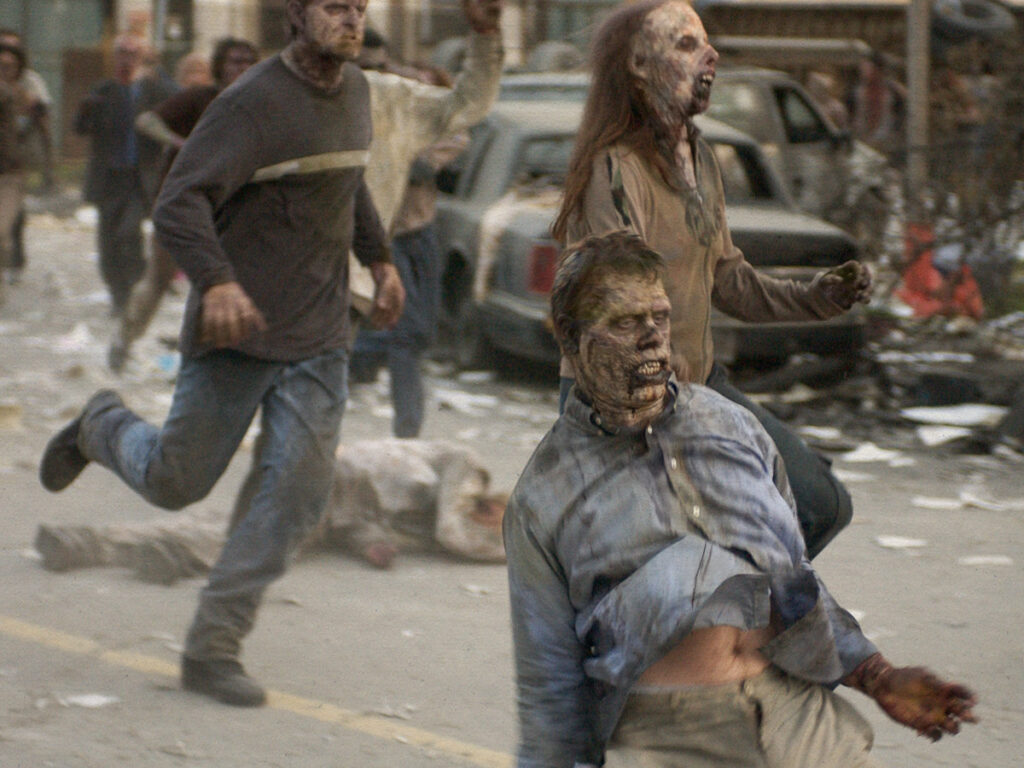
Thanks to the one-two punch of the Resident Evil video game franchise and the astonishing success of 28 Days Later, the zombie movie came (if you’ll pardon the expression), roaring back to life in the early 2000s – with the public’s appetite for shuffling (or in this case, sprinting) corpses at an all-time high, the 2004 Dawn of the Dead remake was a massive hit at the box office, grossing $100million dollars, fully four times its budget.
The two names behind the movie’s production were James Gunn and Zack Snyder, but today, these aren’t just two of the biggest Hollywood directors around but also two of its biggest auteurs… You can tell a Zack Snyder movie from a James Gunn movie with a cursory glance at a frame or two – interestingly enough, despite being the screenwriter, there’s an argument to be made that Gunn was the chief creative vision behind Dawn of the Dead.
At least at first. He was the first person hired for the picture by producer Eric Newman, and his script, an action-packed, gore-soaked romp that kept a lot of the Romero original’s sense of humour, was arguably what got the film green-lit. Considering that Finn’s major screenwriting credit before joining the production of Dawn was the 2002 Scooby-Doo movie, diehard Romero fans weren’t best pleased by their choice of writer.
Ironic, considering the goodwill the two directors had in 2026, it was Snyder who soothed the fans’ soured moods. He came on and wanted a very different tone to not only the Romero original but also Gunn’s script. To be clear, there was a lot about the script he liked, but Snyder envisioned a deathly serious horror movie about the collapse of society rather than the satire that Romero and Gunn saw in the story. Looking at the film today, it’s clear whose vision ruled out in the end.
The auteur theory that one great (often male) vision is all you need for a good film is often a crock of shit, and actual good movie-making comes from adaptation, collaboration and understanding – it’s how you get a film like 2004’s Dawn of the Dead, which has Snyder’s gritty grandiosity and Gunn’s mischievous spirit and creativity, all built around a core idea that George A Romero had in the 1970s.
That, more than any one person, is what makes a great film.