


‘Häxan’: how a silent documentary invented the jump-scare
In 1922, audiences of the nascent art form known as cinema had been freaking out over a train pulling into a station just over 25 years earlier. One can only imagine how much Häxan made them lose their shit.
Even looked at over a century later, there is still something truly unsettling about Häxan. A silent, black and white picture exploring, as the subtitle given to it for a 1968 re-release would put it, Witchcraft Through The Ages.
In a way, Häxan isn’t just an example of early movie-making, but one of the earliest examples of what we’d now call the video essay. Most of the picture is a documentary focusing on the historical roots of witchcraft, interspersed with dramatised narrative segments that still send a chill up the spine today.
The film was the brainchild of Benjamin Christensen, a Danish actor, writer and director who, in 1919, found a copy of Malleus Maleficarum in a Berlin book shop. For those not in the know, the book, whose title is commonly translated to Hammer of Witches, is a treatise on how to hunt and persecute those who have engaged in sorcery. Christensen was fascinated by this tome and spent the next three years putting a film together, not based on it per se, but more based on the mass hysteria it caused.
Because, as we all know today, the witch hunts of the Middle Ages weren’t really holy crusades against devil worshippers but a concentrated effort by theocratic lawmakers of the time to stamp down on any power held by women and anyone not affiliated with the church. This is what Häxan attempts to illustrate, first with depictions of the kind of stories that caused the mass hysteria that gave the church its power to enact such atrocities against people.
These are where the most famous images from Häxan come from, and weirdly enough, it’s not the image of someone literally kissing Satan’s ass.
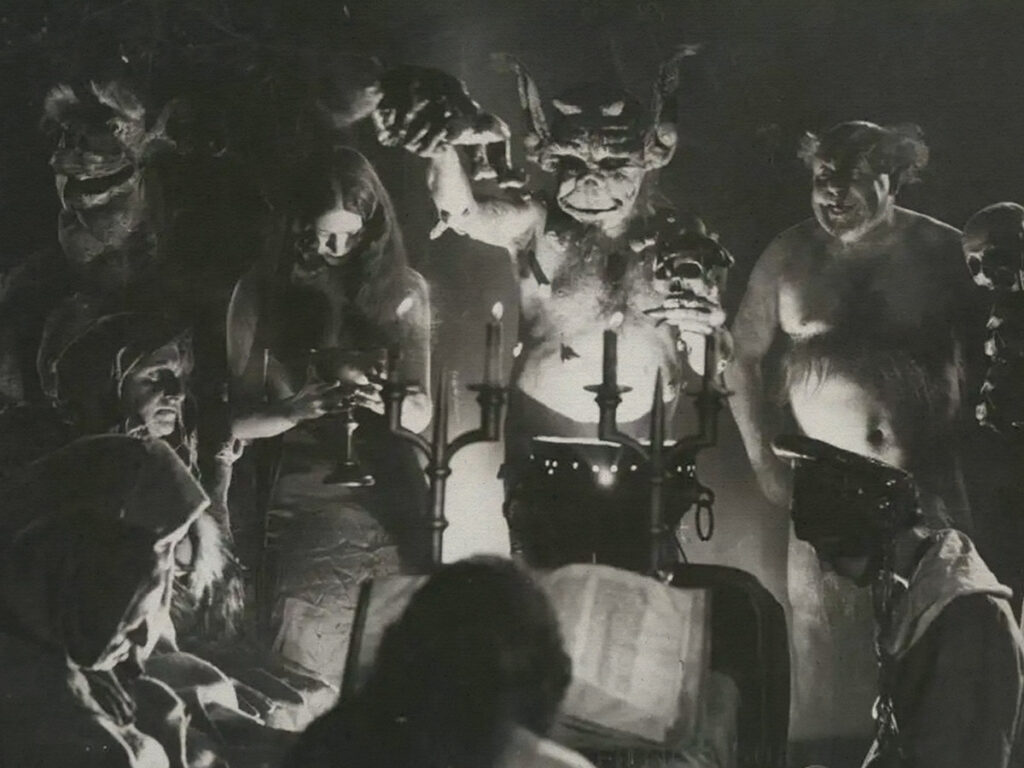
What is the most famous scene from Häxan?
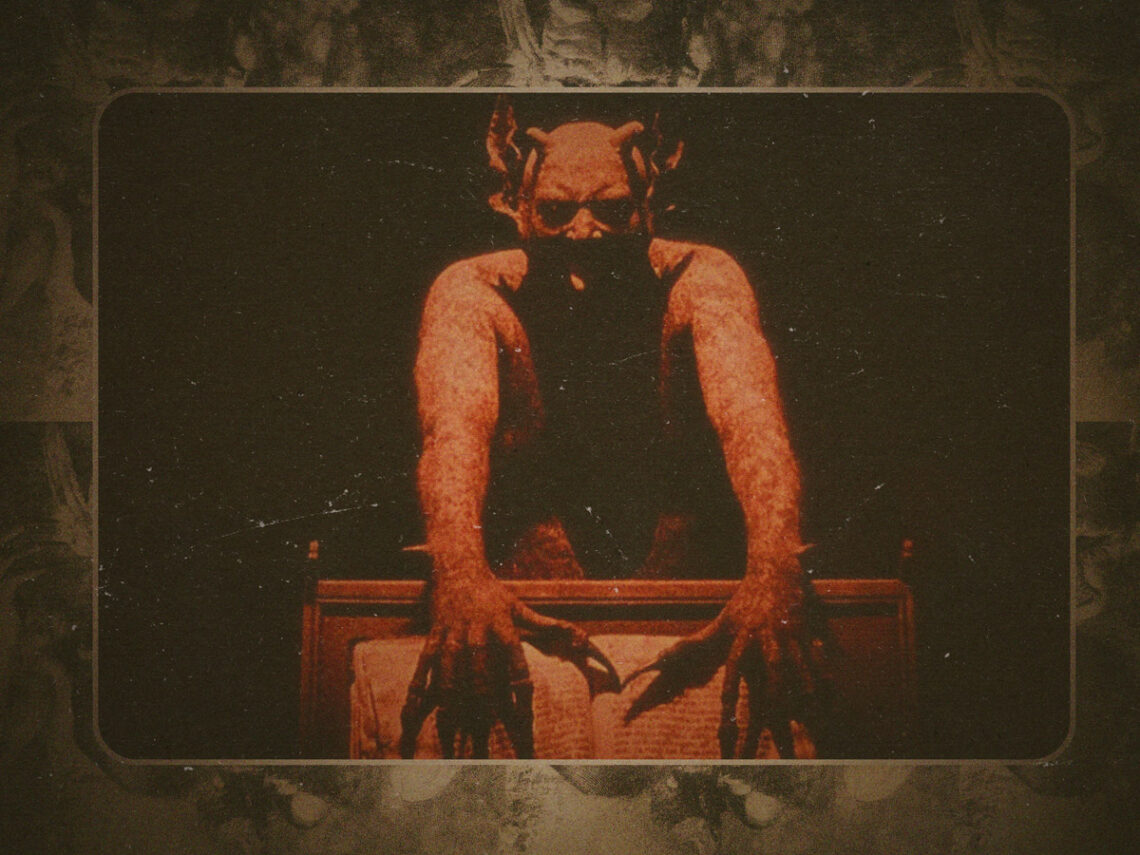
If you’ve spent as much time among esoteric horror communities as I have, this is what you associate Häxan with the most. Not only is it one of the earliest examples of filmmaking that walks a line between documentary and fiction, but it’s also arguably the film that gave the world one of horror cinema’s most enduring scare tactics, the jump scare.
One that still has a sense of eerie power today, depicting a monk reading from a Bible that is suddenly slammed shut by a grotesque demon (one played by the film’s director, natch). However, that’s only one part of what makes Häxan so interesting. The other is the fact that, as a silent film, it has a way of constantly reinventing itself that more recent films (read, anything released after, like, 1935) do not.
Its soundtrack has been made and remade countless times in its century of existence, with several different artists taking a stab at its gothic majesty. Most often, the film is associated with the jazz soundtrack made for its 1968 re-release mentioned earlier.
However, a silent film getting a new soundtrack isn’t anything new, even then. This release went one step further though. For this version of the film, they commissioned a whole voice-over to go with this new version of the film, one narrated with relish by counter-culture icon William S Burroughs.