


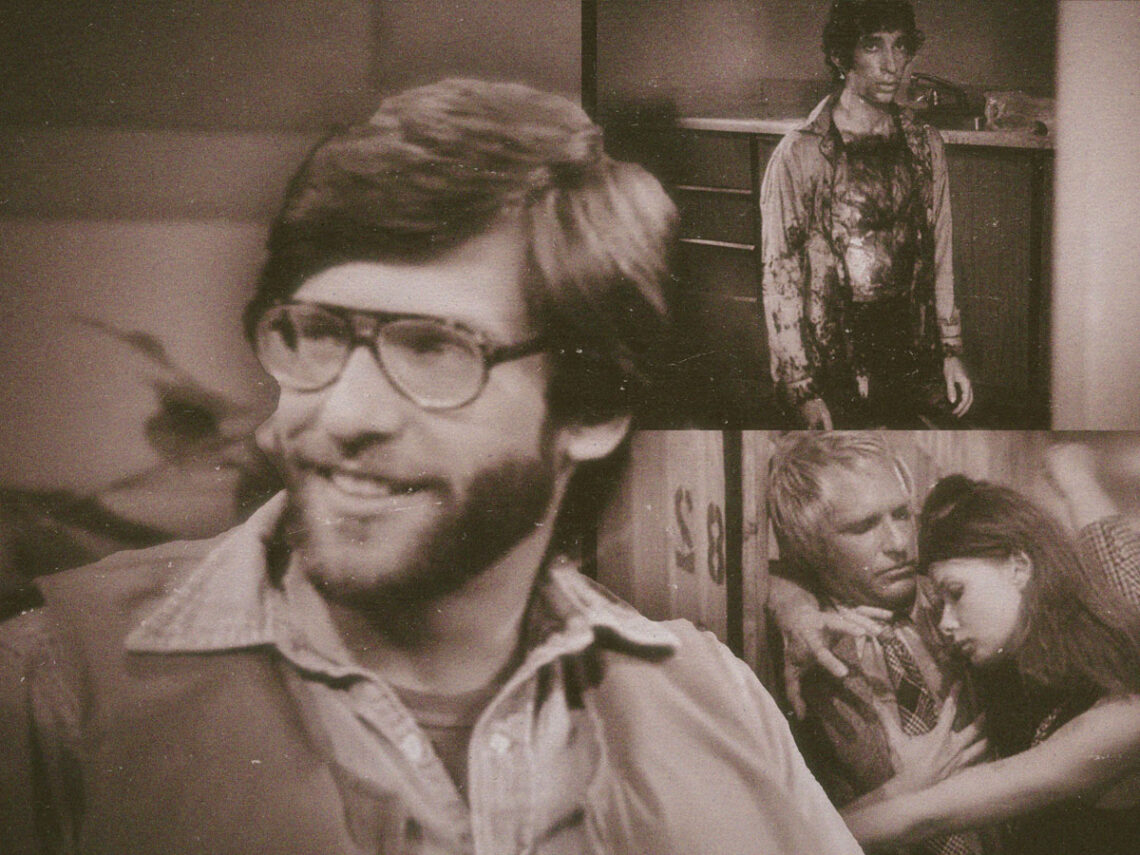
The movie that got David Cronenberg evicted from his apartment
Most movie directors begin their cinematic careers with a film that’s a more streamlined, people-pleasing version of their signature style, but not David Cronenberg.
Which, honestly, is just as well. You don’t ease people into films like Videodrome and The Fly, you chuck them in, and if they don’t like it, they can get out of the water.
Perhaps this was the attitude Cronenberg went into when he made his debut picture, Shivers, in 1975. At the time, Cronenberg was an up-and-coming director with two short art-house features to his name in the form of Stereo and Crimes of the Future (weirdly enough, not an early version of his 2022 picture).
He was dead set on making films for the arthouse until he took a trip to the Cannes Film Festival. When confronted with the kind of budgets that modern art films were being made for, he knew he would most likely never get the chance to make films like that. At least, not until he’d made films for a broader audience. Thus, he returned to his native Toronto and started cooking up an idea for a monster movie, one that horrified people right from the off.
Cronenberg took his pitches for what would later become Shivers to the Canadian Film Development Corporation (CFDC). According to the esteemed director, they called the movie’s premise “disgusting, awful, horrific, perverse”, yet finally agreed to finance it after three years of trying. After the film was complete, they weren’t the only ones who thought that way, leading to one of the most viscerally horrible film reviews in the medium.
Canadian journalist Robert Fulford wrote (under the pseudonym Marshall Delaney, cowardly enough) that the film was “crammed with blood, violence and depraved sex”, calling it “the most repulsive movie I’ve ever seen.”
This scathing review would be bad enough except that he’d also got wind that the film was funded thanks to the CFDC, which uses taxpayer money to finance its films. Thus, leading to the hatchet job of a headline, “You should know how bad this film is. After all, you paid for it.”
Now, to be clear, I’m not one of those people that thinks that critics should be “nice” to art they don’t like. Take something to the cleaners if you think you must; however, there’s a difference between Fulford saying that the film’s bad and tasteless, and him saying it was a waste of taxpayer money. Granted, he could never have guessed how much the review would have messed with Cronenberg personally.
You see, that review was published in the national magazine Saturday Night. One of Saturday Night’s readers? David Cronenberg’s landlord. Who read about the film’s shocking content, marched up to the director’s apartment and kicked him and his young family out there and then, citing some probably bogus “morality clause” in their contract.
Fortunately, the CFDC continued to work on Cronenberg’s films for the rest of the decade, meaning that if Cronenberg and his family were on the street, it wasn’t for long!