


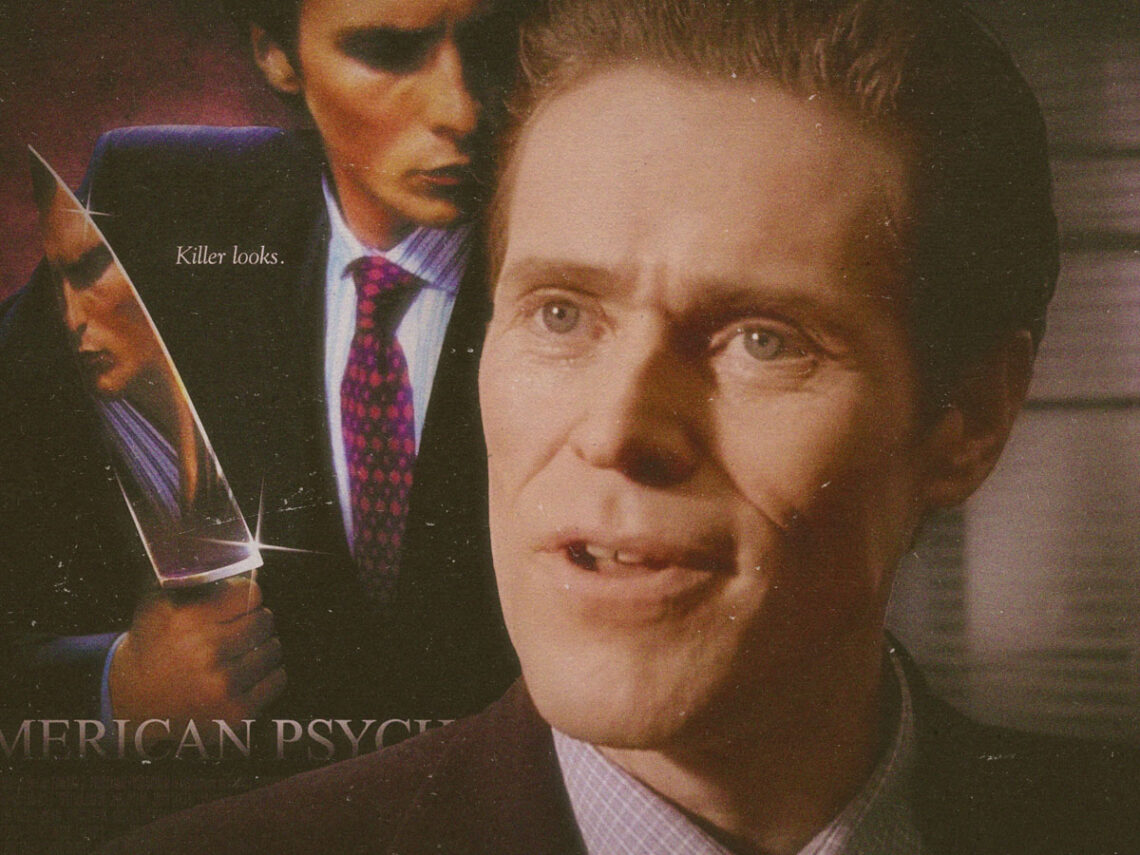
The secret behind the manic performance of Willem Dafoe in 2000’s ‘American Psycho’
The memefication of Willem Dafoe has made many perceive him as an actor who only ever plays unhinged maniacs in movies, which gets in the way of him being, undisputedly, one of the greatest character actors of all time.
Sure, a number of Dafoe’s greatest performances come from when he gets the chance to cut loose and gobble up the scenery in Spider-Man, The Lighthouse, Shadow of the Vampire and many, many others, but he’s far from a one-trick pony. He’s an actor of uncommon range, one who is just as at home as psychopathic billionaire supervillain Norman Osborn as he is as kindly motel manager Bobby Hicks in The Florida Project.
One would assume that his presence in Mary Harron’s infamous 2000 adaptation of Brett Easton Ellis’s American Psycho would go firmly in the former category of his career. American Psycho, if anyone needs reminding, is a violent, surreal, black-hearted satire of the vacuous yuppie culture of the 1980s. It’s a film that features Christian Bale’s Patrick Bateman murdering Jared Leto with an axe over his jealousy about securing a reservation at a hip new restaurant.
Dafoe suits a picture like this, and if the film had somehow been made in the mid 1980s, he wouldn’t have been a bad shout to play Bateman himself. Yet one of the more unsettling things about Dafoe’s presence in the picture is how understated he is, at least by his own standards. Dafoe plays Donald Kimball, a private investigator who is looking into the disappearance of Leto’s character, Paul Allen. In a film full of people desperately trying to fool people into thinking they’re the best version of themselves, Dafoe plays someone with a quiet self-assurance.
This inadvertently makes him one of the most weirdly intimidating characters in the whole piece. In a film full of people who are little more than scared children trying to be adults, Dafoe’s Kimball actually is an adult. So, when he comes in to interview Bateman about what he knows of Allen’s disappearance, it’s pretty much the first time that we see the title character in any kind of real distress as he flails about trying to cover up a murder that he believes he committed.
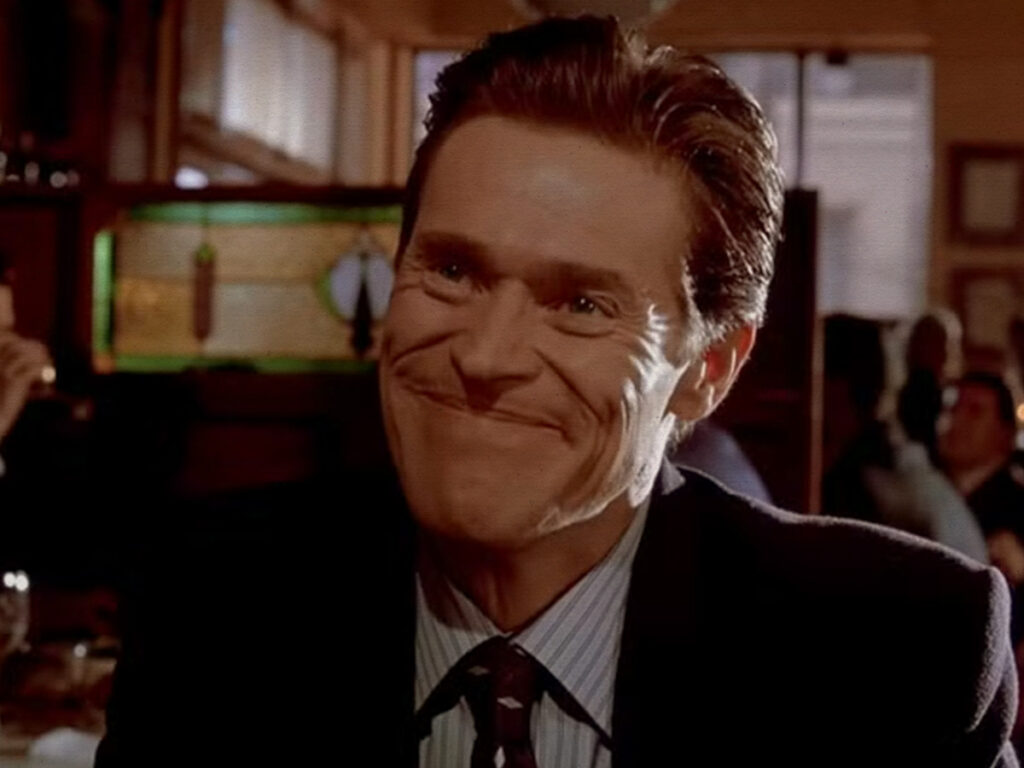
Dafoe is still an incredibly intimidating presence while playing the character more understated than viewers are accustomed to in his performances. However, the real tension from his character comes not from one performance that Dafoe gave, but rather three. You see, the real hero at the heart of American Psycho is arguably not in the cast, but the movie’s director, Mary Harron, who made this scene truly memorable via a collaboration between Dafoe’s performance and the editing of the scene.
Harron shot the scene three times, with each take having Dafoe play the character of Kimball differently. In one version of the scene, he played it like he believed Bateman was innocent. On another, like he didn’t know for sure. Then one more time, where he played it like he was absolutely sure that Bateman was guilty as sin and was going to bring him to justice for certain. Then, the real genius of the scene comes in the edit, as it so often does.
Harron didn’t pick one of these versions of the scene to be the true version. Instead, she made sure that every time the camera cut back to Dafoe, it was from a different take. As a result, no one is ever entirely sure about what Kimball is thinking. One moment, he seems to like Bateman. Another, he doesn’t know what to think of him. Then you cut back to him, and you can see that signature Dafoe leer and know that Bateman is in serious, serious trouble.
Which is the beauty of filmmaking in a nutshell, really. It’s a collaborative effort. No one actor is responsible for a great performance on screen, it’s a conversation between them, the director, the editor and the writer. When all of those work in harmony, you get Willem Dafoe in American Psycho, a performance that may last barely more than six minutes tops, yet is one of the most memorable parts of one of the most memorable films of its era.