


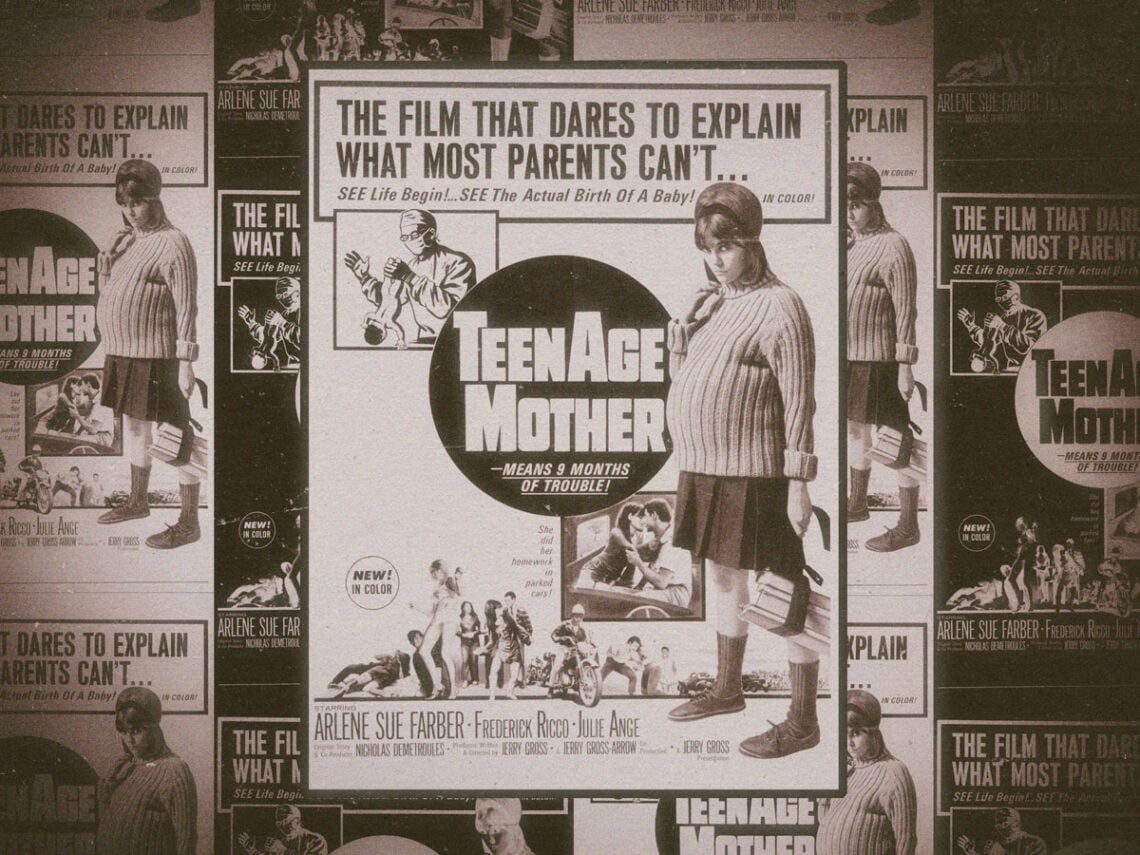
‘Teenage Mother’: The infamous exploitation movie that masqueraded as sex education
Teenage Mother is one of a small handful of what could be called “quintessential”, or even canonical if you prefer, exploitation films of the 1960s.
Which is not to say it’s all that “good”, either, but it does have a rather full quota of exploitation staples such as sleazy drug dealers, disapproving parents, gang violence and, of course, a lying slut! (Film School Rejects once described Teenage Mother as a “grindhouse Juno”. I’m not entirely convinced, but I like the comparison anyway).
What’s funny is that almost nobody remembers the movie itself. Mention Teenage Mother today, and even exploitation buffs tend to remember the birth scene long before they remember any of the characters or the plot, which probably tells you everything you need to know about where producer-director Jerry Gross’s priorities lay. The melodrama, the juvenile delinquency and the hand-wringing morality were really just delivery systems for the stuff audiences weren’t supposed to be seeing in respectable American cinemas. Gross understood better than most that if you wrapped something sufficiently scandalous inside enough solemn public-service packaging, you could usually get away with murder.
It’s also a peculiar cultural marker of pre-sexual revolution America. Beyond the scare tactics and corny drama, the film’s pièce de résistance, and the real reason this otherwise merely “OK” movie became notorious, was its full-colour live birth sequence, complete with speculum and some remarkably intimate close-ups. You have to admire the business instincts of Jerry Gross. His company, Cinemation Industries, which would later release Fritz the Cat, The Cheerleaders, The Black Godfather and Sweet Sweetback’s Baadasssss Song, pioneered a travelling roadshow presentation for the film that included an entirely straight-faced “birds and the bees” lecture before each screening.
Why?
Because it made the whole thing defensible in court.
The film wasn’t obscene, it was educational… or at least that was the argument.
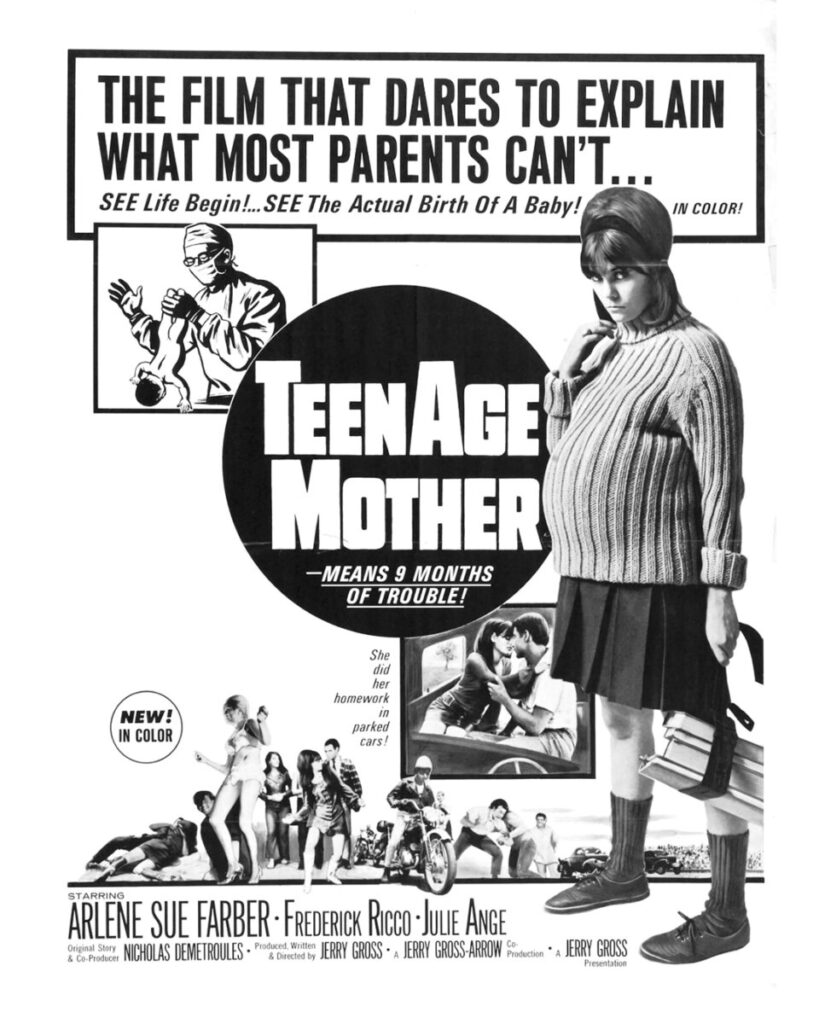
In the years before hardcore pornography became widely available, this sort of thing was absolute box office dynamite. Gross clearly wanted to show audiences something they’d never seen before, but the only legal way to put explicit childbirth footage on American cinema screens was to disguise it as public education, complete with a clumsy moral message. Whether he actually cared about educating anybody is another matter entirely. My suspicion is that he cared rather more about the queue forming outside the ticket booth.
That balancing act had become one of exploitation cinema’s oldest tricks. Producers had spent decades discovering that almost any taboo subject could make it onto cinema screens, provided somebody insisted the audience was there to learn something. Marijuana, venereal disease, prostitution, nudism, juvenile delinquency, interracial relationships and childbirth were all repackaged as worthy educational subjects while the posters outside promised “the shocking truth” or “the picture they don’t want you to see”. Everybody understood the arrangement. The censors got their moral lesson, the producers got their profits, and audiences got exactly what they’d paid for.
The existence of Teenage Mother is a reminder, not of a more innocent age in my opinion, but of a time when America was simultaneously fascinated by sex and terrified of talking about it openly. The film spends much of its running time pretending to be a cautionary tale, yet everybody involved knew perfectly well what audiences had really come to see.
Watching it now, it’s remarkable how much of its original shock value has disappeared. The medical footage that once inspired legal arguments about obscenity would barely register today after decades of documentaries, reality television and the internet. What remains fascinating isn’t the controversy itself but the ingenious lengths filmmakers once went to in order to sneak supposedly forbidden images past the censors. Seen from that perspective, Teenage Mother is arguably more interesting as a piece of American social history than it is as a movie.
Incidentally, according to IMDb, Gross paid a hospital just $50 for the childbirth footage.
The striking lead is actress Arlene Sue Farber, undoubtedly a grandmother by now, who, a few years later, appeared under the name Arlene Tyger in Gross’s fake Italian sexploitation outing Female Animal (which, God help me, I actually own the soundtrack to). The film also features an unexpected appearance from a very young Fred Willard as the gym teacher, years before anyone knew just how reliably funny he would become.
Like so many exploitation films, Teenage Mother isn’t really important because it’s a masterpiece. It’s important because it captures a very particular moment in American popular culture when entrepreneurial filmmakers realised that if they couldn’t beat the censors, they could outsmart them. Jerry Gross wasn’t interested in changing the world. He just recognised that controversy sold tickets, and few people understood that simple truth better than he did.