


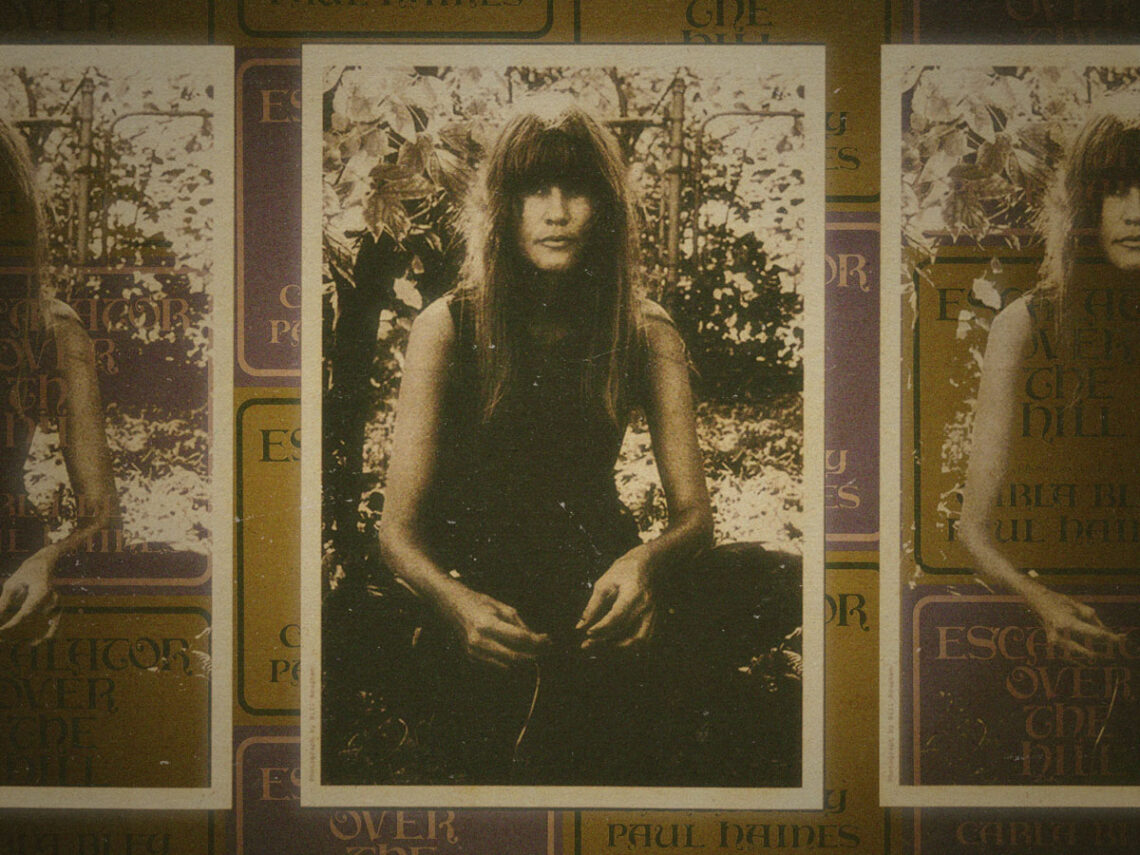
‘Escalator over the Hill’: The baffling jazz odyssey of Carla Bley and Paul Haines
Jazz obsessives really don’t make it easy on themselves, do they?
Yeah, turns out Howard Moon wasn’t actually that much of a parody of the self-important pretentiousness of your average jazz snob. To be clear, the genre and people who play the music are absolutely not the problem most of the time. The likes of Jo Jones lobbing cymbals at a teenage Charlie Parker can get fucked, but you never want to discourage people from making great art, and though it’s not entirely to my taste, great jazz is great art.
Jesus Christ alive, though, if they don’t talk about it in ways that make you want to roll your eyes straight out of your skull. Maybe I just don’t get it, but that’s what it feels like to me. Y’know what isn’t a great thing to combine the world of experimental jazz with if you’re already a little put off by high-minded art terms? Opera. Two great tastes that taste great together indeed, and in the form of Escalator over the Hill, you get the very best of both worlds. Or perhaps that should be most.
I say most rather than worst because, for all my sneering about something I fundamentally don’t get, Escalator over the Hill is one of the most celebrated examples of avant-garde jazz ever made. Take that for all in all. A massive, sprawling achievement that, all joking aside, does deserve respect for its sheer scale. This is an album built for a full orchestra, then the absolute best jazz players of the early 1970s, and some of the leading lights of rock ‘n’ roll at the time. Seemingly all playing at a totally different kind of music each at the same time.
It’s truly an impressive achievement. Then you realise that, according to its creators, it’s not an album, it’s a “chronotransduction“. For fuck’s sake.
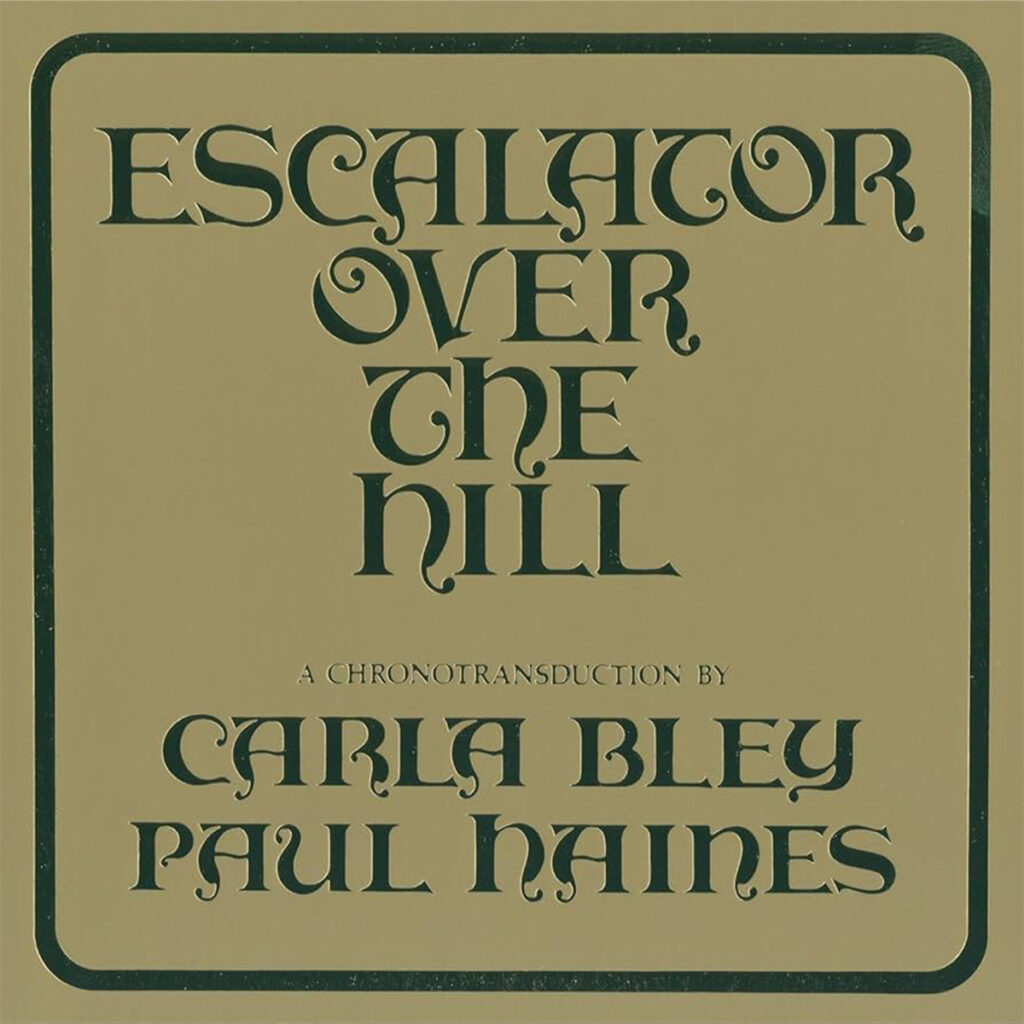
How did this jazz Odyssey get made?
Carla Bley was one of the great avant-garde jazz composers of the 1960s and one of the few women to reach that level of acclaim in a famously misogynist industry. After a chance meeting with poet Paul Haines, they decided to combine their talents on a project that would encompass the furthest reaches of both their mediums. Finding out just what sounds you can still call jazz and just what stories you can tell via poetry.
The team they assmbled to make it is still an absurd achievement to this day. Leading the piece is Jack Bruce and Linda Ronstadt, alongside Bley herself as one of the principal roles. As for who they play, your guess is just as good as mine. Bruce plays the character of ‘Jack’ and ‘Parrot’, Ronstadt is ‘Ginger’, and Bley takes on multiple roles as ‘Mutant’, ‘Leader’, ‘Voice’ and ‘Beggar Woman’. However, considering that no one can even work out the basics of what story is being told here, if any, then those character names aren’t really of any use.
That just scratches the surface of the personnel involved with Escalator over the Hill. Seriously, this record reads less like a music album and more like a Hollywood motion picture, with multiple orchestras and rock bands playing every kind of music you can think of. All the while a completely separate army of vocalists holler Haines’ bonkers poetry over the top of it. Multiply all this by over an hour and a half (even more if you count the endless groove at the end of the record, making sure that the record literally never stops), and you’ve got one of the most ambitious, eclectic and exciting jazz records ever made.
Just don’t ask what the thing’s actually about. Most people won’t know, and those who do will be insufferable about it.