


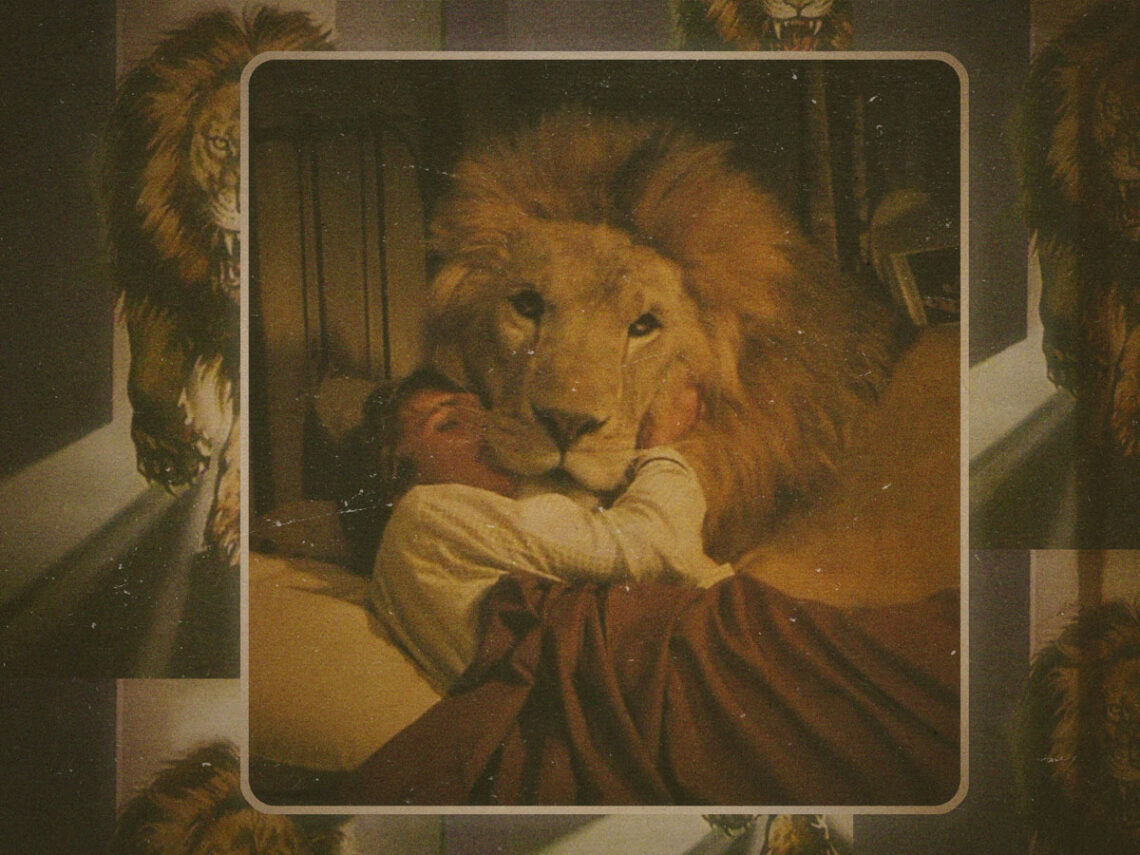
‘Roar’: How to nearly kill your family by making a movie
In the often weird, occasionally wonderful and sometimes horrifying world of Hollywood, there exists the concept of the blank cheque. These are pictures made by a successful movie-maker that may not be the most commercial options, but those filmmakers are so respected that they can even get a crazy passion project green-lit, like with Roar.
Sometimes those cheques clear, like with Sinners, Blade Runner 2049, and Inception. However, more often they bounce like with One From The Heart, Kingdom of Heaven, and Mickey 17.
The vast majority of the time, it’s either actors or directors who get a blank cheque. But in 1973, producer Noel Marshall felt like he had the right to make his dream movie following the success of The Exorcist.
The Exorcist, adjusted for inflation, is still in the top ten highest-grossing movies of all time, which explains how the utterly insane passion project from Marshall got off the ground. It derived from a script he’d been writing with his wife, actress Tippi Hedren, since 1970, which had the working title Lions, Lions and More Lions.
The story goes that Hedren had been working on a movie in Zimbabwe the year before, and the whole family had moved out with her for the shoot.
While they were in the country, Hedren and Marshall had spotted a game Warren’s house overrun with lions. The whole family loved big cats, so the couple got to work on a script that their clan could be a part of. It was a nice little family project, and that’s probably all it should have been. However, after The Exorcist made Marshall extremely rich and opened a lot of doors that were otherwise extremely locked, he thought, “Fuck it, it’ll be fun”.
Reader, fun was the very last thing that making this move was for anyone involved.
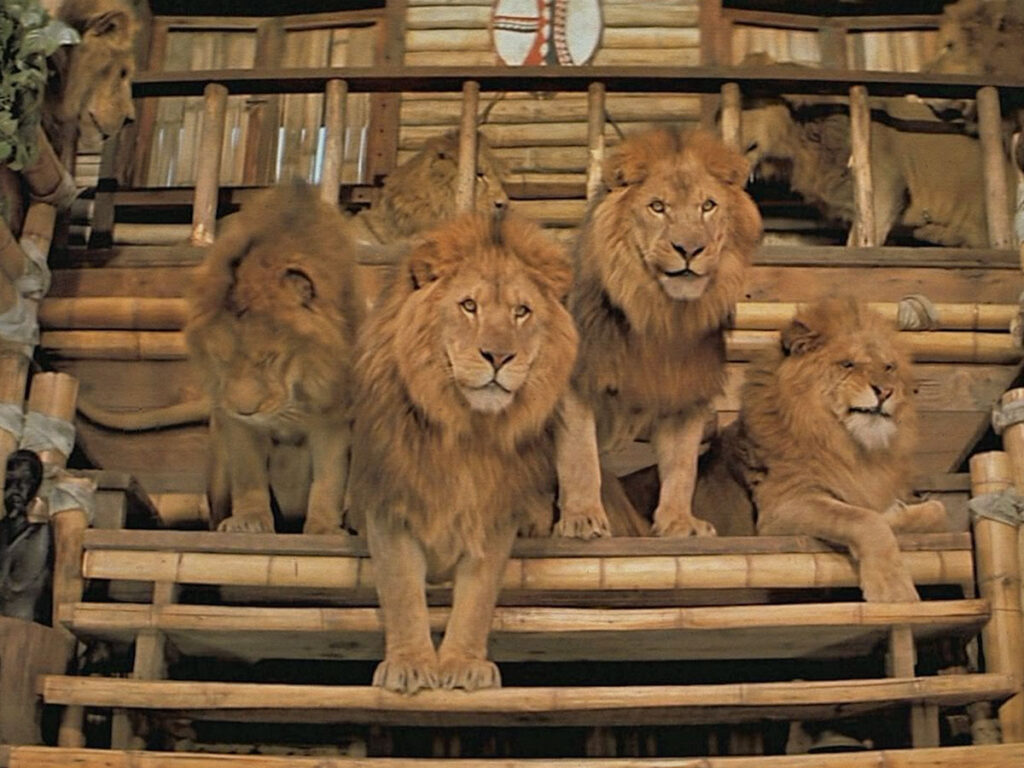
What went wrong in the making of Roar?
The core idea of Roar was a naturalist who lives on a nature reserve that is overrun with lions, tigers, and other big cats. His family come to visit, and wackiness ensues. To his credit, it’s probably a decent story for an animated film. However, an animated film wasn’t enough for Marshall; this was to be a live-action picture. After all, Marshall was married to a star who could carry a film with her name alone.
Sadly, that was the last convenient thing in the history of the production. Because then, Marshall needed a male lead. After Jack Nicholson declined, Marshall decided to act for the first time in his life and become the star of a major Hollywood motion picture. Then came the big inconvenience. Roar called for big cats. Lots of ’em. Due to the fact that this film was produced outside the mainstream studios, funded mainly by Marshall himself, he decided to house the big cats used on the production at his own house.
From 1976 to 1979, Marshal’s own house was colonised by the 132 lions, tigers, leopards, cougars and jaguars used in the film. Absolutely none of which were tame and pretty much everyone who shared a set with them, from cast to crew, got bit. This caused the budget to balloon due to the sheer amount of hospital bills the shoot generated.
It wasn’t even just the big cats, either. Hedren herself, adding to the catalogue of injuries she got during the shoot, had her ankle broken so badly by an elephant that the wound became gangrenous and she nearly lost her leg. Marshall and Hedren’s children were all in the film, suffering horrific injuries as a result. Their daughter, Melanie Griffith, nearly lost an eye to a lioness. It wasn’t just the on-screen cast that got hurt, either; the picture’s cinematographer, Jan De Bont, was scalped by a lion, a wound that needed 220 stitches to heal.
It took the family three years, but eventually, the shoot of Roar was finished, and every member of the family had the literal scars to prove it. After another two years of post-production, the film was finally released 11 years after Marshall and Hedren had conceived of the idea. After all, if the film was a hit, then the whole process would have been worth it, right? Wrong.
The film cratered. Roar was a genuine, bona-fide box office catastrophe that barely made back a tenth of its budget.