


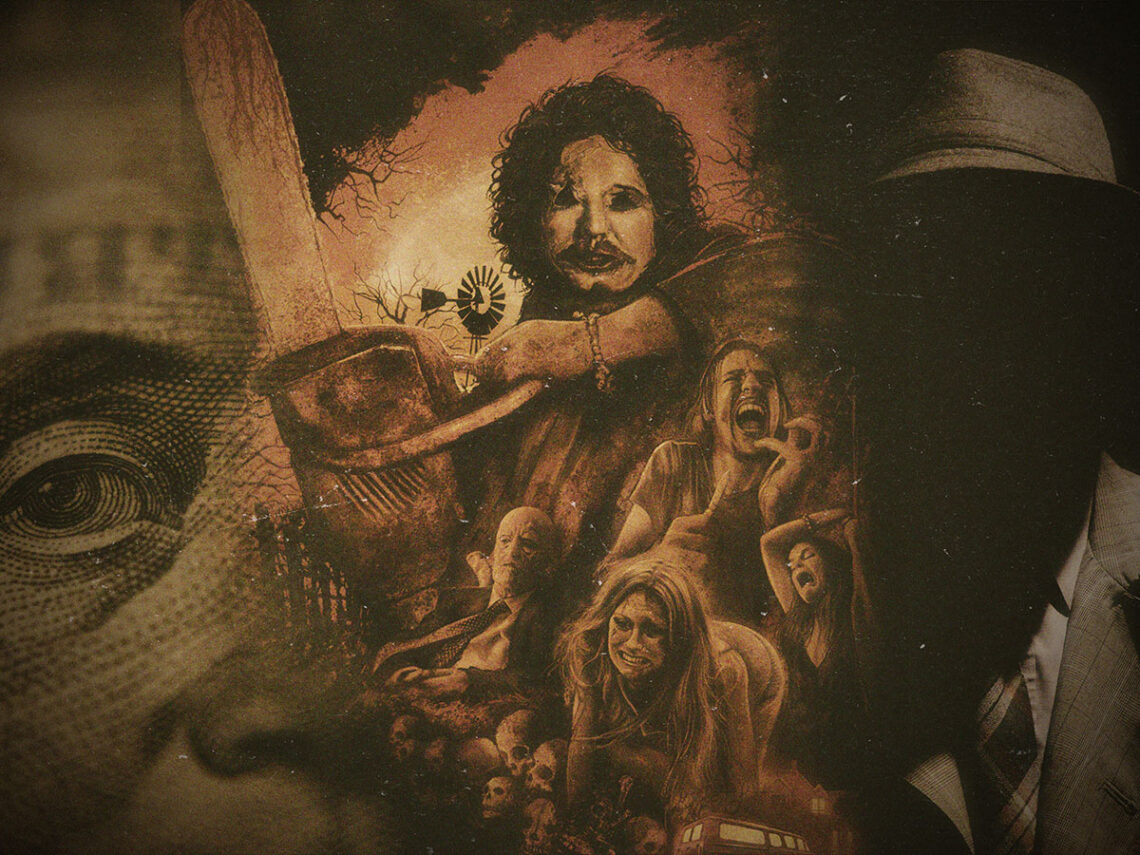
Was 1974’s ‘The Texas Chainsaw Massacre’ funded by the mafia?
Many people who don’t like horror say that they don’t like the gore of horror and prefer films that have “atmosphere” and “tension”. One wonders what they’d think if they ever took the chance to watch one of the ultimate examples of atmosphere and tension in horror films, Tobe Hooper’s 1974 masterpiece The Texas Chainsaw Massacre.
It sounds ludicrous, but it’s true. Texas Chainsaw isn’t a brainless exercise in meaningless gore like Terrifier or even (and I do apologise to a certain section of our audience for this) the entire Friday the 13th series. Barring a fairly graphic opening, one that even then doesn’t have any blood or killing in it, the most blood you actually see on screen comes from a cut on Marilyn Burns’s finger. That’s not even to say that horrifyingly brutal things don’t happen in the film, but you never see them outright on screen. Everything is done with suggestion, sound effects, and that word again, atmosphere.
Now, a major part of this came from the artistry at work. Tobe Hooper is a spectacular horror director. Someone who, unfortunately, never really got the chance to show off the full extent of his skills with his later work. However, the other side of the coin is that fundamentally, gore costs money. The Texas Chainsaw Massacre was made for 20 cents and a tub of Pringles. Or more accurately, around a hundred grand, depending on who you listen to. Peanuts for any kind of motion picture, so something had to give.
Compare that to the first Friday the 13th, which came six years later, which had incredible gore effects designed by Tom Savini. That’s a film that cost five times more than the original Texas Chainsaw Massacre.
What’s more, as the decades went on, it became clear that the source of the money put towards distributing The Texas Chainsaw Massacre was so dodgy that Hooper and chums would have probably preferred to go a few rounds with Leatherface himself than tell their backers they needed more cash.
After the filming was complete, Hooper was having trouble shopping the film around to studios. Each of which told him that the film was “too gory” (it wasn’t, it just felt that way) and “too disturbing” for mainstream tastes (fair fucks to ’em, that’s bang on the money).
Out of options, Hooper took the film to more salubrious studios, including the Bryanston Distribution Company. The BDC had made their millions off the back of distributing the hit Deep Throat, but that wasn’t why the company was so dodgy.
No, that came from the fact that the company’s founder, Louis Peraino, had founded the company with money earned from the family business. What was his family business? The Colombo Crime Family. A legitimate mafia outfit. Perhaps it shouldn’t have been much of a surprise, then, when the company stiffed them on royalties after the film was a surprised box office hit. Leaving Hooper to pay the 20-strong crew who made the film around $400 each.
Hooper, being a courageous guy, took the company (made up of mafiosos, mind you) to court, where they were ordered to pay the cast and crew of Texas Chainsaw half a million dollars to make up for the shortfall. However, the company conveniently folded before the case could finish. Thus, it wasn’t until the rights to the horror classic were bought by New Line Cinema in 1983 that the actual cast and crew were paid for making one of the greatest horror films of all time.