


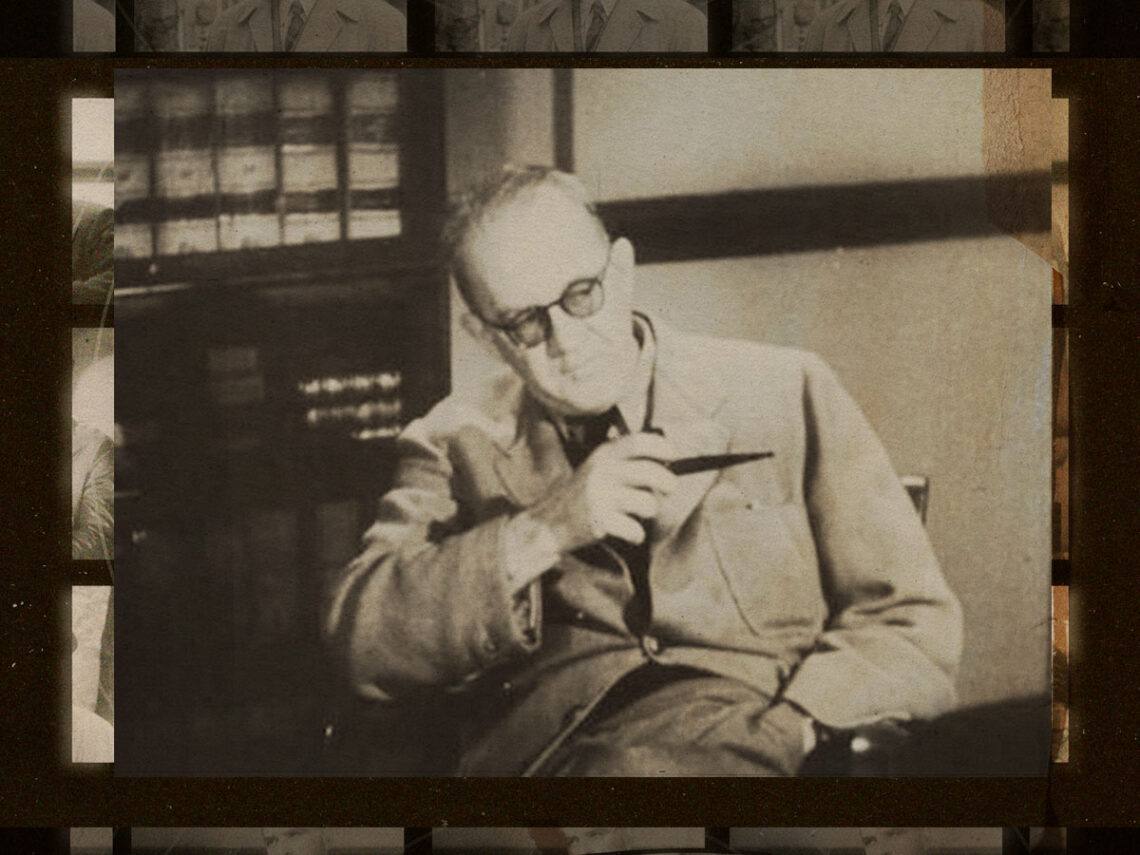
‘Undercover’ with John Ford: the instructional film that gives tips for WWII spies behind enemy lines
“The main thing about directing is: photograph the people’s eyes” – John Ford
During World War II, John Ford worked as chief of the Field Photographic Branch of the OSS, the intelligence agency that preceded the CIA.
When he went on active duty, Ford had already directed 1941’s Sex Hygiene, an Army training film with tips for avoiding the clap and the syph on R&R leave: “I looked at it and threw up,” was the review Ford later gave Peter Bogdanovich.
To this, Lt Commander John Ford added the Oscar-winning documentaries The Battle of Midway and December 7th. Bogdanovich writes that, after the war, Ford’s group began work on a seven or eight-hour film that was to have been used as evidence at the Nuremberg Trials. In the end, the task fell to Budd Schulberg, also a member of the Field Photographic Branch, whose The Nazi Plan was entered into evidence at Nuremberg.
Some of Ford’s wartime movies were exclusively for OSS consumption, such as 1943’s How to Operate Behind Enemy Lines, also known as Undercover, an instructional film about how to be a spy. Like most movies of its kind, it teaches by illustrating dos and dont’s—Ford appears in the only speaking role of his career as the pipe-smoking case officer assigned to the “don’t” agent—and lays heavy emphasis on a single lesson, here the supreme importance of maintaining a believable cover story.
“I like, as a director and a spectator, simple, direct, frank films,” Ford once said, which is certainly on show here. “Nothing disgusts me more than snobbism, mannerism, technical gratuity… and, most of all, intellectualism”.
Agonising sequences depict spies blowing their cover through inattention to detail: anything from paying the bar tab with bills no longer in circulation to using “hair grease” they can’t get in Enemytown since hostilities began.
Undercover is as stark and stiff as a Navy cot, and that’s precisely its charm. There’s no flair, no fat, no attempt at drama—just Ford’s no-nonsense vision of what happens when a spy forgets to cut the buttons off his coat or lights a cigarette the wrong way. The film plays like a paranoid instructional sermon: one false move and you’re dead, or worse, you’ve compromised the mission. The acting is wooden, the direction cold, and the message loud and clear. Ford wasn’t trying to entertain anyone here, he was trying to drill fear into your skull. It’s more clinical than cinematic, but that’s what makes it so fascinating. It’s Ford, stripped of all sentiment, pointing a camera at the war and saying: Don’t fuck this up.
Undercover is available to stream online today, but the dialogue sounds like it was recorded with a Kleenex stretched over one end of an empty cookie dough tube, as if all the Allies’ microphones had been melted down for the war effort. The YouTube version embedded below is much easier to follow. If I owned a movie house, I’d program this with the short Don’t Kill Your Friends, a contemporary US Navy training film starring my own grandfather as an inept pilot who offs civilians during aerial gunnery practice.
“I love making pictures but I don’t like talking about them,” Ford once famously said. So with that, you can watch Undercover below… for free.