


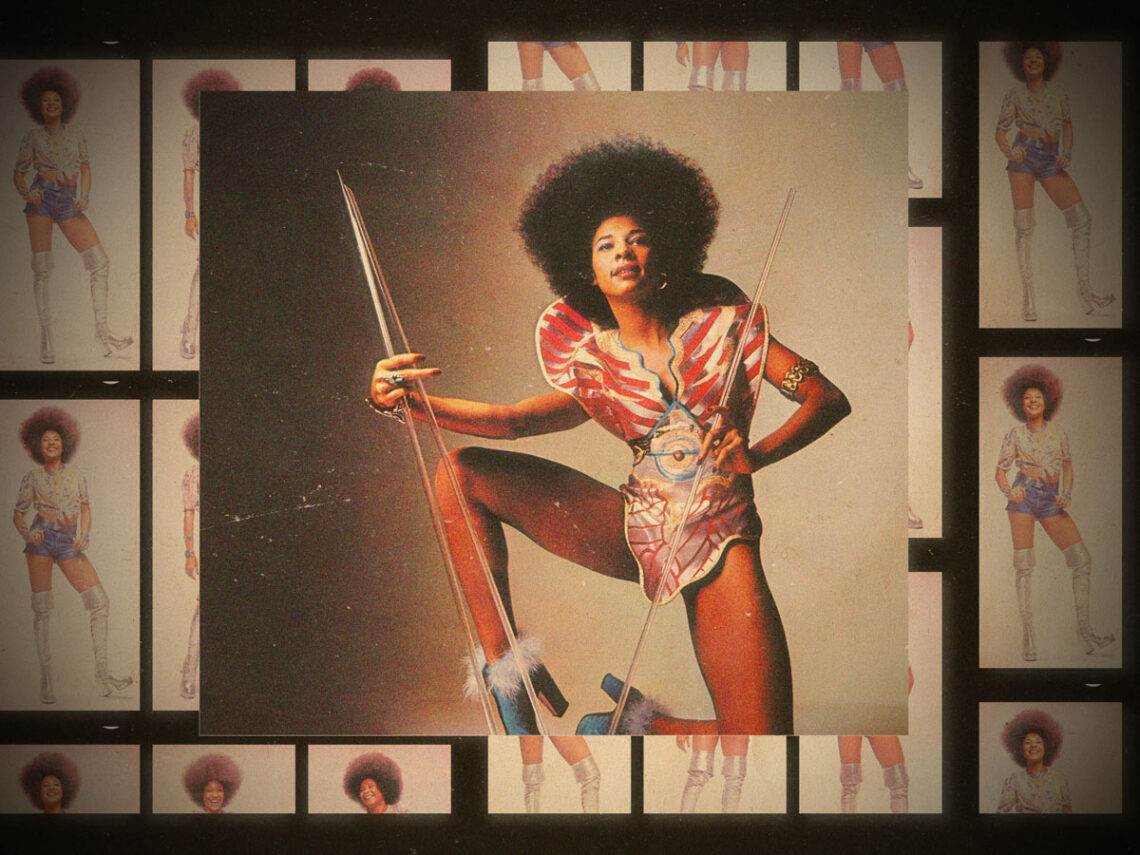
‘Stars Starve, You Know’: Funk priestess Betty Davis calls out her record company in 1976
By the mid-1970s, Betty Davis had released three groundbreaking albums of sexually frank, hard funk, but with little to show for it.
She had great, cutting-edge material, and her concerts wowed audiences and generated controversy, but none of this translated into record sales. Her detractors, though, including the NAACP, felt she was too provocative or outrageous.
After two albums for an independent label, Davis was courted and signed by a major, Island Records, but after the failure of her Island debut, Nasty Gal (1975), the suits were now also pressuring her to change. It was in this environment that Betty wrote what is perhaps her most personal song, one that outlines her plight as a famous, yet struggling, artist. It’s a tune that, for decades, few had heard.
In the summer of 1976, Betty Davis travelled to the rural city of Bogalusa, Louisiana, to record album number four at Studio in the Country. At the state-of-the-art facility, located out in the woods and free of the usual distractions, Betty went to work.
With her core backing band, Funk House, and Davis in the producer’s chair, they went about getting Betty’s new songs down to tape. Among those tracks was the highly autobiographical, ‘Stars Starve, You Know’.
Though she often sang about her life and career in song, ‘Stars Starve, You Know’ was different. Seeming to put all of her frustrations into a single, furiously funky number, Betty sang about the demands placed upon her to change, to tone down her act, to sell out, to no longer be herself.
“They said if I wanted to make some money
I’d have to change my style
Put a paper bag over my face
Sing soft and wear tight fitting gowns
They don’t like the way I’m lookin’
So it’s hard for my agent to get me bookin’s
Unless I cover up my legs and drop my pen
And commit one of those commercial sins”.
At numerous points, she calls out her record company by name.
“I said go on and be yourself man
Because I sure can’t be mine
I said
Ain’t no business like show business
I said
Tell me can you spare a dime
I’m hungry
Ah hey hey Island”.
While a serious, real song about the perils of the music industry, Betty injects humour into it, and there’s a playfulness in her delivery.
Though an album was completed and mixed by the end of summer ’76, the tapes were shelved. It’s unclear why, though Betty later said it was due to an unrelated dispute with the head of Island, Chris Blackwell. Undoubtedly contributing to the label’s decision was ‘Stars Starve, You Know’, which they surely weren’t happy with, nor could they have been pleased with the rest of the material, which was as uncompromising as ever.
Some 30-plus years later, the album was released as Is It Love or Desire (2009).
Following the Bogalusa sessions, Betty Davis was dropped from her label. She would soon go across the pond to London, where she continued to struggle. By the early 1980s, she had left her music career behind, staying out of the public eye.
And just like that, Betty Davis vanished—poof—like a glitter bomb in reverse. One minute, she was too raw, too Black, too female, too loud, too everything for the suits and gatekeepers. The next, she was gone, with nothing but rumours, rare vinyl, and secondhand memories of sweat-soaked shows. What they couldn’t market, they buried. But you can’t kill the truth, and Betty’s voice—feral, funny, fearless—still rips through the speakers like a flare gun in the dark. She warned us. Stars starve, you know. And still, she never begged for a seat at their table. She flipped it over instead.