


The bizarre world of unblack metal
Just because you’re Christian doesn’t automatically mean your music sucks – this may be a controversial opinion in some circles, but to me, it’s true.
Who’s going to argue with the work of Nick Cave, Kendrick Lamar, Kacey Musgraves, Nina Simone and the thousands of other incredible musicians whose work is informed by their faith… Even the most devoted religious folks can have complicated relationships with their faith, and reckoning with that can make for incredible art – it’s the moment that your music becomes about spreading the word of God that suddenly, everything starts to fall apart.
There’s no better example of this than the spectacularly cringe world of Christian rock. It’s a simple enough formula. You take all the most pompous aspects of modern rock music, remove all the edge and replace it with limp proselytising about just how rad Jesus is. Then you stick your mate Travis up front and have him grunt into the mic to show how “hardcore” you are, just before you lead the audience in a group prayer before the circle pits open up.
Fittingly, it’s truly God-awful and yet somehow, this urge to turn every ounce of counter culture into the very thing that enforces mainstream culture gets its tendrils into everything we love. Surely there must be a few things holding out against it, right? I mean, take black metal, for instance. A genre of music completely built around offending as many Christians as humanly possible? That has legions of dyed-in-the-wool Satanists creating a literally Ungodly noise as a celebration of independent thinking and spirit? Surely, they can’t take that from us, right?
My friends, welcome to the truly baffling world of unblack metal.
What on earth is unblack metal?!
Honestly, it’s exactly what it sounds like – this is despite the fact that part of the entire point of black metal was creating art that was explicitly anti-Christian, to the extent that the genre was arguably named after Darkthrone, calling their music “unholy black metal”… Clearly, enough Christian people heard the music and thought, “I like the screaming and the riffs and the blastbeats, but I will not stand for this slander of Christ and his followers!”
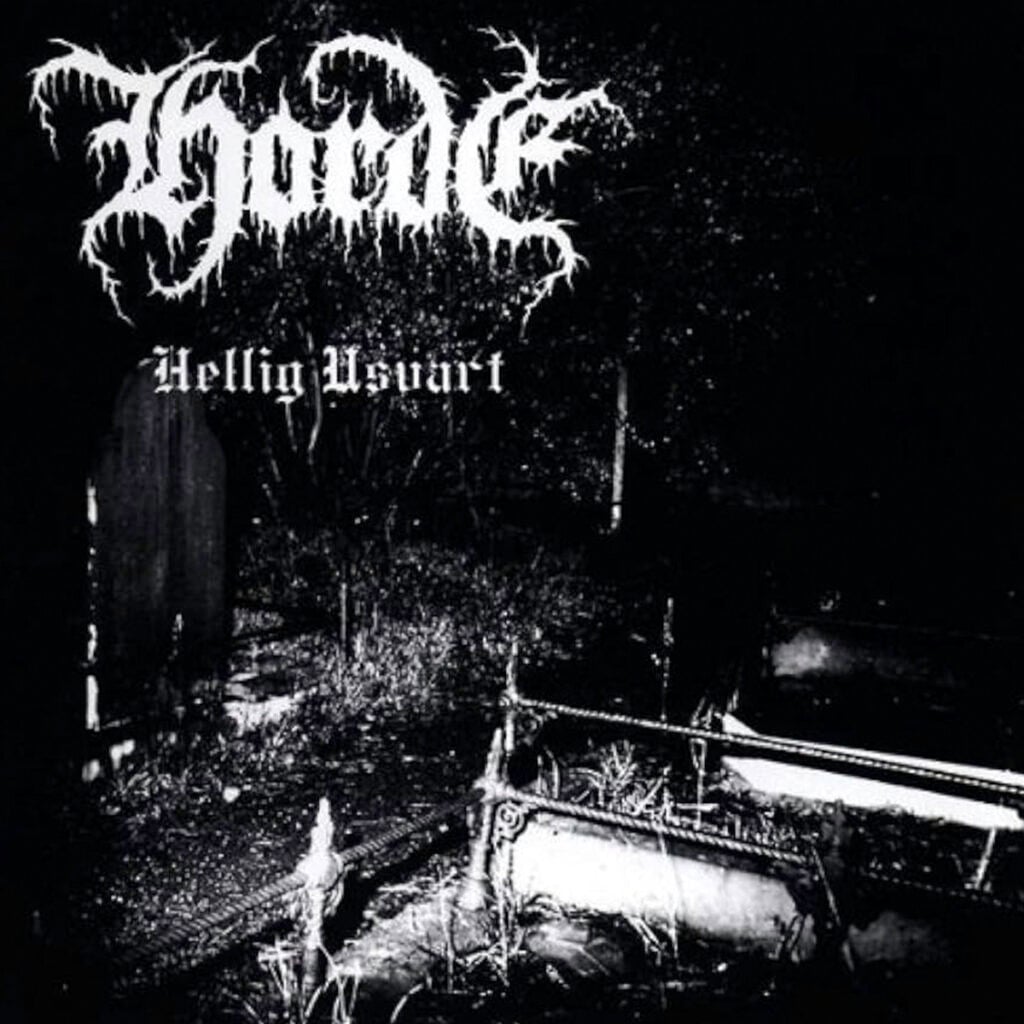
At the very least, they knew to stay away from the first name pitched for this movement – the American doom metal band Trouble released their explicitly Christian-themed album Psalm 9, and their label, in response to Venom and Bathory’s “black metal”, wanted to brand the Trouble album as “white metal”. This was dismissed out of hand. It wasn’t really until 1994, when the Australian band Horde signed to Nuclear Blast Records and released the explicitly Christian Hellig Usvart, that the movement finally got the name unblack metal.
Needless to say, this release went down so badly among Nuclear Blast’s fan base that the label had to keep the members of Horde anonymous due to the death threats they were receiving for releasing an album by a Christian rock band… Considering this was the 1990s black metal scene, they had reason to take those threats very, very seriously – Horde, however, became a relatively popular band as a result of signing to the label and has since been very influential.
Several explicitly Christian black metal bands have popped up in their wake, but only a few of them have ever taken to the term “unblack metal” with much enthusiasm. The likes of Kekal, Crimson Moonlight and Lengsel all prefer to refer to their music as simply ‘black metal’. Probably because that’s what it is. Much like Christian rock before it, if the faith that fuels the music is as important as the music, it’s probably not going to be all that good.