


Cult Act: Captain Beefheart and the disturbing story of ‘Trout Mask Replica’
In 2010, a real estate listing popped up for 95 Ensenada Drive, Woodland Hills, California. The listing described the bijou house, tucked away near the West Mulholland Trailhead, as “a charming Girard cabin with a famous rock ‘n’ roll history”.
To be fair to them, this isn’t inaccurate. However, it has a “famous rock ‘n’ roll history” the same way that Jonestown had a “famous powdered beverage history”.
So let’s talk about the album that was written there half a century ago. The soundtrack to the dying hippy dream and a sacred text to the likes of Tom Waits, David Lynch and Jack White. An album that, depending on who you ask, is either the most exciting avant-garde album of the 1960s, or 78 minutes and 51 seconds of unlistenable, ugly garbage. An album whose creative process involved the mental and physical torture of all who recorded it, at the hands of the guy whose name was on its cover.
Let’s talk about Captain Beefheart.
Don Van Vliet gives a whole new meaning to the term “cult act”. A childhood sculpting prodigy from Glendale, California, Vliet traded in the chisel for a microphone and began singing the blues at the insistence of his childhood friend, Frank Zappa. A friendship that, in hindsight, explains so much about both men. After releasing his first few albums of skewed, but relatively straightforward blues rock as Captain Beefheart, Vliet decided that being feted by the likes of John Peel and The Beatles just wasn’t enough for him, for he was… an artiste.
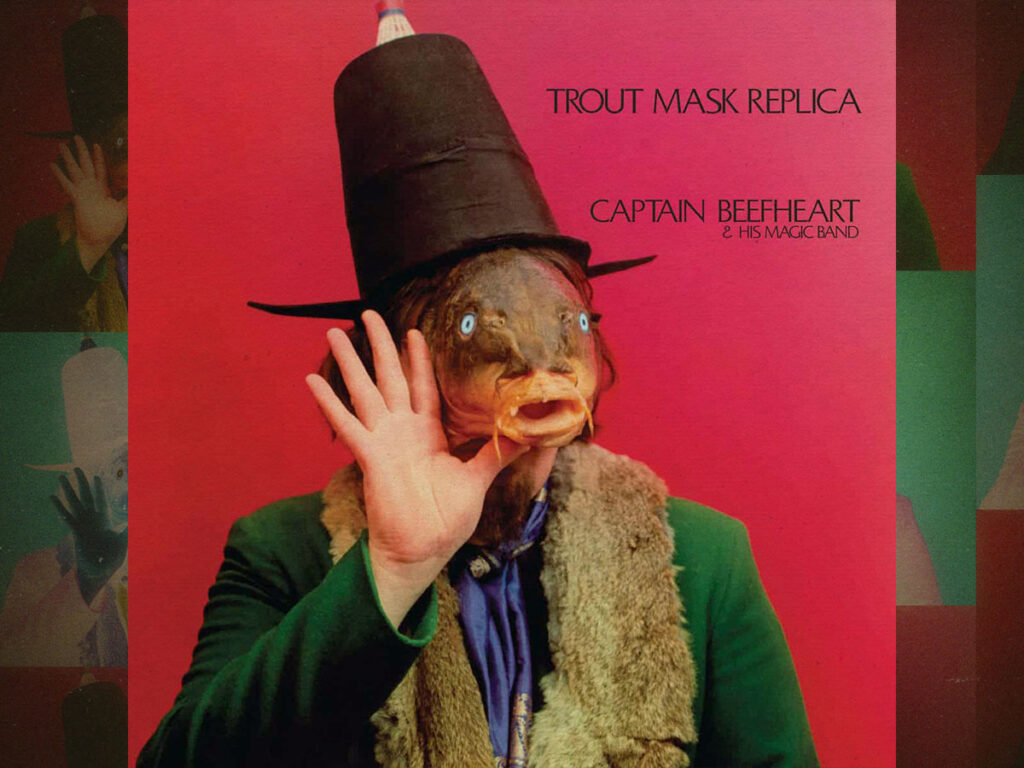
How did Captain Beefheart become an artiste?
Obviously, this meant he was also a bullying, abusive asshole to everyone he worked with, from his label to his band. To the extent that, according to some sources, an early collaborator of his got so sick of Vliet’s constant insults that he left the studio and came back brandishing a crossbow at his frontman’s head. Without even looking at him, with a loaded weapon pointed at his head, Vliet responded, “Get that fucking thing out of here, get out of here and get back in your room”. And that’s exactly what he did.
By 1969, all the members of what was now called Captain Beefheart and his Magic Band who were on Vliet’s musical level had been successfully chased out and replaced with new members who were talented, young, and most importantly, impressionable. Guitarist Bill Harkleroad and bassist Mark Boston were all of 19 years old when they joined the band in 1968, just in time for Vliet to begin planning his masterpiece, Trout Mask Replica.
And by planning, I mean deciding that it wasn’t enough to record the album, his band had to “live” the album. That humble cabin from earlier became much more than a studio, it would also become a communal living space for the band. Communal is a word doing a lot of heavy lifting there, as one of the two bedrooms was reserved for Captain Beefheart, and the other for the other five members of the Magic Band. This holistic attitude toward making the record continued with the arrangements.
Vliet’s songwriting process was to sit at a piano (an instrument he’d never played), and bash away at it for hours while forcing his drummer and right-hand man, John ‘Drumbo’ French, to transcribe his cacophonous nonsense to sheet music (something Vliet was never able to do in his entire working life as a musician). Once they were done, Drumbo would take these hastily scrawled notes, take them to the rest of the band, and they’d begin their marathon, 12 to 14-hour rehearsals, shaping them into songs.
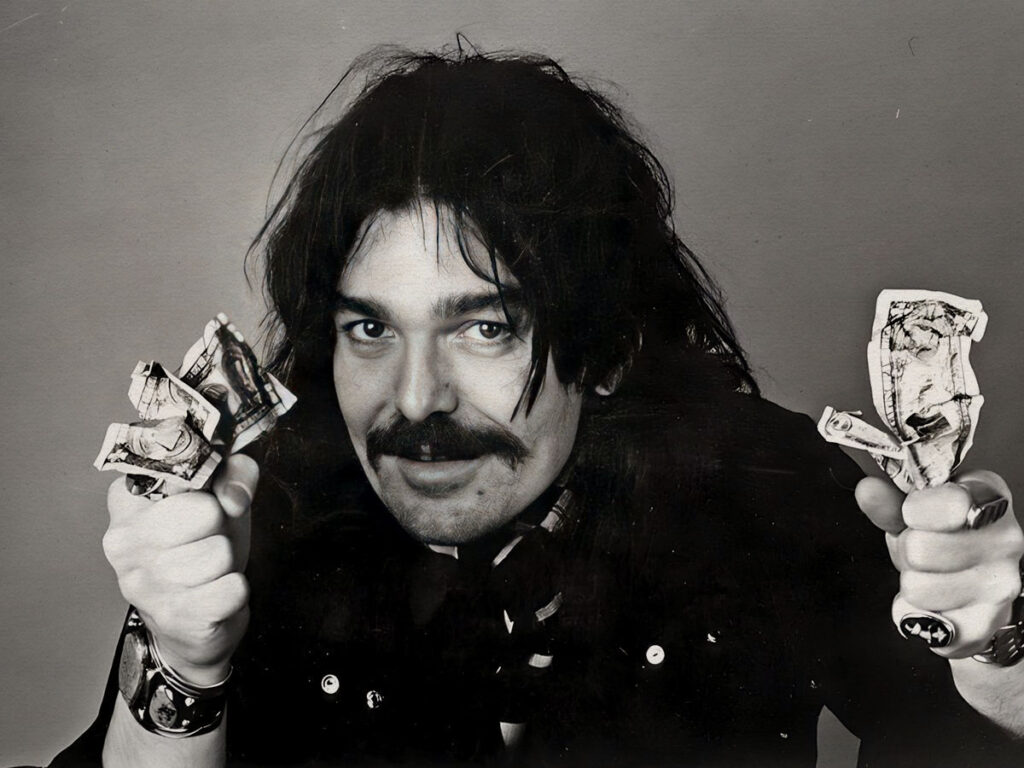
Could those sessions get worse?
These rehearsals would begin the moment they woke up in the morning, and wouldn’t end until they physically couldn’t play anymore. There were no breaks or rests for any reason whatsoever, chiefly because apart from a single trip a week to pick up their welfare checks and buy a few meagre groceries, the band were not allowed to leave the house under any circumstances. Drumbo himself talks about spending an entire month subsisting on a single cup of soy beans a day. One visitor to the house described the band as looking “cadaverous”.
Shockingly, it gets worse. The abuse Captain Beefheart put his band through got more and more intense as his control over his bandmates extended. The band members today talk about being put “in the barrel” if Vliet wasn’t happy with their work, which basically meant that he’d lock them in a closet and berate them verbally for days on end, until they broke down in tears or, more disturbingly, in total submission to Vliet’s demands.
These demands are best summed up by Drumbo, who said the final straw for his time in the band came after the recording was completed, when, during rehearsals for an upcoming tour, he wasn’t able to (in Vliet’s words) “play a strawberry”. Vliet responded to this insubordination by throwing Drumbo down a flight of stairs.
Because yes, Vliet’s abuse of his bandmates became violent with time. And in true cult leader fashion, it wasn’t just him attacking the band members, but also convincing the other members to attack the members that had displeased Vliet in some way. This process continued for six months before Vliet finally decided that the album had been written, and took them into the studio, where 20 of the album’s 28 tracks were recorded in a single six-hour session.
The rest, they say, is history.