


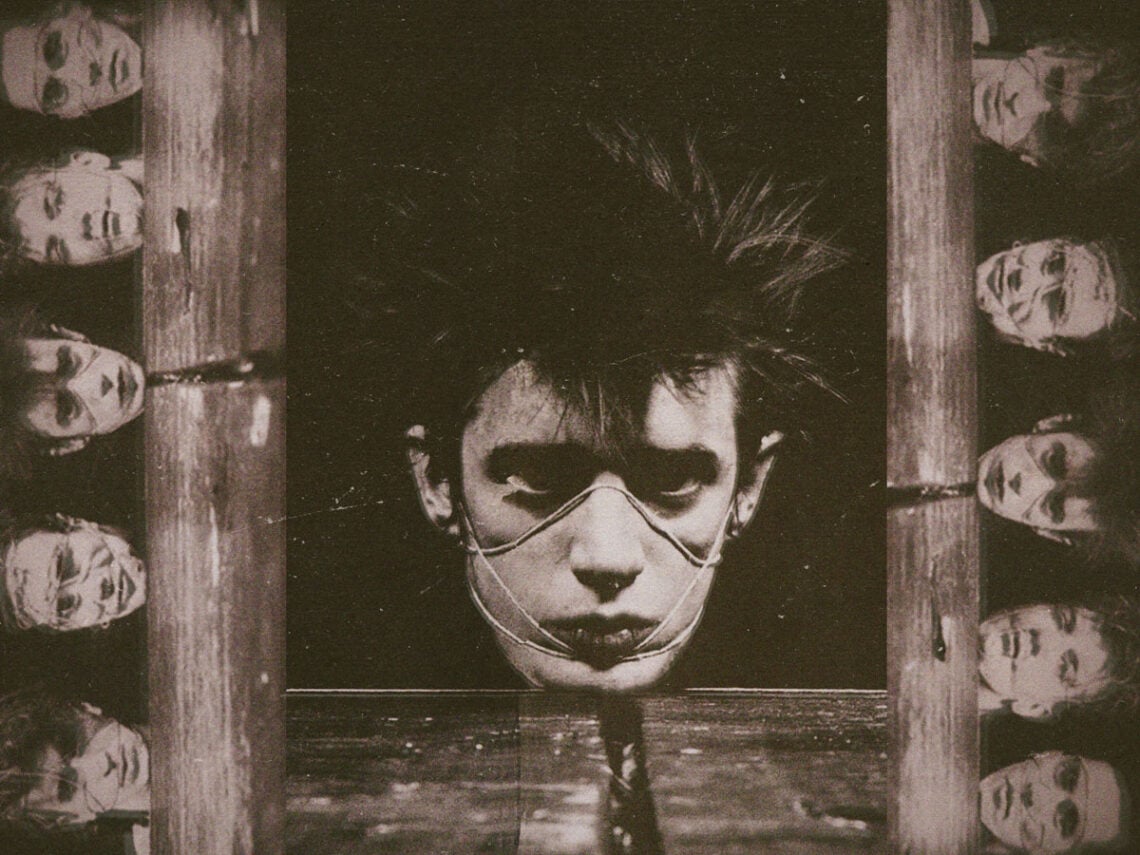
The chilling night that Einstürzende Neubauten performed in Nürnberg
From the moment they formed, Einstürzende Neubauten were reckoning with Germany‘s then-recent past.
After World War II, Germany understandably tried to put the past behind them. It was a highly fragmented attempt to soothe the national brow, considering the country was literally split into two sides. However, both East and West Germany were, essentially, trying to pretend that the atrocities committed mere decades ago, in many cases by the new generation’s parents, just didn’t happen. That was some other Germany in some other time, and now everything was different.
West Germany busied itself in immersing itself in watered down western pop culture and making bucketloads of money thanks to the so-called “economic miracle” of the 1950s. East Germany just threw up its hands and acted like getting rid of capitalism also got rid of fascism and thus, resolved itself of any wrongdoing in the war. Culturally, the Eastern Bloc also pumped out easygoing, culturally omnipresent ‘Schlager Music‘ as a way of “protecting itself” from the influence of the West.
It took the generation growing up in all this unresolved trauma to look at both sides of this fractured Germany and say, “Both of you are wrong, and everything is fucked”.
Einstürzende Neubauten came in slightly after this movement began in earnest. The first group of young people to really begin this movement in earnest was the student protest group known as the 68ers, along with early krautrock bands like Can and Tangerine Dream. Blixa Bargeld grew up inspired by bands like these; however, he feuded with the naive student protests of the 68ers with the same disgust that punks viewed hippies with and decided that the music he’d made would be decidedly more shocking and visceral.
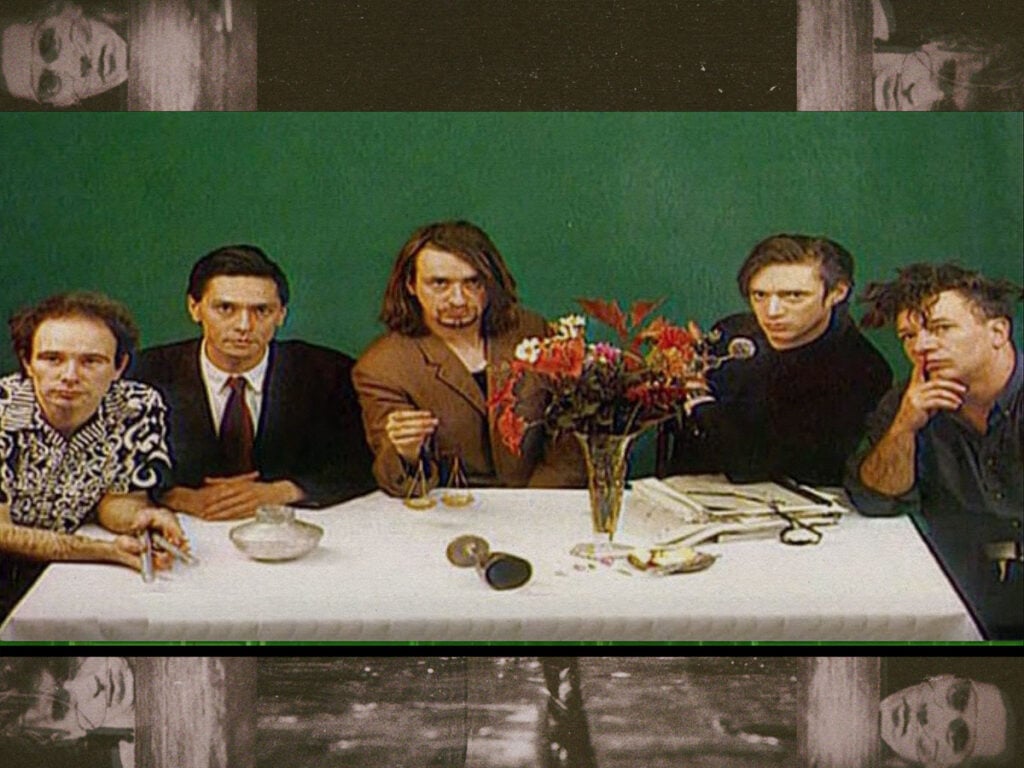
Thus, Einstürzende Neubauten were born in 1980 and struck an almighty chord with young people of both Bargeld’s generation and the one coming of age in the early 1980s. Four decades after the end of World War II, German culture was finally beginning to reckon with the unconscionable acts of its past. So, the Pedagogical Institute of Nürnberg asked them to perform two concerts at the Zeppelinfeld Tribune, the site of hundreds of Nazi rallies still in the living memory of millions of Germans.
However, in typical Bargeld fashion, when he’s asked by a German news reporter whether this is a way of excising the horrific scenes of the past from the site, he’s evasive. He explains that to act like he’s exorcising the place with the music of his band is to play into the same faux-mysticism that plagued the place four decades ago, yet neither is he there to desecrate it. The right to desecrate the place, in his mind, lies not with him and his generation, but with the people who saw it in its original purpose.
That’s not to say that the band played there simply for provocation, however. He says that the band took the gig as a way of standing against the very thesis for which the place was built. To fight against the idea that any one person is inherently more valuable than anyone else, something true to the very core of Einstürzende Neubauten as a band.
Something that can be read in their very name, which roughly translates to English as “collapsing new buildings”. At the time they formed, the culture rising in Germany still retained the core of Germanic supremacy that had caused such death and destruction during the war. All the culture of Bargeld’s childhood was doing was framing that period of time as “Not real Germany” and this new stuff as “real Germany”. Bargeld and Einstürzende Neubauten as a whole stood for the truth.
They stood for the simple fact that all humans are capable of good and evil. They played in a site literally worshipped by Nazis, not to show that “real Germany” had won and vanquished the impostors, but that Germany could stand for something evil at one point, but then all that rhetoric could fall. All those buildings could collapse. And something beautiful can always rise in its wake.