


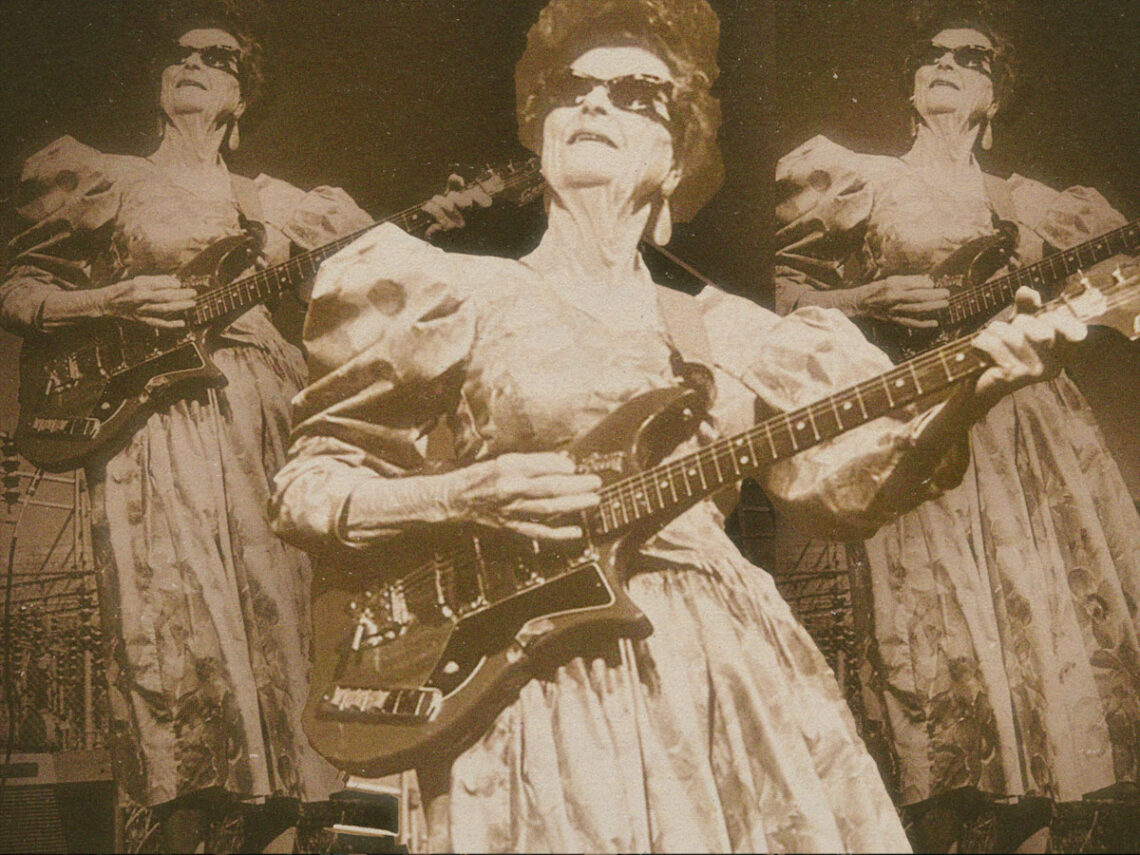
Cordell Jackson: the lost godmother of 1950s rock ‘n’ roll
The vast, vast majority of people who are credited with “inventing” rock ‘n’ roll are getting credit for something they don’t deserve. For Cordell Jackson, however, the conversation becomes a little more complicated.
Because no one can “invent” a genre of music the way you can “invent” anything else. It’s a movement, not a moment. Are the people who played country music and blues music responsible for it? After all, the genre wouldn’t have been made without their work. It would make sense to credit the people who first tried to combine those existing styles of music as the inventors, but does it count if they were clearly just trying to combine two fads to make a buck? Surely the people who popularised it, who did it well enough to justify it being an actual genre, have just as much claim to inventing it?
All very convincing arguments, yet anyone you could put in that conversation has something that Jackson doesn’t. A (quite literal) track record to make an argument off. Everything we know about the Pontotoc, Mississippi native is that, in terms of art, she might have been making rock ‘n’ roll music when Elvis Presley was literally one year old. Jackson was born Cordell Miller in July 1923 to a musical family. Her father led a string band called the Pontotoc Ridge Runners, and Cordell took right up after him at a very early age.
Starting out by sitting in with her father’s band on banjo and piano, and keeping up with the group despite being a literal child. However, her calling came when her father’s band acquired a very new piece of technology, an electric guitar. Cordell took to the instrument right away, despite her bandmates (which included her father, might I add) telling her that “little girls don’t play guitar”. Marvellously, she recalled looking them in the eye and telling them, “I do.”
That seemed to be enough to convince them, and according to her, playing the guitar in her father’s string band made her, essentially, invent rock guitar. She had to turn her amp up loud and play just as hard to be heard at the rowdy dive bars they’d play at, but soon enough, it was no longer enough to simply play in the band. She wanted to make her own music and, after graduating from high school in 1943 and settling down with her husband William Jackson in Memphis, Tennessee shortly afterwards.
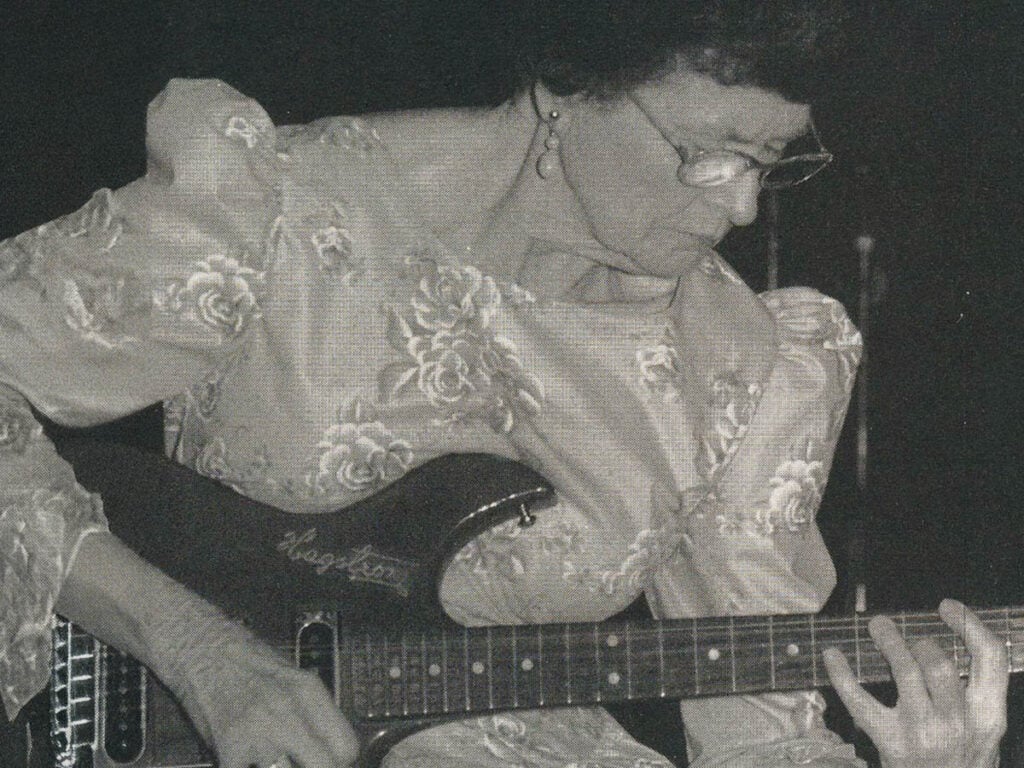
A brilliant story, but one that takes a sad turn after this. Jackson wanted to make her own music and made friends with a budding producer named Sam Phillips, who actually recorded a few demos with Jackson as she started out. These demos and the skill with which they were recorded help Phillips set up Sun Records. However, despite the fact that he quite literally wouldn’t have set up that label without her help, he flatly refused to offer Jackson a record deal on account of her gender.
It’s one hell of a what might have been. What if Phillips, with all his connections, skill and cunning, had realised what he got and made Jackson an early star of Sun Records? What if one of rock ‘n’ roll’s earliest players was a woman as talented and driven as she was? We’ll never know, and because of that, we’ll never know if she’s truly one of the earliest rock ‘n’ roll musicians as a direct result. Two kinds of legacy, snuffed out because of basic misogyny.
Jackson, obviously, didn’t need anyone’s permission to make music. She started her own label, the spitefully named Moon Records and quite possibly became the first woman to own her own independent record label. She didn’t see any real success, however, until the 1980s, when her story was picked up by the new wave and punk bands of the era. She started playing live and made a name for herself as a cult act. An appearance in a beer commercial (ironic for the lifelong teetotaller) with fellow rockabilly icon Brian Setzer briefly made her a celebrity, but the money and fame were never what she was doing all this for.
She was doing this for the joy of it. Thus, it looks like it’s only losers like me who care about what might have been. To a badass like Cordell Jackson? What matters is what you do.