


Delia Derbyshire: the radical genius who built electronic music by hand
To many people, Delia Derbyshire is most famous for the Doctor Who theme tune. Although she did not actually compose the music, it was her arrangement of the piece that made it one of the most instantly recognisable TV theme tunes of all time.
Derbyshire was the kind of person the history books usually forget…until they can’t anymore. She was born in the industrial wreckage of wartime Coventry, a city flattened by bombs, which feels weirdly appropriate. At school she was brilliant at math, physics, and music and applied to study sound at Decca, only to be told flat-out they didn’t hire women.
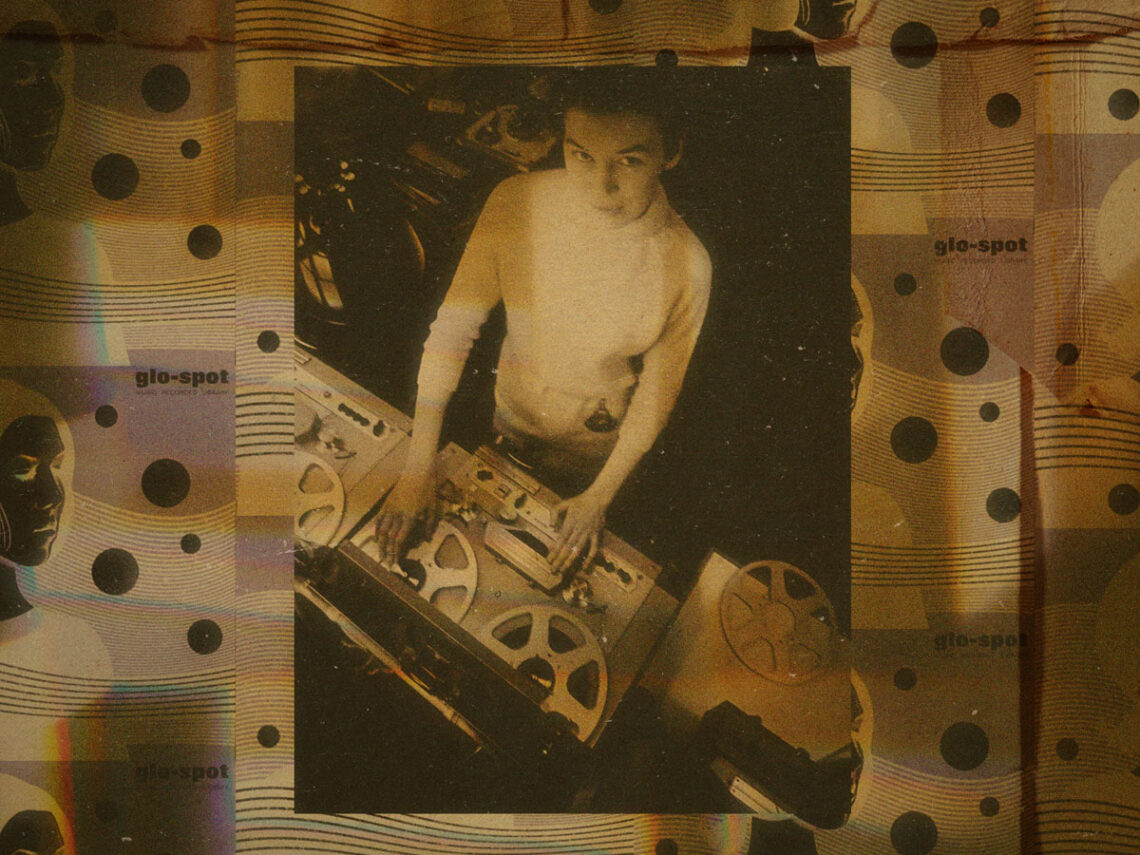
Refusing rejection, she found her way into the BBC Radiophonic Workshop in 1960, where she started sculpting tape loops and sine waves like they were raw clay. She didn’t just work with sound, though, she built it. Derbyshire was one of the first people in Britain to take electronic music seriously, and not in a dry academic way either. Her stuff was eerie, intense, haunting, and decades ahead of its time. She had no synths, no presets, just scissors, spools, and stubborn vision. She made the future with razor blades and reel-to-reel machines.
In 1963, soon after joining the BBC, Delia Derbyshire was asked to realise one of the first electronic signature tunes ever used on television. It was Ron Grainer’s score for a new science fiction series, Doctor Who.
Grainer had worked his tune to fit in with the graphics. He used expressions for the noises he wanted, such as wind, bubbles, and clouds. It was a world without synthesisers, samplers and multi-track tape recorders; Delia, assisted by her engineer Dick Mills, had to create each sound from scratch.
She used concrete sources and sine and square-wave oscillators, tuning the results, filtering and treating, cutting so that the joins were seamless, combining sound on individual tape recorders, re-recording the results, and repeating the process, over and over again.
When Grainer heard the result, his response was “Did I really write that?”
“Most of it,” Delia replied.
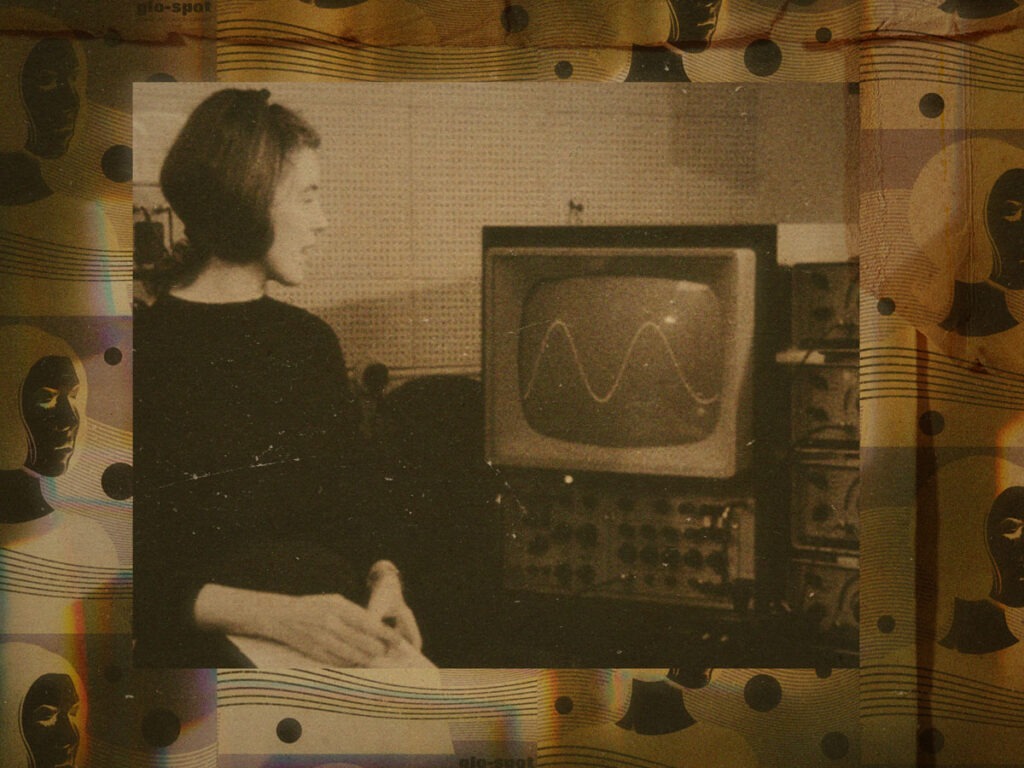
She was also in an avant-garde pop group (using electronic sounds long before Kraftwerk) called Unit Delta Plus. Along with Peter Zinovieff and Brian Hodgson, she attempted to manifest an electronic counterculture before that term was common. They ran synth sessions, held public demonstrations, swapped tapes, and built custom gear.
Perhaps the most famous event that Unit Delta Plus participated in was the 1967 Million Volt Light and Sound Rave at London’s Chalk Farm roundhouse, organised by designers Binder, Edwards and Vaughan, who had previously been hired by Paul McCartney to decorate a piano. The event took place over two nights (January 28th and February 4th, 1967) and included a performance of tape music by Unit Delta Plus, as well as a playback of the legendary Carnival of Light, a 14-minute sound collage assembled by McCartney around the time of The Beatles’ Penny Lane sessions.
In the ‘60s and ‘70s, her fingerprints were everywhere in British electronic music. But she also retreated. By the mid-1970s, she was slipping away from the BBC, struggling with health and addiction. The irony: by the time the electronic underground caught onto her, many thought Derbyshire had vanished. She’d faded, but her echoes didn’t.
When artists rediscovered tape experiments, glitches, and modular drift, they were often tracing back to her.
“It’s in my blood, it’s just my instinct. Absolutely. That’s all I can say”.
Delia Derbyshire
With White Noise, Derbyshire recorded an extremely strange, harsh and very futuristic album in 1969 called An Electric Storm—it’s pretty evil sounding—that’s been embraced by today’s electronic music fans. Derbyshire also contributed music to the classic British 1970s sci-fi series, The Tomorrow People, but by the ’70s, she was starting to show signs of depression and left the BBC Radiophonic Workshop. She later worked in a few other soundtrack factories, then a bookstore, then an art gallery, but generally drifted away from her musical career, becoming a severe alcoholic.
She died in 2001 as her earlier recordings were beginning to come out on CD and as her influence on modern electronic music was at last being acknowledged.
Delia didn’t make pop music, she made possibility. She mapped the invisible: between tones, between silences, between what should be noise and what becomes music. She cracked open doors for what could hear. Her life was tangled and painful, but her work was generous. Every time a synth bends toward strange, every crackle or tape warp that refuses to be cleaned up—Delia is there.
Delia Derbyshire never got to see her influence fully bloom. But in circuits, in underground labels, in bedroom producers wiring their first effects box—she lives. The Doctor Who theme is just the spark. The rest is fracture, the rest is air. That’s where Delia Derbyshire always wanted to be.