


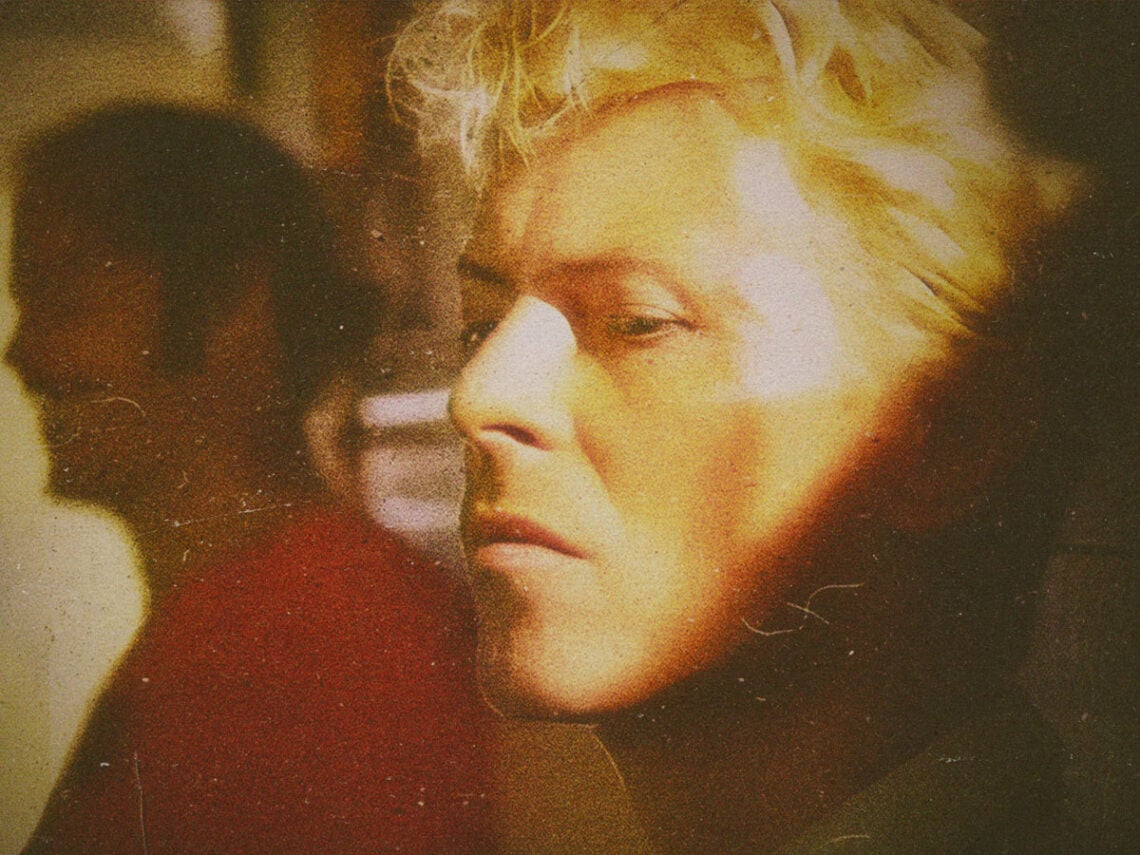
Did David Bowie “sell out” to screw over his manager?
The 1970s imperial phase of David Bowie might have created some of the greatest rock music of all time, but in terms of commercial success, he wasn’t exactly a titan.
That’s not to say he was some starving artist. Bowie was a major deal, especially early on in the decade at the height of Ziggy Stardust and Aladdin Sane. He played arenas, sold hundreds of thousands of albums and had hit singles, but he was never on the level of Black Sabbath, The Who or even Slade, let alone big boys like Led Zeppelin and the Eagles. Rather than a household name, he was more the world’s biggest cult act.
This was especially the case when he moved away from guitar-led rock music and let his music become, for lack of a more delicate way of putting it, really weird. After a detour into his so-called Plastic Soul era with 1975’s Young Americans, he essentially invented post-punk before punk was even a thing with the krautrock-indebted Berlin trilogy of Low, Heroes and Lodger. Turns out, while his fanbase were ecstatic with the records, not to mention the critics, the world of pop music wasn’t exactly crying out for albums like Heroes.
While those records were hits, it wasn’t the world-conquering pop records people were expecting from Bowie a few years earlier. Those would come quite suddenly at the start of the 1980s, when Bowie immediately dropped the artsy act and went for the pop jugular.
He went from ‘Breaking Glass’, ‘Boys Keep Swinging’ and the justifiably forgotten Turkish-flavoured reggae jam ‘Yassasin’ in the late 1970s, to ‘Ashes to Ashes’, ‘Fashion’, and ‘Under Pressure’.
This run of singles made Bowie one of the biggest acts in the world in his late 30s. Now, speaking as a person hurtling towards their late 30s themselves, I can more than relate to the feeling of wanting a little more stability in your career as you stare down the barrel of middle age. However, there’s a little more to this tale than Bowie seeking a period of time where he actually was the world’s biggest pop star. You see, one of the men who was convinced that Bowie was going to be the next Beatles was his manager for his glam rock heyday, Tony Defries.

At first, the two weren’t just colleagues, but friends. Bowie viewed Defries as such a core part of the project that he signed a contract guaranteeing him a shocking 50 per cent of his royalties. When Bowie’s well documented drug problems made him paranoid and suspicious of pretty much everyone in his life, Bowie started seeing his manager as little more than a parasite, leeching of his talent and getting very rich indeed as a result. Bowie fired him in 1975, going against an important contract they’d signed a few years earlier which necessitated a long period of negotiation between the two parties.
Finally, an agreement was reached. Bowie needed to stump up a large sum of cash as a severance package to Defries, and would also still owe him half his royalties for the next seven years. Now, you look back over the timeline and everything starts to fall into place. After 1975, he ditches pop music in favour of arty krautrock and ambient music. Seven years after that, the final payment to Defries goes through and suddenly Bowie is free to take all his royalties himself. What’s the first single he releases after this?
It’s bloody ‘Let’s Dance’, isn’t it?
Does this make that world domination era nothing more than a spiteful sell-out move? One that Bowie eventually paid for by releasing some of the worst albums of his career? Possibly, but being a fan of David Bowie means knowing that nothing is entirely black and white. The ‘Thin White Duke’ was nothing if not ambitious, and he did always want to be that big of a deal, dating back to his earliest days as David Jones. It wasn’t just for the money, it wasn’t just for the spite, it was also for him, too.
But one can only imagine how good fucking over a corporate suit in such a manner must have felt at the time.