


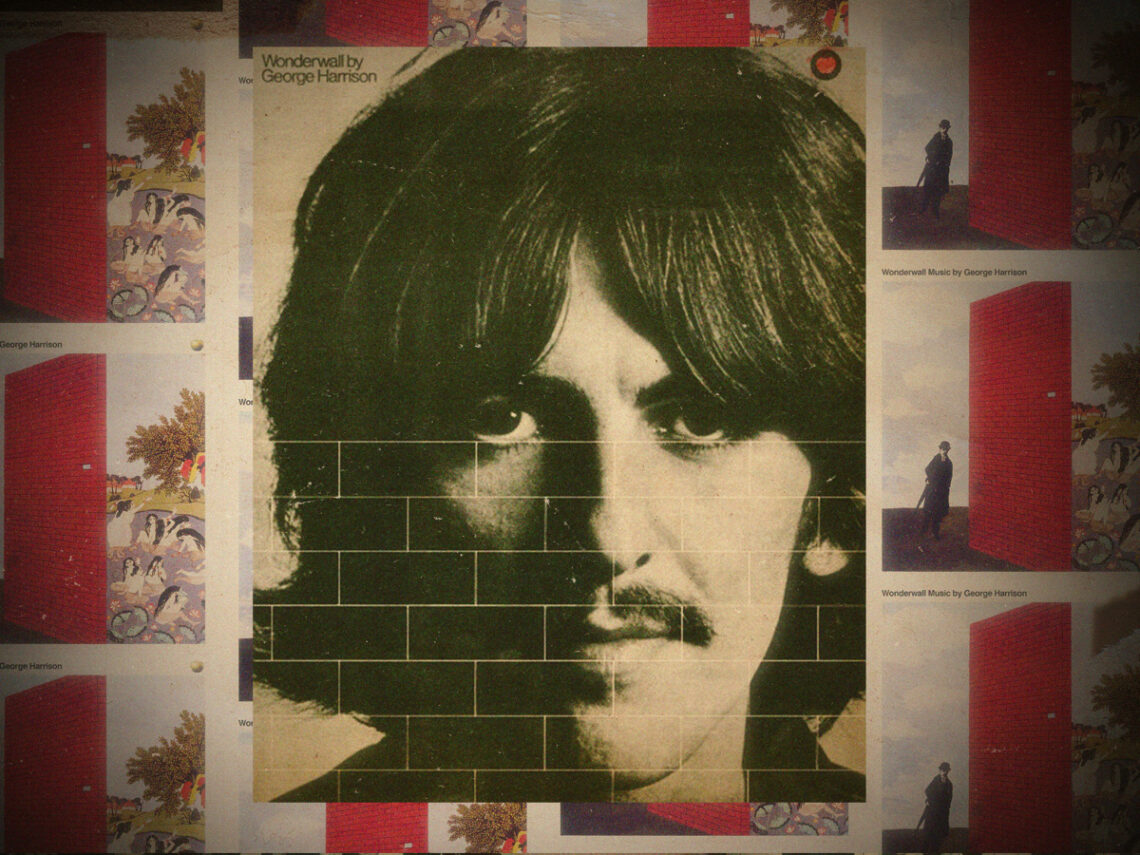
George Harrison’s ‘Wonderwall Music’: the Beatles’ first solo album and weirdest one too
George Harrison’s exotic soundtrack to Joe Massot’s swinging sixties cinematic head trip film Wonderwall was the first solo Beatle project – that is, of course, if you don’t count Paul McCartney’s 1966 soundtrack to The Family Way, which was actually credited to The George Martin Orchestra.
1968’s Wonderwall Music is all over the musical map—delightfully so—with songs ranging from classical Indian ragas to jaunty nostalgic-sounding numbers to proto-metal guitar freakouts. It’s a minor classic, and I wish more people knew about it. I’ve long been an enthusiastic evangelist for this album, sticking tracks on mixed CDs and tapes for quite some time. Even avowed Beatlemaniacs tend to have missed out on Wonderwall Music. It’s a real overlooked gem.
Harrison’s principle collaborator for the Wonderwall soundtrack was orchestral arranger John Barham who transcribed Harrison’s “western” melodies into a musical annotation that the Indian musicians in Bombay could work with. Barham was a student and collaborator of Indian sitarist Ravi Shankar, who had introduced him to the quiet Beatle.
Barham, who would soon go on to compose the soundtrack to Alejandro Jodorowsky’s psychedelic western El Topo and contribute to Harrison’s All Things Must Pass, played piano, harmonium and flugelhorn, and acted the role of orchestral arranger on certain tracks.
Harrison later said Wonderwall Music was “partly an excuse for a musical anthology to help spread the word”, before going on to explain: “I used all these instruments that weren’t as familiar to western people as they are now, like shehnais, santoor, sarod, surbahars, tabla tarangs.”
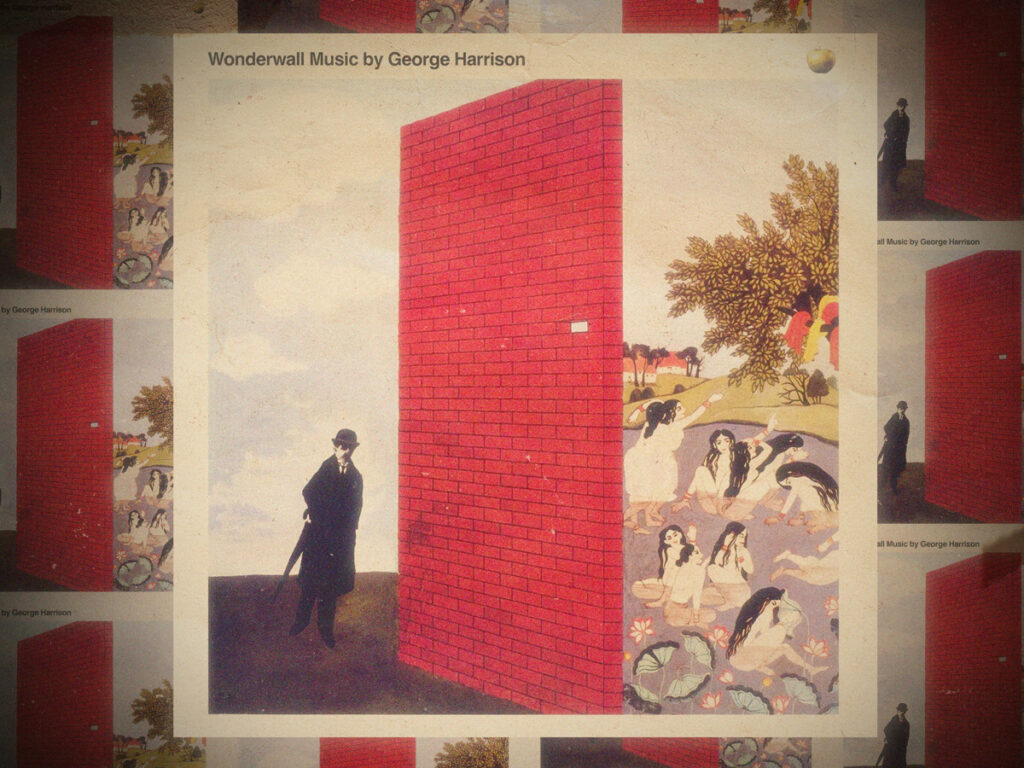
With Barham, Ringo Starr (under the pseudonym “Richie Snare”) and Eric Clapton (here credited as “Eddie Clayton”), along with some session musicians, and a Liverpool band called the Remo Four, Harrison recorded the “English” portion of Wonderwall Music in December 1967. The Indian classical musicians were recorded the following month in Bombay.
“We recorded backing tracks to accompany certain points in the film,” Remo Four drummer Roy Dyke later explained of the record. “George had timed it all with a stopwatch: ‘We need one minute and 35 seconds with a country and western feel.’ Or, ‘We need a rock thing for exactly two minutes.’ Nothing was really written. We’d talk over ideas he wanted, play something, and he’d say, ‘That’s good, keep that. I like the piano there.’ It was very experimental. The idea was to set an atmosphere.”
“It was a free atmosphere on those sessions. They were very creative and enjoyable.”
John Barham
Peter Tork from the Monkees also played an uncredited banjo part that was used for a cue in the movie, if not on the record. It was released on November 1st, 1968, just a few weeks before the White Album and was the very first release on Apple Records. It’s probably not too much of a stretch to call it the first “world music” project of a major rock musician. If it’s not the very first, it is certainly among the very first of its kind (and Harrison spent a considerable sum out of his own pocket to underwrite the expense of recording in Bombay).
But Wonderwall Music’s far too quirky to be considered strictly a world music album. Some of it sounds like the New Vaudeville Band after they’ve drunk lots and lots of coffee. Some of it sounds, not surprisingly, like psychedelic instrumental Beatle outtakes.
There are a lot of great tracks on Wonderwall Music, but the one I want to highlight first is ‘Ski-ing’, a two-minute-long sonic screamer wherein Eric Clapton and Harrison come up with the blueprint for the Buttlhole Surfers’ guitar sound back when Paul Leary was just a tyke.
On reflection, Harrison’s Wonderwall Music is one of those albums that slipped through the cracks not because it’s weak, but because it simply didn’t fit the narrative. Too weird to sit alongside the Beatles canon, too playful to be taken seriously by the prog crowd, and far too stoned-sounding to ever get a look-in on classic rock radio. Which is precisely why it’s worth your time. It’s George at his most curious, pulling at loose musical threads just to see what might happen, and sometimes stumbling onto entire new directions. Ignore the Beatles trainspotters who treat it like an embarrassing oddity. It’s a strange, beautiful, uneven little beast – the kind of record that makes you wish more megastars had the guts to throw away the rulebook and have a proper muck about in the studio.