


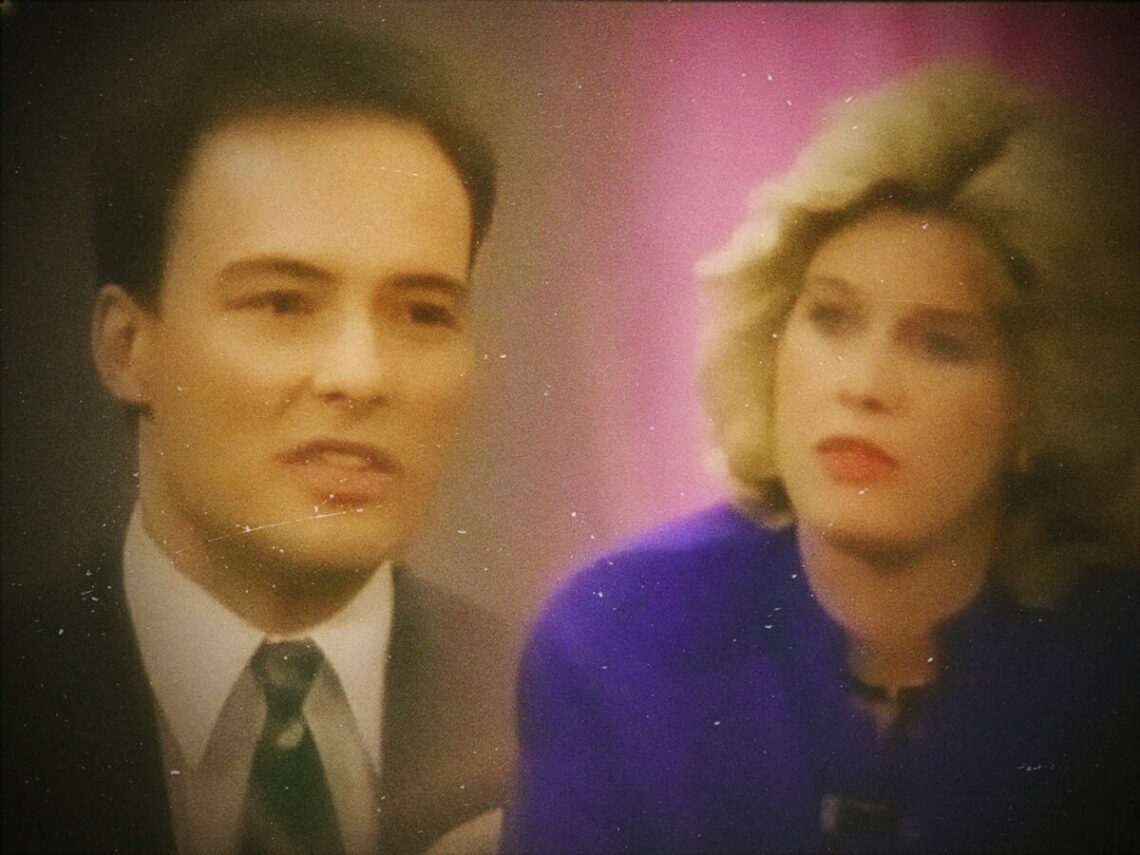
The insane clash between Jello Biafra and Tipper Gore on an episode of ‘Oprah’ in 1990
Say what you will about Jello Biafra, the man lives and breathes punk rock with every damn fibre of his being.
For most punk rockers, playing in a band as respected, reviled and ridiculed as Dead Kennedys would be enough to give them credit in the bank. More than enough in fact. After all, he’s been the frontman and main creative director of arguably the best and most influential punk band of the 1980s. Biafra is responsible for some of the greatest anti-establishment anthems of all time. Yet, for the man born Eric Boucher, that was never enough.
In fact, quite the opposite. Biafra seemed to view life in a band as a hobby rather than a profession. It was a fun distraction from the real work of political activism and attempting to change the world. This was a man who legitimately balanced his early days in the Dead Kennedys with campaigning to become Mayor of San Francisco. His campaign slogan was “there’s always room for Jello,” receiving around 6500 votes, which was 6499 more than anyone thought he’d get.
When the band ended in 1986, it wasn’t a tearful moment for Biafra. Instead, it meant that a major distraction had been put away, and he could get down to doing what he felt was his purpose. However, before then, he had to deal with the small matter of an obscenity charge put against him and his band due to their final album, Frankenchrist. It wasn’t due to a song, or even the cover art, but a graphic HR Giger print inside the record.
Eventually, the charges against the band were dropped, but it left the already tetchy Biafra with a gigantic chip on his shoulder. Considering the charges against the band were a result of complaints made to, and by, the Parents Music Resource Centre (PMRC), there was one person at the very top of Biafra’s list of people he had a score to settle with. The centre’s co-founder, figurehead and friend to all fans of censorship everywhere, Tipper Gore.
This came to a head on a 1990 episode of Oprah. The producers of the hit show thought it would be a great idea to have Gore and Biafra settle their differences live on TV, mediated by Oprah Winfrey. Biafra, a smart man who already had experience with fairly high-level politicians, took to this with all the charm, good nature and good faith that you could ever associate him with.
His opening statement during their segment on the show saw him look Gore straight in the eye and say, “I accuse you of trying to destroy my career and ruin my right to make a living.”
Weirdly enough, the punk rock frontman had the crowd totally in his corner. They were applauding his takedowns on Gore, and when he took the PMRC to task over being backed by a litany of religious right groups. Biafra’s brought receipts as well, naming names and pointing fingers at all these groups involved with Gore’s crusade rather than relying on platitudes and vague denials the way that Gore does.
As part of his tirade, he named the group Back in Control as an entity endorsed by Gore herself. In Biafra’s words, they are “a group of cops from, I believe, Orange County, who send manuals to police departments and to parents claiming that, among other things, the Jewish Star is a symbol for Satan, that high-top tennis shoes and black clothing could be a sign that your child might be turning to heavy metal and should therefore be deprogrammed.”
Just like the PMRC wasn’t ready for Twisted Sister frontman Dee Snider to be as eloquent and intelligent when he testified against them in front of the US Senate Committee, Gore didn’t anticipate Biafra to be this informed.
She really placed her foot in it, though, when she said that her committee “had nothing to do with the problems you had”. Biafra gives her the opportunity to back out, saying that they “tried to take credit for it”. However, when Gore argued “that’s not an accurate quote”, Biafra, with an almost sexual degree of relish, pulls out the very edition of the paper that interviewed her about the trial.
Reading from the paper, he said, “‘What about Jello Biafra’s obscenity trial?’ Quote, ‘I mean, I’d like to take credit for that.'”
Gore then continued to insist that it’s a misquote, but the damage had already been done. In fact, the damage was done long before Gore was tripped up by a four-year-old newspaper. The damage was done when Biafra stated, in the broadest possible terms, his interpretation of the ethos of the PMRC, telling the studio audience, “If a kid shoplifts or becomes involved in a gang, then, well, it must be the music’s fault.”
Almost under her breath, Gore says, “It is.”
I’m not sure there’s much more to say than that, really.