


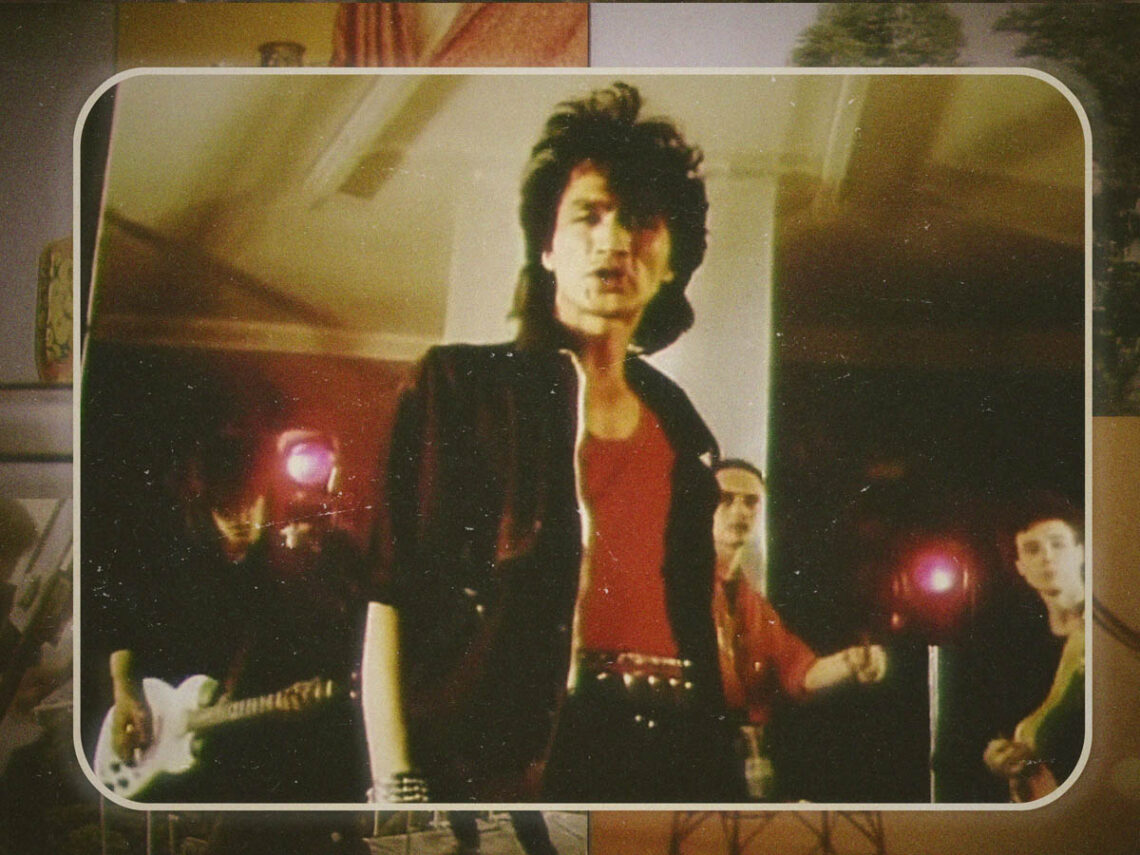
Kino: the band who turned Chernobyl into a music video set
Rock bands of all shapes and sizes, take note. Never, ever trust a film director.
Sure, if you’re lucky, they’re Martin Scorsese, or Jonathan Demme or Melina Matsoukas. However, you play in a rock band. You’re the opposite of lucky, and now you’re trapped in a room with some moustachioed dickhead in a beret who sees you as nothing more than gurning props for his artistic vision. Now you’re being made up to look like a talking drink as the artist huffs glue from a paper bag, ranting about how making pop videos is beneath his titanic genius, and you’re thinking, “Christ, maybe I should have retrained in cyber?”.
Well, if it’s any consolation, one band did have it worse and went on to huge success in their home country. Formed in what we now know as Saint Petersburg, Russia, but was then known as Leningrad of the Soviet Union, Kino are to this day one of Russia’s biggest and most popular bands. This is doubly impressive for Kino because, coming up as they did in the “glory days” of the Soviet Union, half of their record sales came from bootlegs and tape trading. The Soviet music industry of the time was nowhere near as developed as the West’s, for obvious reasons, and thus everything was slightly less glamourous than in the UK and the US.
Perhaps it was this lack of glamour that made Kino, who by 1986 were selling hundreds of thousands of records in their home nation, still accessible to a student filmmaker making his graduation project. Ukrainian director Serhii Lysenko was a huge fan of the band, so when putting his thesis film together, he was able to pitch his vision to the band directly. He would take four of their songs and make interconnected music videos for them, that would play together as one film that he would call Konets Kanikul, or The End of the Holidays, to us Brits.
What made this project stand out to Kino?
Now, for all my talk about Kino’s huge popularity, they were still very much an underground band. Both Lysenko and the band could stand to gain a massive amount from turning their music into a film, so the band decided to work with the young director. Presumably, part of Lysenko’s initial pitch wasn’t what turned out to be the most famous part of the whole film, because otherwise he would have been laughed out of whatever building he pitched the film to them in.
You see, as mentioned earlier, Lysenko was Ukrainian. He was pitching this film in 1986. Up until recently, there was only one time in history that Ukraine made international headlines, and that was the very same year, when the number four reactor of the Chernobyl Nuclear Power Plant exploded. You may have heard of this. Lysenko, the savvy little madam, only told the band after they’d approved his pitch that part of his plan was to take the band to the site of the disaster and film part of the movie there.
I don’t want to blow your mind here, but the band weren’t too comfortable with the idea of going to the site of a recent nuclear disaster for the sake of filming a pop video. It took four decades for the radiation levels in Chernobyl to lower enough for tourists to visit, and even then, those visits are strictly limited to official tours that begin and end with radiation checks. The mad bastard wanted to send the band over to Pripyat the same year it happened, and somehow, the band agreed to it.
Possibly due to the fact that Lysenko swore blind that you could keep away the radiation by drinking enough wine.