


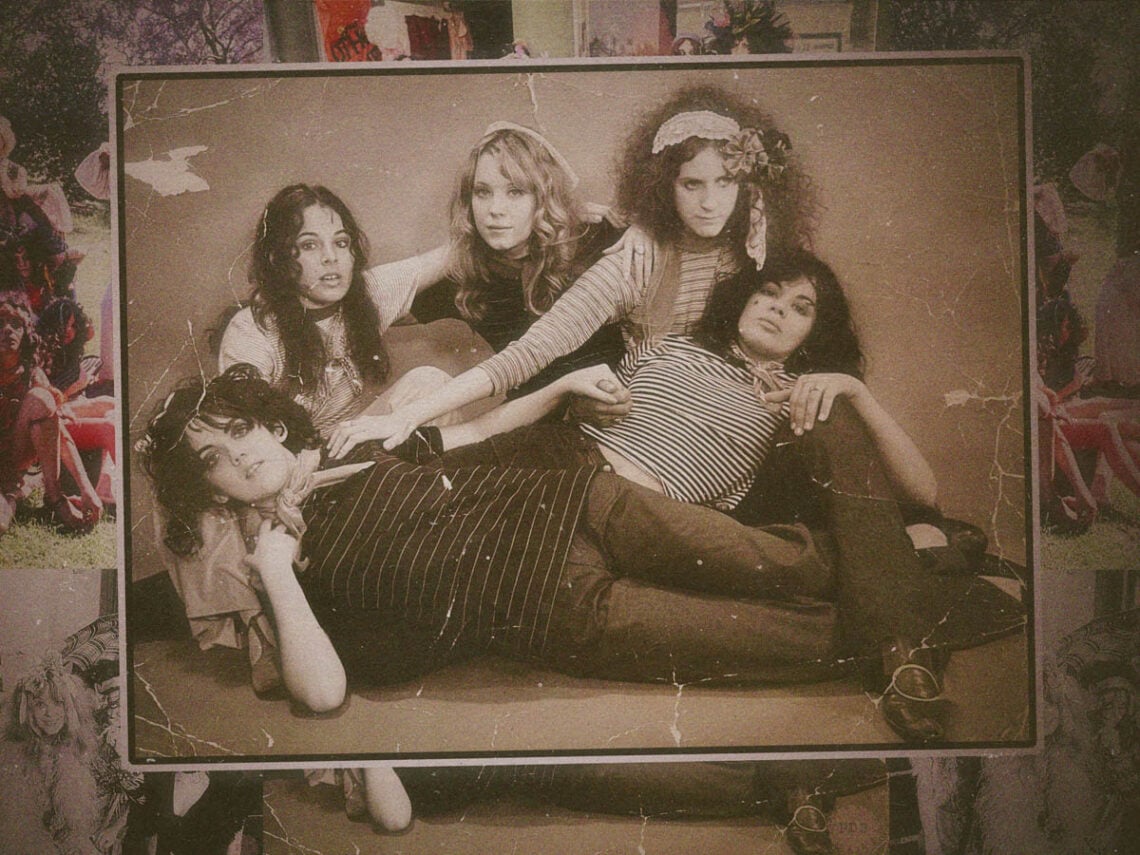
The Flying Garter Girls: the most infamous groupie clique of the 1970s
Almost Famous is a complicated movie in hindsight. It’s a masterpiece, but one that has such a rose-tinted view of 1970s groupie culture that it almost lives in a fantasy world.
Of course, that’s the point. Not only of the story but of the film as a whole. Director Cameron Crowe made the film as a way of depicting how crazy yet incredible his teenage years spent as a rock journalist felt. Which makes sense, if you’re 16 and travelling with the likes of the Allman Brothers Band, Led Zeppelin, Eagles and Fleetwood Mac, you’d romanticise it, too. The arc that the film’s lead character, William Miller, goes on in the film reflects this, as well
He learns to see past the glitz and glamour surrounding the rock stars he’s profiling. Seeing their humanity and failings as well as the moments of rock ‘n’ roll transcendence. However, the fact that the members of Stillwater (the fake band that Miller follows in the film) see the groupies that follow them as nothing more than disposable objects is treated like a reveal in the film, as is how young all of them are. Looking into their experiences and reading their testimonies of the time shows that this would have been a lot more obvious than the film makes it out to be.
The ringleader of the groupies, Kate Hudson’s iconic Penny Lane, is such a one-to-one recreation for a close friend of Crowe’s of the era that he used her real-life nickname for the character. Lane was based on Pennie Ann Trumbull, a Portland, Oregon, native who discovered rock ‘n’ roll when she was 16 and fell for it utterly, moving to Los Angeles when she was 18 to immerse herself in the city’s rock culture. In doing so, she did as anyone as young and beautiful as she would have done, and got laid a whole lot.
She wasn’t the only one pursuing dudes in bands, of course. In particular, she struck up a close friendship with five other girls, and they formed a tight-knit community. One that stuck together in the face of the legion of shitty rock dudes looking to take advantage of them. They became the Flying Garter Girls, and to acknowledge their sisterhood, each of them took a nickname as part of the Garter Girls.
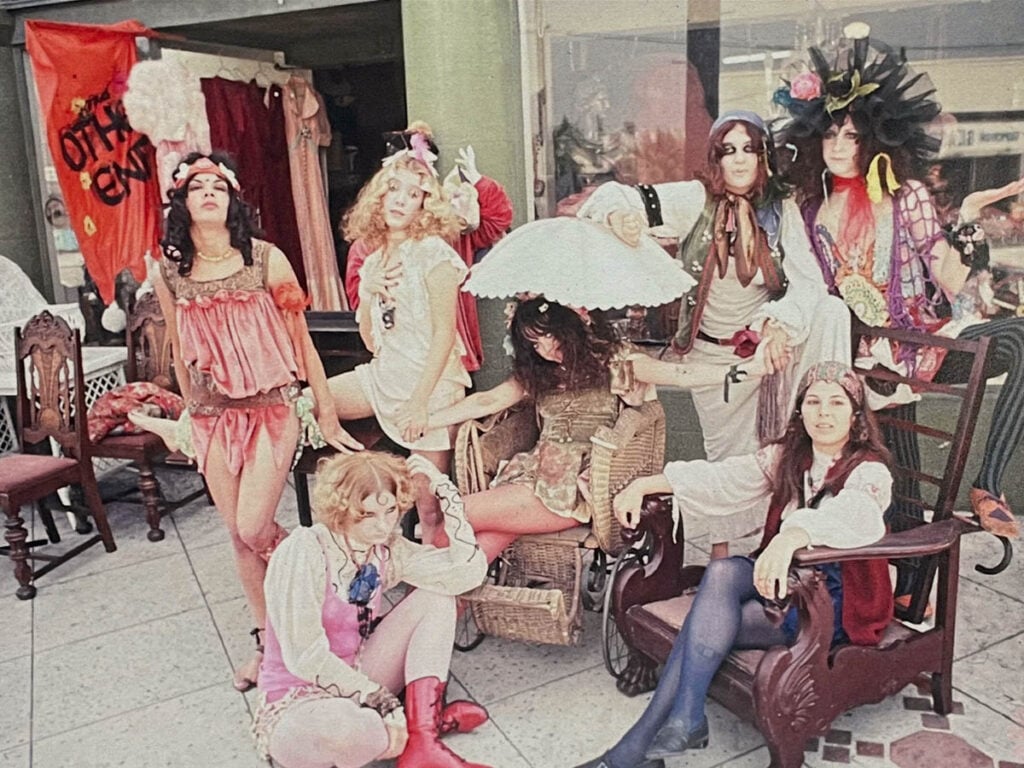
Trumbull, of course, became Lane, and she was joined by Marvellous Meg, Sexy Sandy, The Real Camille, Miss Julia, and Caroline Can-Can. This was a tight-knit group that was surprisingly official. They even had a set of matchbooks printed as a way of promoting their services. One wonders how necessary this was, though; there wasn’t a soul in the 1970s rock scene who didn’t intimately know who these girls were. Literally.
However, Lane has maintained ever since that while she did have a few dalliances with rock stars (who wouldn’t if we had the chance?), she was there as a fan first and foremost. This is something we can see in her later life as well. After moving back to her native Portland to be closer to her parents, she’s become a fixture of the city’s thriving scene. A regular face at shows, still living for the music.
I love Almost Famous, but viewing it in my 30s and not as a teenager who’s distracted by how much of himself he sees in the main character (he’s got my damn name!), I can see that Miller’s story isn’t really the interesting one. It’s Lane’s story that should be told today, same with the entire Flying Garter Girls coterie. To this day, they get tarred with the term “groupie” when they’re so much more than that.
They were fans who found something that spoke to them more than anything else in the world. They were survivors, people who were preyed upon by much older men when a number of them weren’t of legal age themselves. Most of all, they were humans, with arguably the last interesting perspective on a part of pop history that has otherwise been done to death.