


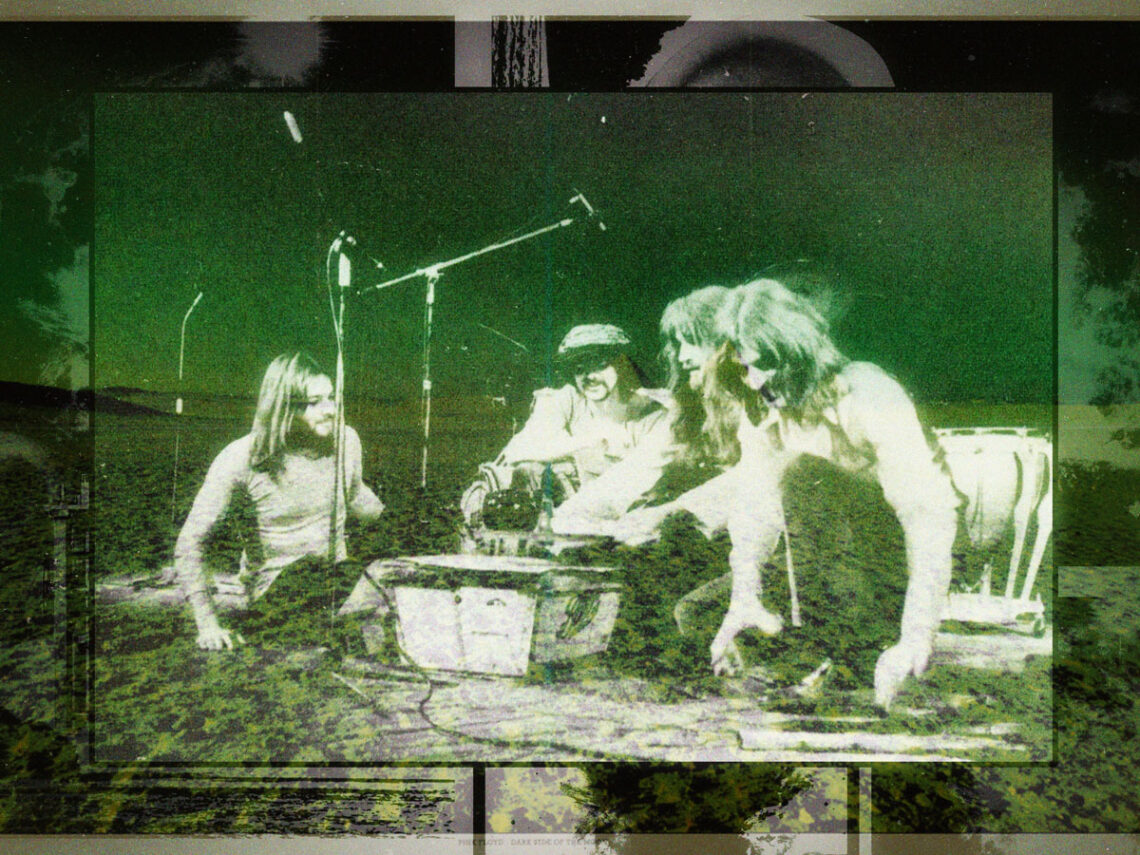
‘Moonhead’: The night Pink Floyd soundtracked the moon landing
They might not know it, but Pink Floyd are likely experiencing a small boon of attention once more for their 1973 smash hit record The Dark Side of the Moon, and for one simple reason: we’re heading back to the moon.
The world is once again craning its collective neck skyward in vague recognition of a group of humans who are defying our terrestrial positions on earth and heading for the celestial satellite that keeps our nights lit and our dreams moving. Artemis II is looking at the dark side of the moon as nobody has before.
Despite our current worldview being unstoppably tarnished over the last few decades, largely by a raft of inhuman leaders and the kind of plummeting of human decency that would make Wile E Coyote nostalgic, there’s something special about a rocket launch. No matter if it does sometimes equal being a giant waste of funds or become a vehicle for a group of nitwits to claim the escapade to be a ruse to once again confine us to a flat planet, shooting into space is fun. But it was never as fun as it was in 1969.
The landing of Apollo 11 on the moon easily qualifies as one of the truly epochal moments of the twentieth century. The three American astronauts, Neil Armstrong, Michael Collins, and Buzz Aldrin, spent about 21 hours on the moon, during which time countless thousands of people surely looked up and thought, “Wow, there are human beings up there.” In fact, we know for sure that David Gilmour of Pink Floyd was one of those people, as we shall see.
With some assistance from its colleagues in the Netherlands and Germany, the BBC mounted programming to celebrate the great event. One of the shows featured a live jam by Pink Floyd. The program was a one-hour BBC1 TV Omnibus special with the whimsical title of So What If It’s Just Green Cheese?. It was broadcast on July 20th, 1969, at 10pm. Interestingly, the program featured two actors who would become much more famous about three decades later, Ian McKellen and Judi Dench. Dudley Moore and the Dudley Moore Trio were also on hand.
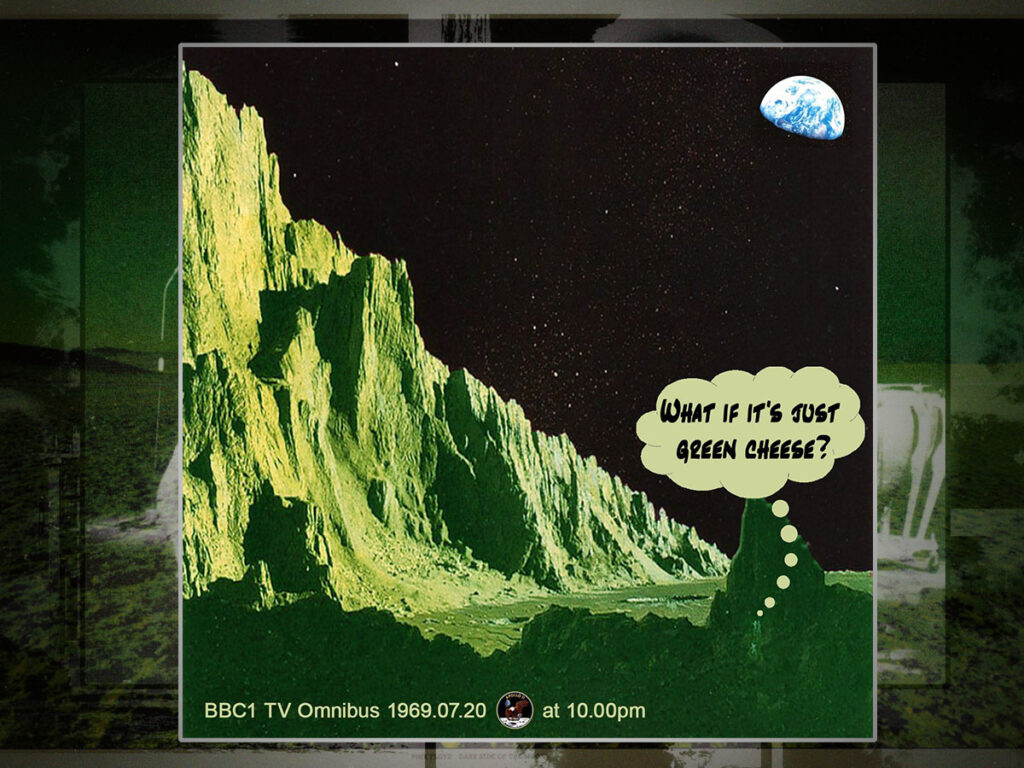
The Floyd jam session eventually came to be called ‘Moonhead’. It’s included in Pink Floyd’s massive box set The Early Years 1965-1972, which was released with a mammoth 2,840 minutes of imposing Pink Floyd rumblings.
David Gilmour reminisced about the appearance in an article he wrote for The Guardian in 2009: “We were in a BBC TV studio jamming to the landing. It was a live broadcast, and there was a panel of scientists on one side of the studio, with us on the other. I was 23.”
The young man had already found some fame with Pink Floyd, but still represented a younger member of the band who had formed around Syd Barrett’s own cosmic frequency before introducing Gilmour as his replacement. For the most part, Gilmour was the exact kind of artist who would have been influenced by the event, alongside David Bowie and other star-gazing songwriters.
But how does the leading purveyor of acid-rock get invited into the tightly-wond white shirted halls of subordination that is the BBC? Gilmour confirmed, “The programming was a little looser in those days, and if a producer of a late-night programme felt like it, they would do something a bit off the wall. […] They were broadcasting the moon landing, and they thought that to provide a bit of a break, they would show us jamming. It was only about five minutes long. The song was called ‘Moonhead’ — it’s a nice, atmospheric, spacey, 12-bar blues.”
But, as well as being a musician, Gilmour was also just like everybody else, an earth-dweller completely captivated by the notion that not all humans were branded with such a moniker. “I also remember at the time being in my flat in London, gazing up at the moon, and thinking, ‘There are actually people standing up there right now.’ It brought it home to me powerfully that you could be looking up at the moon and there would be people standing on it.”
As Kevin J Donnelly points out in Magical Musical Tour: Rock and Pop in Film Soundtracks, throughout 1968 and 1969, Pink Floyd were repeatedly enlisted by British TV producers to provide music for TV shows, including ATV’s The Gamblers and ITV’s The Tyrant King. So it was natural that Floyd was in the BBC’s Rolodex for this special occasion.