


Beyond the grave: The unlife and times of the murder ballad
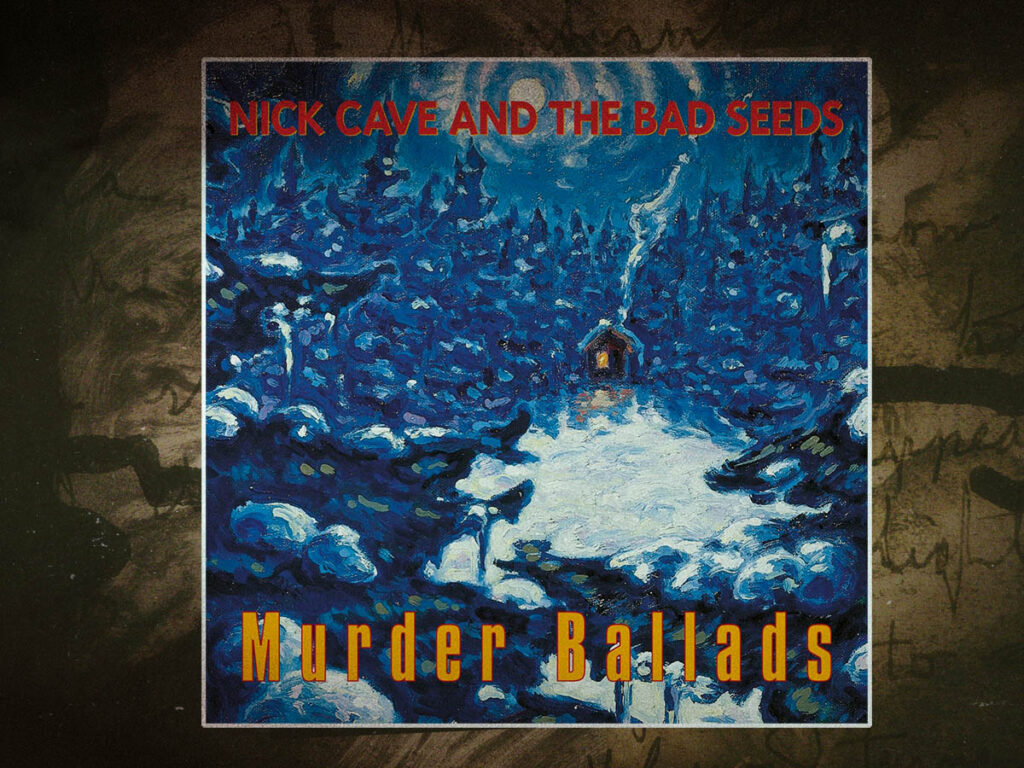
When Nick Cave titled his ninth studio album with The Bad Seeds Murder Ballads, there was more than a hint of tongue in cheek. Presumably not the cheek that tongue belonged to.
After all, Cave and the gang had spent the previous decade and a half writing songs precisely about that topic. Grisly crimes of passion told from the perspective of both the victim and the villain. Sometimes they described the aftermath or the preamble. Sometimes it would be uncomfortably, viscerally in the moment. One thing was for sure, which was that at the end of most Nick Cave songs, someone would be dead.
At the time of that record’s release, he wasn’t alone in writing about subjects that dark. In fact, the 1990s and early 2000s were a banner year for that kind of storytelling. Whether it was coming from Gangsta rap, Horrorcore or Nu-Metal, the world loved a bit of the dark stuff when it came to their music. So much so that it was used as proof by a large number of hand-wringing numpties that the sky was falling, the world was coming to an end and that, ah yes, that ol’ chestnut, culture was falling apart.
Yeah, no. Murder Ballads may have been an accurate description of the content of that Nick Cave record. There was also a far deeper meaning, though. It was titled that as a tribute to the fact that anything by Nick Cave, Eminem or Body Count that touched upon death was touching on a rich vein of music that lasted generations longer than anything we could call pop. “murder ballads” wasn’t just a catchy name for a record, it was an entire genre not just of pop music, but of popular song that went back thousands of years.
What was the first murder ballad?
In fact, it’s barely possible to say what the first murder ballad is. We’re talking a tradition of folk music that goes far beyond anything in pop music and back to days when only a certain amount of history was recorded. This is folk music in the old-old-fashioned definition of the term. We are not talking tweed blazers, rapt, reverent audiences and acoustic guitars that cost more than a small car; we’re talking the traditional definition of the term. Music of the people.
These songs were genuine culture. In that they weren’t just aural decoration, they were ways of passing around local news, myth and gossip. It’s the reason that so many of these songs have lasted so long. While the telling, re-telling and embellishment of them have given these songs an air of the supernatural, there’s a decent chance that each of them, be they ‘The Two Sisters’, ‘Lamkin’ or ‘Lord Randall’, actually happened in some way, shape or form.
After all, history has a habit of excluding working folk. The act of recording one’s own history and culture was closely gatekept for generations. Take ‘The Two Sisters’ as a perfect example. Its earliest known appearance was on a broadside from 1656 under the name ‘The Miller and the King’s Daughter’. That’s already over 350 years old, and there’s every sign that the song was already old stock if it was being printed back then. The first known version of ‘Lord Randall’ was even earlier, dating all the way back to Verona in 1629.
Thus, when people talk about grisly songs being a sign of cultural decay, they’re ignoring the fact that the very idea of culture stems from songs like this. Pieces that talk about things that we humans have been obsessed with for generations. Love, God, politics, booze, sex and, yes, death.