Creepy, sleazy and well‑hung: Exploring the art of cult movie posters
Stumbling across Westgate Gallery is like getting clocked in the head with a forgotten Betamax copy of Ilsa, She Wolf of the SS and waking up in a fever dream curated by Kenneth Anger and Russ Meyer. It’s not a gallery, it’s a goddamn temple; walls drenched in day-glo hysteria, satanic nuns, kung-fu broads, bug-eyed aliens, and enough violent giallo chic to make your retinas haemorrhage joy. Imagine if Alejandro Jodorowsky and Jack Smith ran a video store inside a strip club—it might look something like this.
What elevates Westgate from oddball poster depot to full-blown ritual chamber of pulp worship is its resident curator of filth and celluloid glory: Christian McLaughlin. Part historian, part smut priest, he doesn’t just sling paper—he conjures ghosts. McLaughlin has an encyclopaedic handle on the lurid netherworld of exploitation cinema, from Euro-trash sleaze to XXX-rated arthouse to long-buried 1970s horror flicks that played exactly once in some Long Beach grindhouse. He doesn’t just find the posters; he knows their secrets.
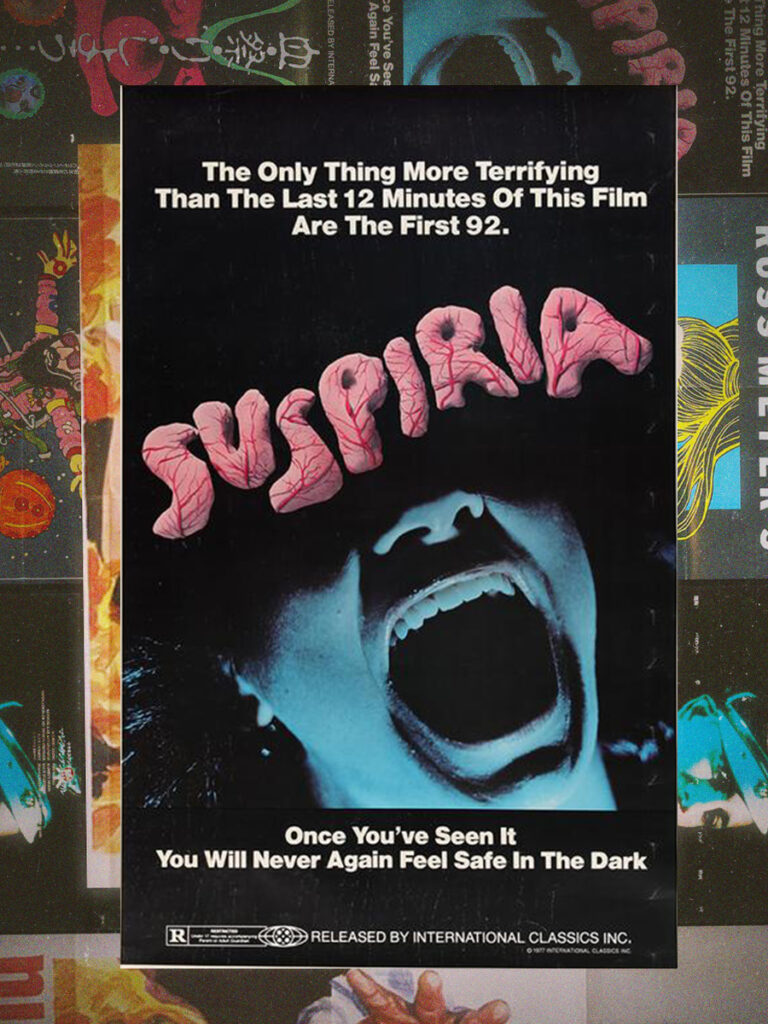
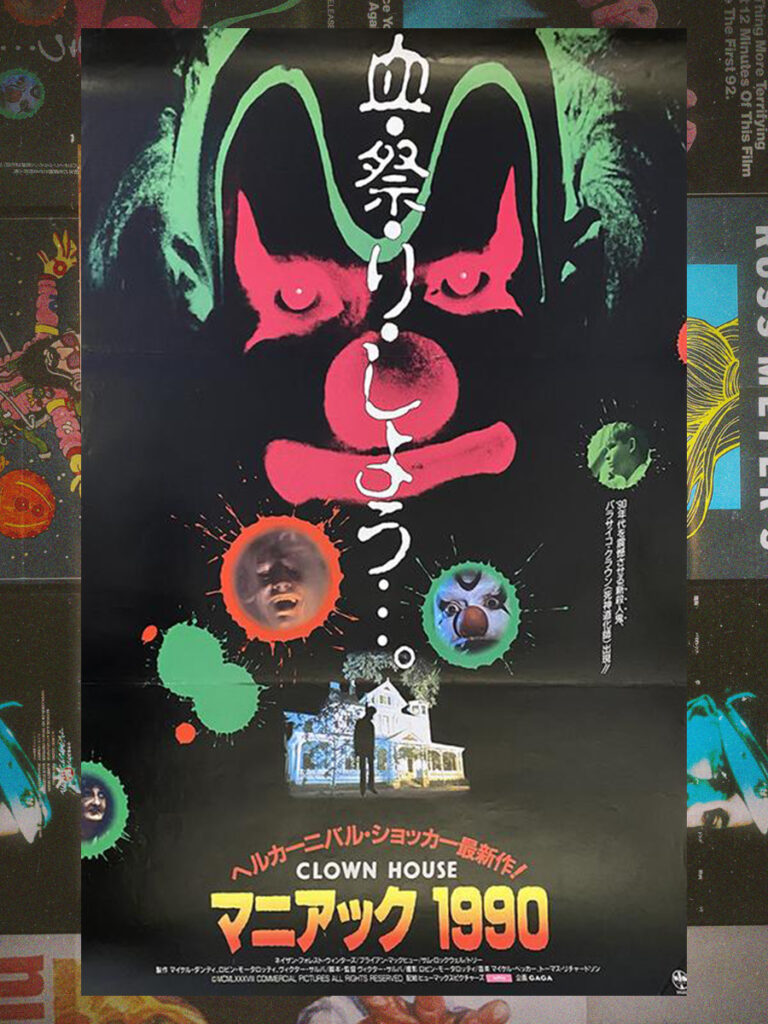
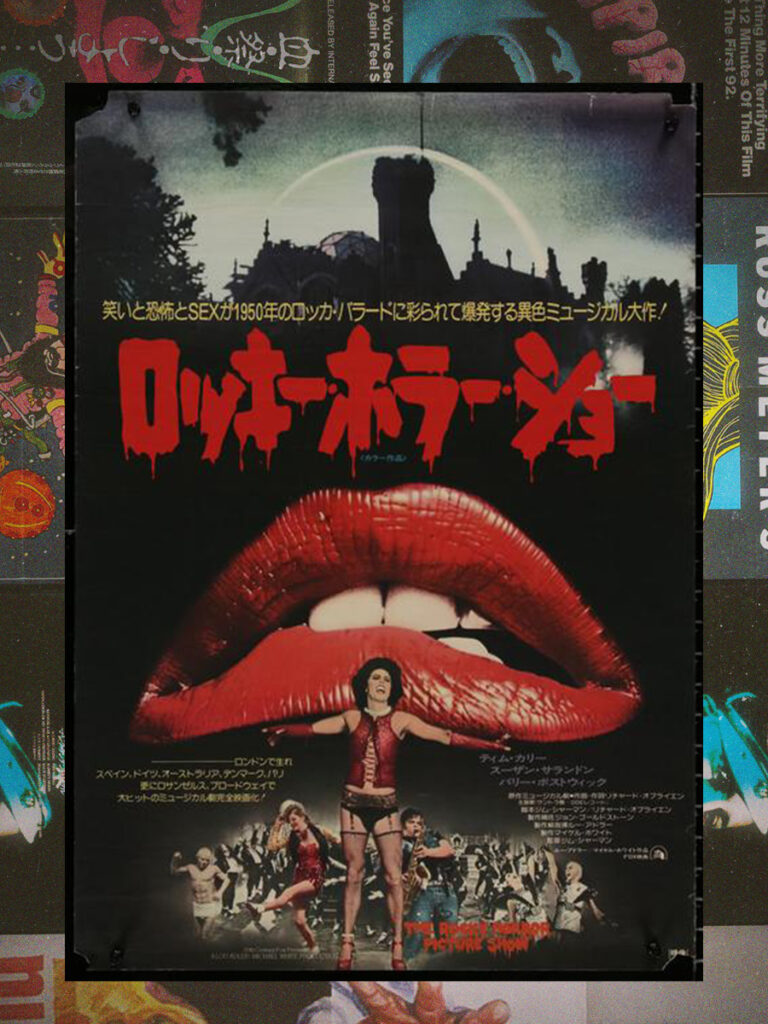
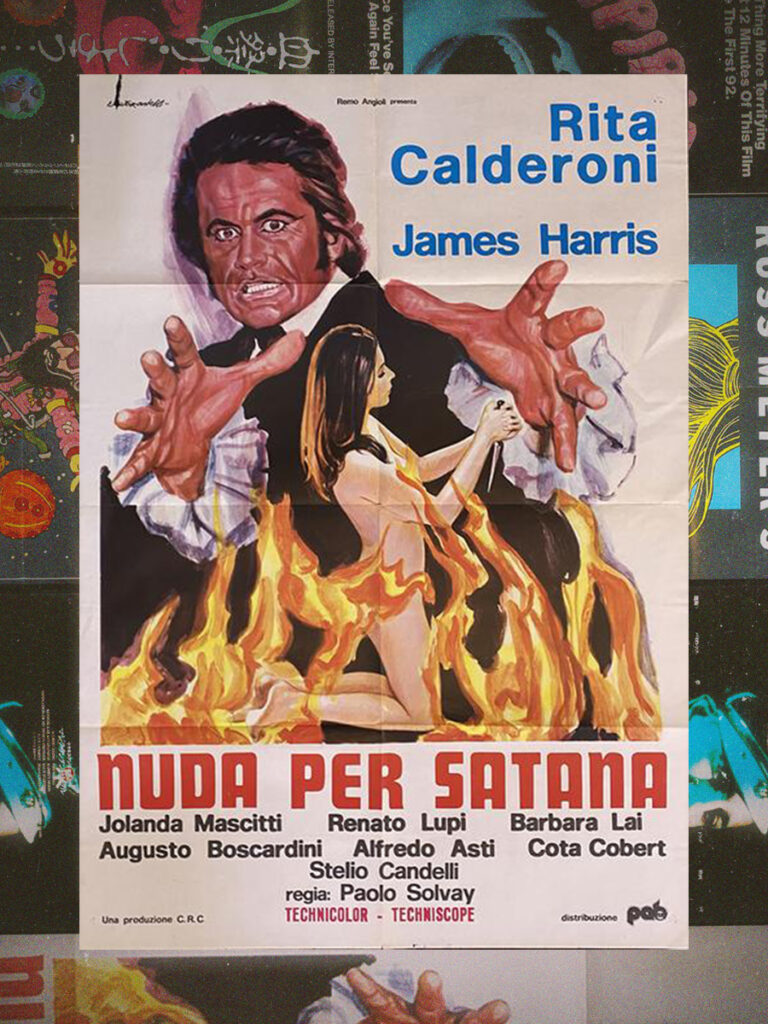
The posters McLaughlin curates – like the Japanese Clownhouse sheet, all mutant colour swirls and killer clown iconography, or the screaming blue-black face from Suspiria – aren’t trying to sell you a night at the movies. They’re shouting into your lizard brain like late-night cable hallucinations. They’re artefacts from a lost continent of cultural filth, where the rules never applied and the only sin was being boring.
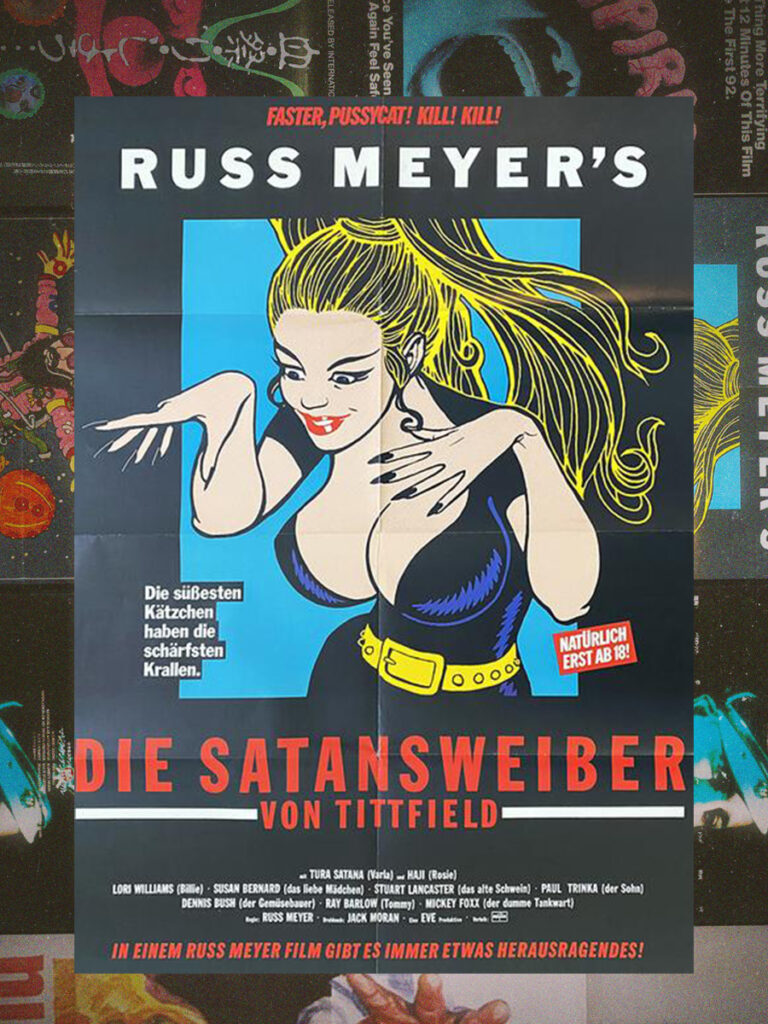
Take the German cartoon-style reissue of Faster, Pussycat! Kill! Kill!—a high-camp alt-universe comic book featuring Tura Satana as Amazon warlord. Or the hallucinatory chaos of School of the Holy Beast, where nuns strip, bleed, and punish like they’re auditioning for a Kenneth Grant ritual. You don’t need to have seen these films (though you should) to feel what they’re about. The posters do the heavy lifting. They scream, hiss, and seduce. Sometimes they just melt into your skull like weird dreams that reek of hairspray, sweat, and nitrate.
But perhaps what’s most beguiling about Westgate is its ability to collapse cinematic obscurity and high art. A softcore nudie parody like Please Don’t Eat My Mother – with its psychedelic plant-sex vibes and chipmunk-cheeked Rene Bond – sits comfortably alongside Salo and its bleak art-world infamy. The gallery treats all cinema trash with the reverence of Andy Warhol’s soup cans: iconography of the underground, reframed as timeless.
If your tastes lean towards the forbidden, the forgotten, or the just plain freaky, Westgate Gallery isn’t a shop: it’s an awakening. One gorgeously unhinged one-sheet at a time.