


Christiane F: teenage junkie, prostitute, and style icon of heroin chic
Christiane F is a 1981 German film based on the autobiographical recordings of a young heroin addict and prostitute in West Berlin. It was one of the most successful German films of that year, going on to become a worldwide cult hit, but one that stirred up a lot of (I think justifiable) controversy.
Two journalists from Stern magazine, Kai Herrmann and Horst Rieck, met the girl, Vera Christiane Felscherinow (born May 20th, 1962) in 1978 when she was a witness against a john who paid underage prostitutes with heroin.
The reporters were shocked by the extent of the escalating teenage drug problem and spent over two months interviewing Christiane and other young junkies and prostitutes (of both genders) who congregated near the Berlin Zoo. They ran several articles and a book, Christiane F. – Wir Kinder vom Bahnhof Zoo, covering four years (ages 12 to 15) of her life on the streets, which was published in 1979.
Christiane lived with her mother in a bleak West Berlin neighborhood full of the sort of postwar high-rise apartment blocks that were often hives of social problems. She became fascinated by a discothèque that she had read about called “Sound” and although she was only 11-years-old, too young to be admitted, she was able to get into the club. There she fell in with a fast crowd who were experimenting with various drugs and by the time she was only 14, she was turning tricks to feed her habit in the Bahnhof Zoo train station.
When the film—directed by Oscar-winner Uli Edel—was released in 1981 it was a huge hit in Germany, and elsewhere, turning Christiane into somewhat of a celebrity in Europe, a real-life “Go Ask Alice” who had great fashion sense and cool hair. And this was the problem: Although the film does not intend in any way to glamorise the life of a heroin-addicted teenage prostitute, it inadvertently does.
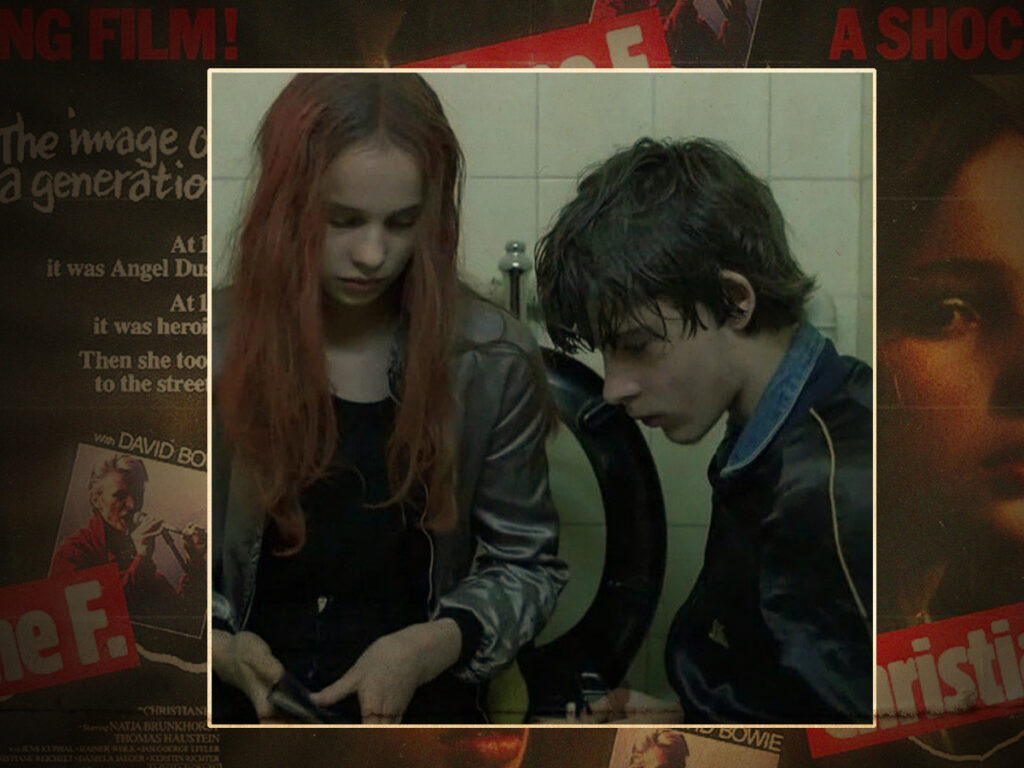
The fact that the actress who played Christiane F in the film, Natja Brunckhorst, was so beautiful didn’t help matters. Soon teenage girls were emulating both the cinematic “Christiane” and the real-life Christiane’s hair style and clothes. The Bahnhof Zoo station even became somewhat of a Japanese tourist destination, for a while.
I saw this film when it came out, when I was a teenager myself, and I can recall thinking that a) Natja Brunckhorst was super hot and that b) doing some drugs with such a cute girl and going to a David Bowie concert (he’s seen in the film performing and provided the soundtrack music) seemed like a really good time to me. I can certainly understand why why German youth advocates were concerned at the time by the way impressionable young girls saw Christiane F as a role model.
Some 40 or so years after it was released, the film still has that undiminished heroin chic quality going for it. This comment was left on YouTube: “Amazing film. Amazing book. She was so beautiful. So clever. Such a shame she ruined her life. But she’s a hero. And maybe I’m the only one who thinks this, but it looks to me kinda attractive, you know. I mean, seventies, Berlin, David Bowie, freedom, it all looks so great! Today it’s awful.. Like everything”.
You see what I mean?
Later, Christiane F released a few records under the name Sentimentale Jugend, in partnership with her then-boyfriend, Alexander Hacke (of Einstürzende Neubauten), in the early 1980s. Christiane’s brief foray into music wasn’t just some novelty cash-in or PR stunt from her publishers—it was raw, cold, dissonant, and utterly of its time.
Sentimentale Jugend was less “band” and more noise diary. Their work was abrasive, industrial, barely structured—collapsing walls of tape hiss, reverb, German radio static, screaming, and what sounded like metal being dragged across broken pavement. The sound of two kids crawling out of the Berlin gutters with a four-track and nothing to lose.
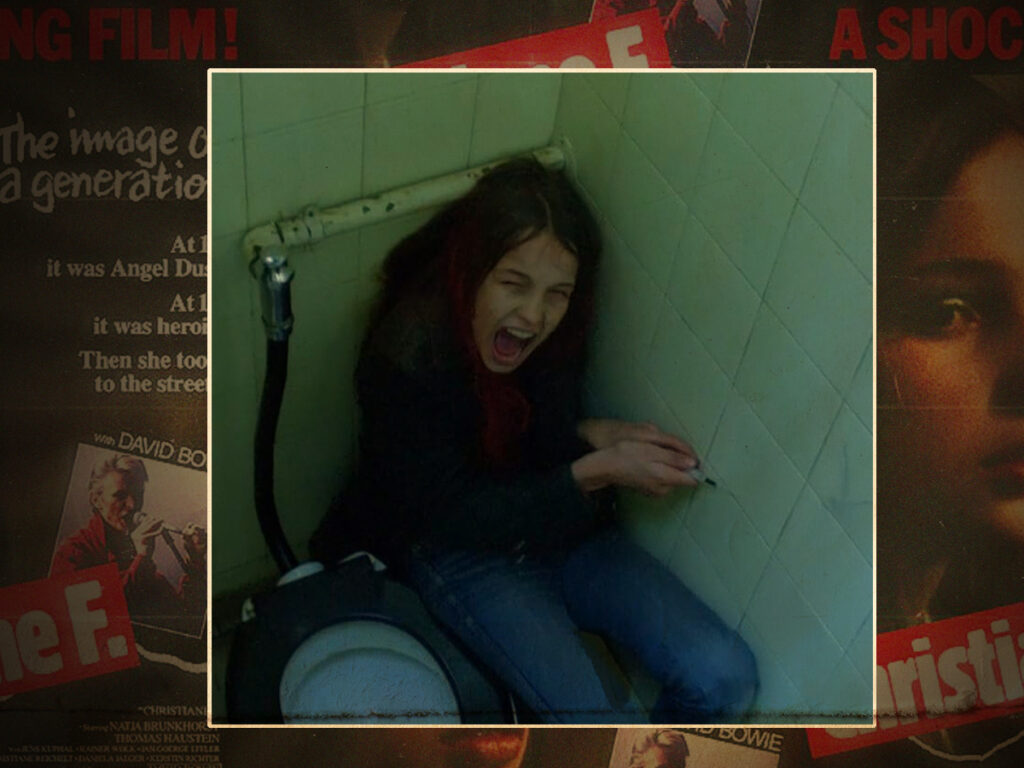
The couple also appeared in the 1983 German film Decoder, along with Neubaten’s FM Enheit, William Burroughs and Genesis P-Orridge. Decoder is one of those strange, hard-to-describe films that plays better when you’re slightly sleep-deprived and the walls feel too close. Shot in 1983 but set in a world that feels like it ended years before, it’s part cyberpunk, part Burroughsian mind virus, part DIY German anti-capitalist screed.
Although she has been able to support herself from author’s royalties for many years, Christiane F‘s life has been anything but easy. She’s been on and off drugs since her teens, and at one point a few years ago, she lost custody of her young son. In 2011 she was caught up in a drugs sweep when police searched her bag at the Berlin train station, Moritzplatz, a known haven for junkies, but no narcotics were found on her person.
As you might expect, every couple of years the German media check in with her to “see how she is doing”.
In an interview conducted in 2013, Felscherinow described her frustration with public perceptions of her since the publication of Christiane F. She said: “What bothers me most of all is this Christiane F. thing. Is she finally clean now, or not? As if there is nothing else to say about me. And I can’t get clean. It’s just what everyone else has always expected of me. The doctors complain. But I do have a life, after all.”
Later that year, answering a question as to why she never stopped using drugs, she explained: “I never wanted to give them up. I didn’t know anything else. I decided to live a different life to other people. I don’t need a pretence to stop.”
In the end, Christiane F remains a ghost that won’t leave the room. Not because she wants to be, but because we keep her there. She’s not a cautionary tale, not a cult icon, not a tragic beauty locked in some eternal Berlin winter. She’s just a person who lived through the worst and wrote it down. The fact that she didn’t die, didn’t vanish, didn’t wrap things up in a neat arc—that’s what makes her story matter.
She just kept going. And in a world that fetishises the fall or demands the comeback, that kind of persistence might be the most radical thing of all.