


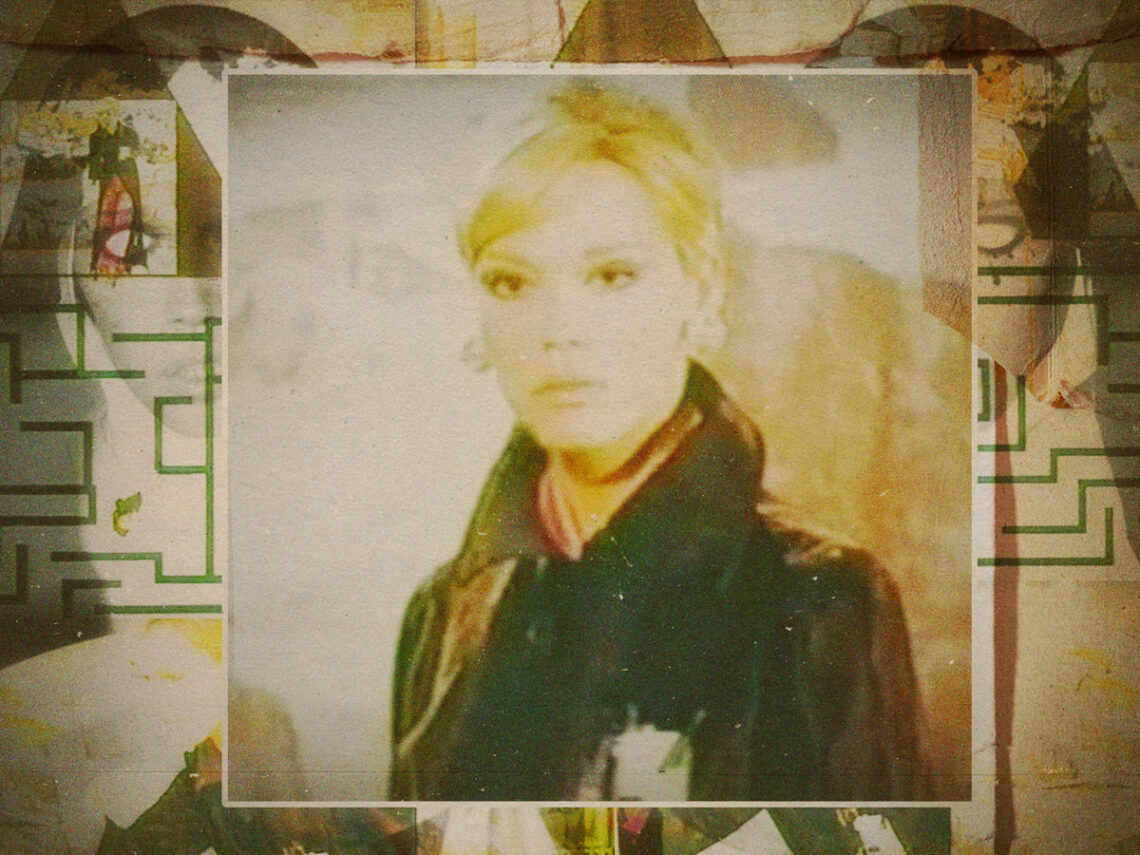
Salvador Dalí’s muse Amanda Lear in her first TV commercial, 1967
There’s a certain spectral cool that hovers over Amanda Lear. Even before she opened her mouth to sing, even before she smirked her way through talk shows and disco bangers, she was already a creature made entirely of myth.
Not everyone is born this way, of course, some sculpt themselves into legend. Amanda Lear? Well, she fucking blasted out of a surrealist’s fever dream, halfway between a Bond girl and an artistic alien.
Lear’s origin story reads like the punchline to a baroque riddle, but long before she slithered her way into disco stardom – or openly toyed with gender taboos – Lear appeared in a French TV commercial in 1967 for an eerily stylish Révillon’s Detchema fragrance. And in true Amanda fashion, she made it look like high art.
You have to remember what the world looked like in 1967. It wasn’t ready for Amanda Lear. Hell, it’s still not in many parts. Whispers followed her everywhere: that she’d transitioned, that she hadn’t, that she’d been born male, that Dalí paid for her surgeries, that she was born in Hong Kong, or Singapore, or the moon. Lear never confirmed or denied any of it. Why would she? Amanda Lear was always in control of her narrative, and she played the game better than most.
Dalí hand-picked her from the swinging London fashion scene, moulded her into a walking art piece, and made her his “muse”, though what that meant probably changed by the hour. She posed for him, dined with him, lived in his orbit like a beautifully dangerous satellite. To be Dalí’s muse was to be both adored and manipulated, and Lear wore that crown with a wink.
This commercial is the earliest moving image of Lear on record. It’s short – barely a minute – but already, the Lear mystique is in full effect. It’s a prelude to everything that would follow: the album covers with her in latex and chrome, the songs soaked in post-glam decadence, the Italian TV appearances where she toyed with lecherous men like a cat with a half-dead mouse.
She would go on to become a disco icon, a European television queen, a warping mirror in which pop culture saw its own obsessions refracted back: sex, gender, fame, and artifice. But in this brief moment from 1967, Amanda Lear is just beginning her transmission. She’s not selling a fragrance. She’s selling herself as an enigma. And we’ve been buying ever since.