


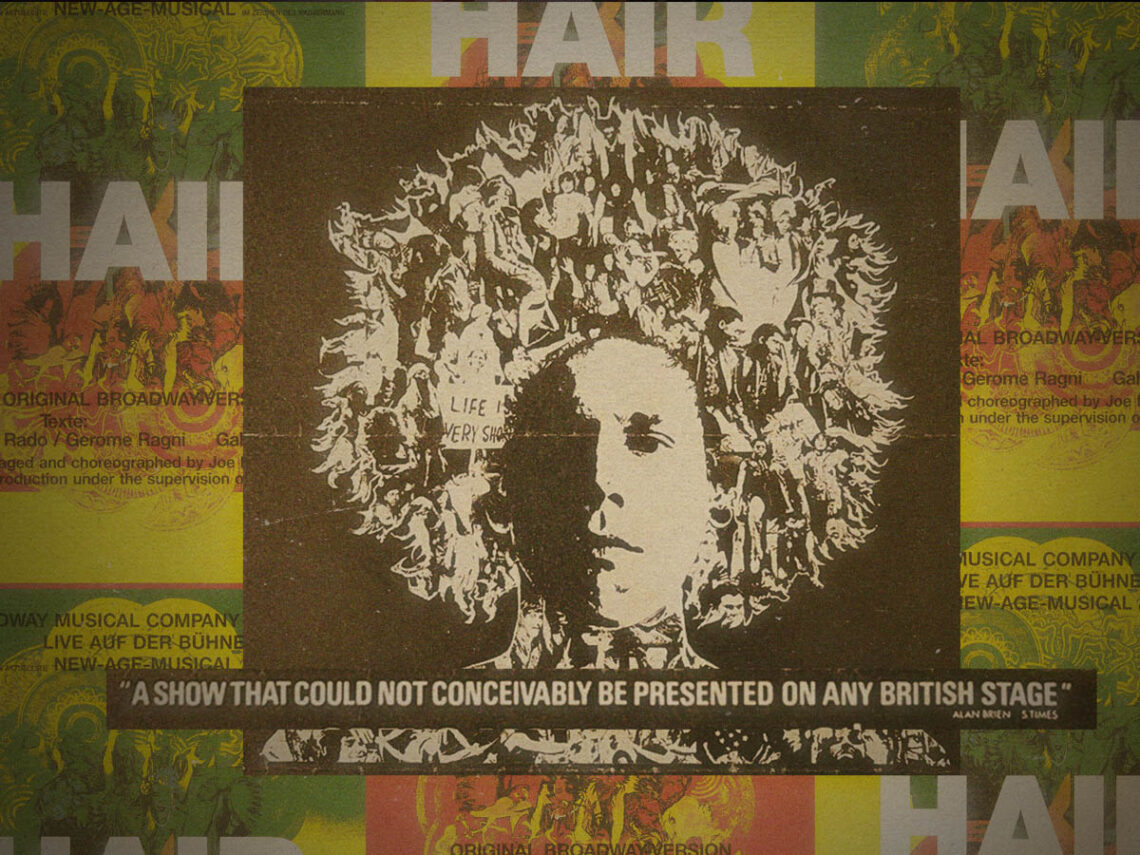
‘Hair’: the Broadway smash that was illegal in London
The idea of a controversial musical is a pretty silly one – It’s like talking about an aggravating tapestry, or a triggering lock of hair… Musicals, and I say this as someone who loves musical theatre more than nearly any other form of storytelling, are pretty safe, at least, on the surface.
Because that’s the secret about every form of mass communication, right? If you only look at Avatar, Star Wars and Driving Miss Daisy, films seem like a perfectly cosy medium. Ditto with TV if you only look at Friends and Miranda. If you only look at the highest-grossing, most establishment musicals around, like Mamma Mia! and Wicked, then you’d think that the only eyebrows musicals could raise would be the lightest, most easily upset around.
Yet that’s not the case. Just look at the likes of Rocky Horror and Avenue Q, the world of musical theatre can shock and appal even outside the theatrical underground of black box theatres and cabaret bars. Hell, the original version of Grease was still shocking for its time. Yet none of them come close to the stir caused by Hair when it first premiered off-Broadway in 1967. Every rule that could have been broken about what constitutes proper musical theatre, Gerome Ragni, James Rado and Galt MacDermot’s extravaganza broke with glee.
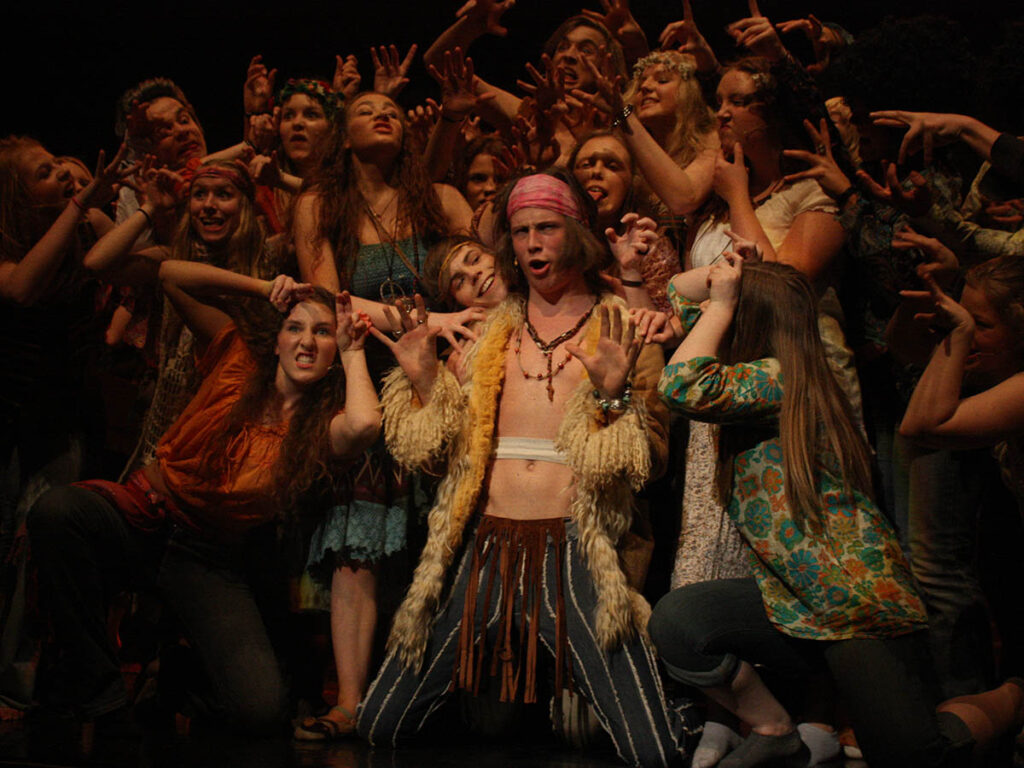
To this day, the world of musical theatre hasn’t seen a show this outright cool. This was a rock musical about the hippy era, and rather than debut about ten years after hippies were old hat, the way that Broadway usually does, it instead premiered at the peak of the summer of love. It was genuinely on the pulse and thus, featured discussions of bisexuality, polygamy, and the whole second act began with the entire company emerging on stage stark naked.
This was the kind of thing that you could (just about) get away with on the American stage. In true British fashion, it was literally illegal to try that shit at the time.
Why was ‘Hair’ illegal to stage in London?
This was because the London stage was still in thrall to the Licensing Act of 1737, an act of Parliament that was put in place to control what was being said about the English government and the royal family on London’s stages. Essentially, no play could be performed on a London stage officially without its script first being read and approved by The Lord Chamberlain and his assistant examiner. While this was to make sure that anti-government sentiment couldn’t be sewn among the theatre-goers of London, this obviously was not the only reason for the Act’s passing.
You see, they were also to make sure that London’s theatre-goers wouldn’t be exposed to immoral values via indecent stage plays. Thus, any genuine nudity or depictions of homosexuality were a no-go from the start if you wanted to depict them in any venue bigger than a pub back room. The English theatre scene spent the next two centuries pushing back against this, and while the Angry Young Men of the 1950s came very close to overthrowing the Licensing Act, it wasn’t actually replaced with the Theatres Act until 1968.
There’s an argument to be made that one of the key reasons it was abolished was because Hair was a massive hit, yet one that couldn’t be staged in London because the uncensored nudity on stage was part of the very foundation of the piece. If there’s one thing that’ll change centuries of precedent in the English legal system, it’s a boatload of cash – the Licensing Act was abolished on September 27th, 1968, and literally that same evening, the curtain went up on the West End debut of Hair.
The hit so big it changed English law!