


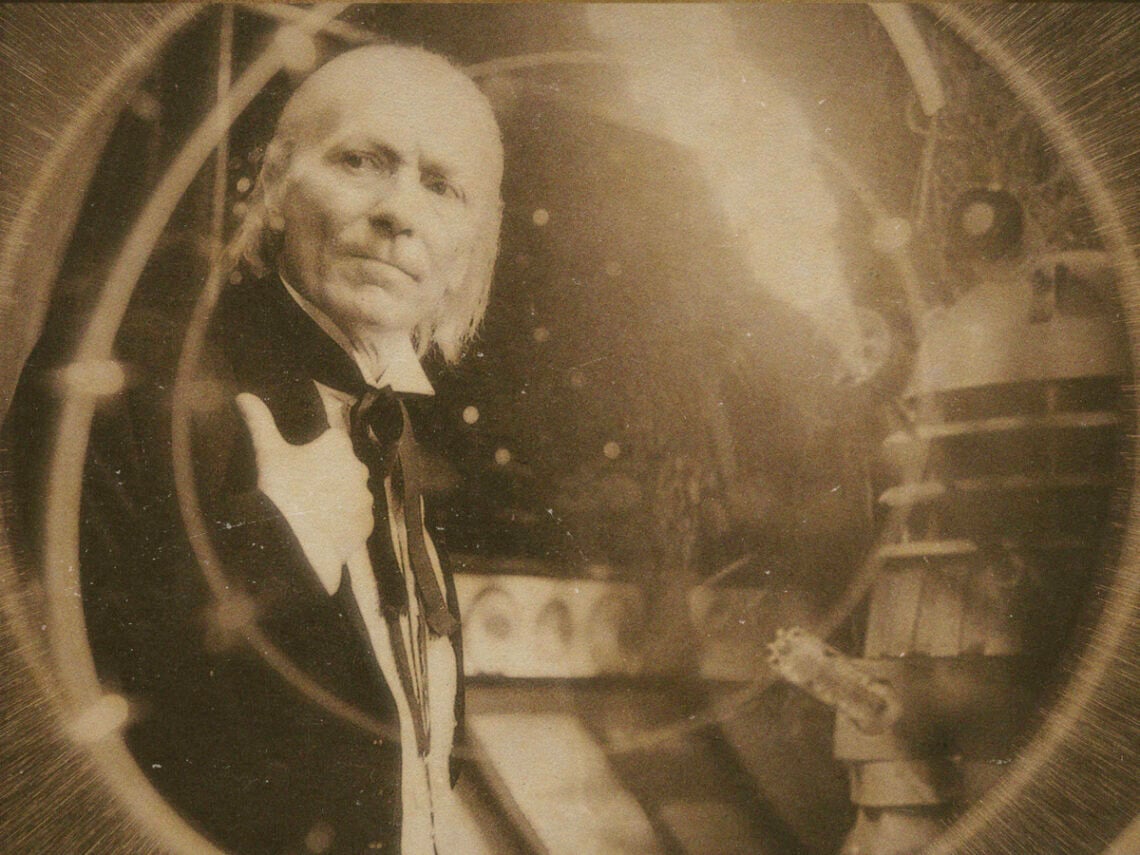
The 1968 classic Hollywood movie inspired by ‘Doctor Who’
One might assume that the famously dodgy special effects of early Doctor Who were a result of being a science-fiction series made in the early 1960s, but no. Even at the time, they weren’t much cop.
Doctor Who, despite being a ratings smash, was still a show being made on the cheap side at its 1960s pomp. All the things that those early years made are fun of for today, wobbly cardboard sets, hastily thrown together visual effects, and monster designs that look like they wouldn’t make the podium at a primary school arts and crafts fair, were also a source of ridicule back then.
However, what made the show stand out was its acting and writing.
If you go back and watch ’60s Who, this is clear to see. The showrunners knew their limitations. They knew that if a storyline’s climax was an epic space battle, it would look plainly ridiculous. Thus, the show instead takes a handful of excellent actors that could sell audiobooks to the deaf, chucks them in a room and gives them a brilliantly written script. Suddenly, all it takes is the shake of a camera and a deftly written monologue, and suddenly, everyone’s invested.
Something the show has been failing to realise for the last half a decade, but that’s a story for another time.
However, while the show began life with a budget of £30 and a tub of Pringles, it became one of the biggest on British television, allowing the money allocated to it to pile up. The special effects began to become more and more convincing (at least for the time), so in 1965, the team decided to put their money where their mouth is. This led to the broadcast of the most ambitious and expensive Doctor Who serial made up until that point, ‘The Daleks’ Master Plan’.
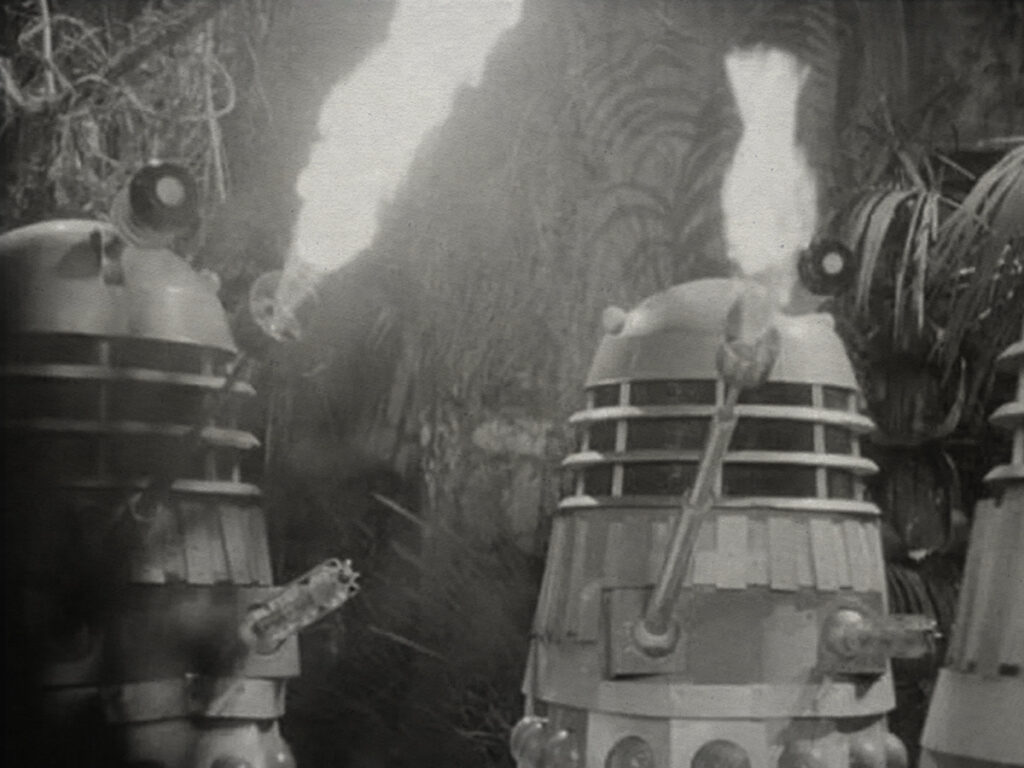
The fifth episode of the serial ends with one of the most shocking scenes in the early history of the show. A signifier that this was going to be a much darker story than the audience was used to, and that the stakes were going to be sky-high. At the time, one of The Doctor’s companions was a Trojan servant girl called Katarina; the writers were finding it hard to keep her in the story, so the decision was made to make her the first companion death in the history of the show.
It’s a powerful scene today that sees Katarina save The Doctor and his companions by ejecting herself and her captor out of an airlock, suffocating in the vacuum of space. The public outcry to the scene was immediate and noisy, with people complaining that the show had strayed too far from the children’s education show it began as and had become too violent. However, the episode’s director, Douglas Camfield, fielded a very different response to the episode.
He received a phone call from a veteran of film production, who was keen to know how exactly they’d achieved the effect of Katarina floating in space. When Camfield asked them why they wanted to know, the person said they were in the production team of a director currently beginning pre-production on a science-fiction film, who was very impressed by the special effect and wanted to work it into this upcoming film.
The director? Stanley Kubrick. The film? 2001: A Space Odyssey.
That’s right, an old episode of Doctor Who showed Stanley Kubrick how to make a film that is, to this day, one of the most convincing depictions of space travel in cinematic history. Not bad for a few cardboard sets and a plunger stuck to a dustbin, right?