


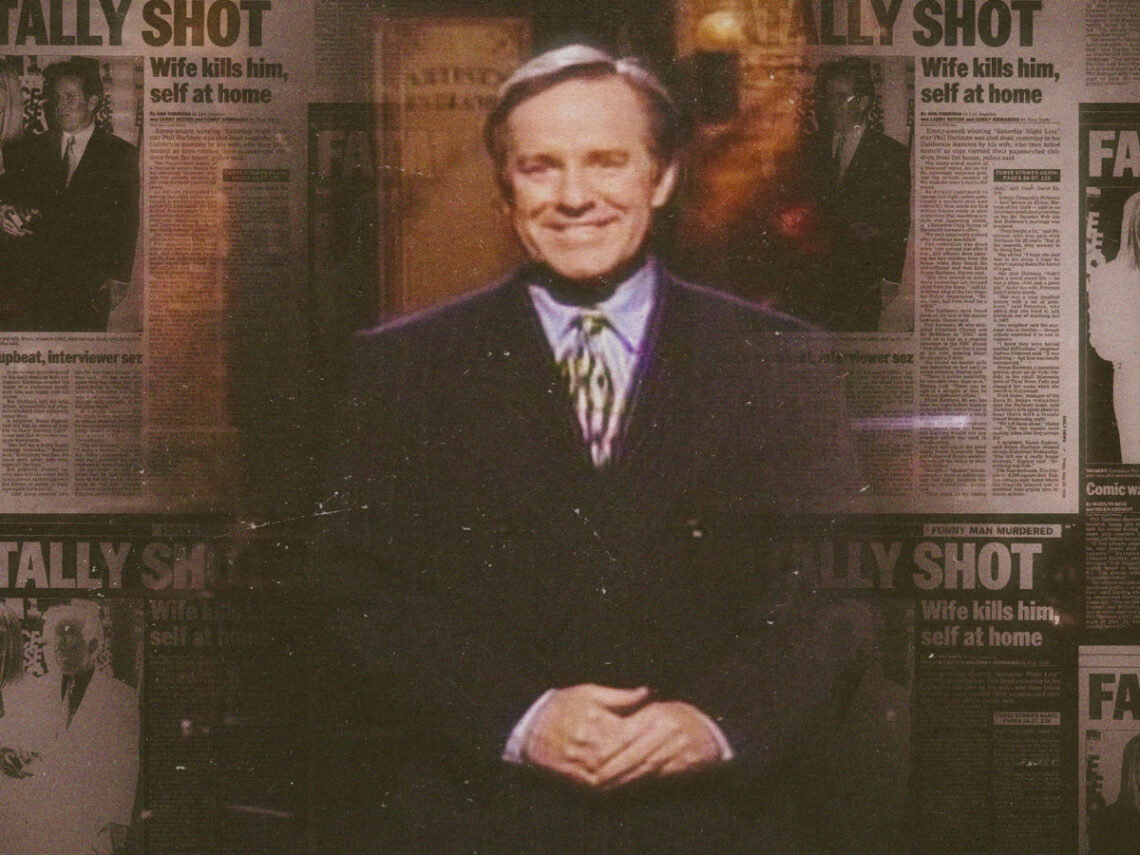
Phil Hartman: The ‘Saturday Night Live’ legend murdered by his wife
Phil Hartman earned a legendary reputation during his eight-year stint on the television mainstay Saturday Night Live, as well as one hell of a nickname.
While Hartman was never the outright star of the show during that time, it’s hard to be when your co-stars are Adam Sandler, Mike Myers and Dana Carvey, but each of them knew that behind the scenes, Harman held the entire joint together. It’s why they called him Glue.
This role suited the Canadian native down to the ground. Hartman spent his late teens and early twenties as a roadie for a band and as a graphic designer. During those years, he learnt how to support others, even designing album covers for the likes of Poco and America, and making the logo for Crosby, Stills and Nash.
However, it was only a matter of time before his natural performer’s streak began to take over. Even then, though, he was always as keen to help others find their groove as hog the spotlight for himself. When his friend Paul Rebens came to him with a character idea for a hyperactive, overly enthusiastic and slightly childish comedian who was clearly in over his head, Hartman worked with him to fully create the character of Pee-wee Herman.
When he eventually made it to Saturday Night Live, Hartman wasn’t just one of the show’s biggest draws but one of the most dependable figures behind the scenes.
If a sketch needed a thankless role or a bystander, Hartman was up for it. If a new arrival was struggling to fit in, Hartman could coach them through anything. If a guest wasn’t playing ball, Hartman could usually get them to see sense. In the world of entertainment, Hartman was something vanishingly rare, someone who genuinely wanted to help people. So much so that there’s a very real possibility that desire would eventually kill him.

In 1986, Hartman met aspiring actress and former model Bryn Omdahl on a blind date. Within a year, they were married, and Hartman was reportedly doing all he could to help his wife find success in the industry. Partially, because they were very much in love and he wanted to help out his wife, but also, disturbingly, because Omdahl was jealous of his success and was starting to take it out on him verbally and sometimes physically.
To call their relationship toxic sells it short. Omdahl would try to match Hartman’s success, fail, then retreat further into a drug and alcohol dependency that she was unable to kick. Over the next decade, Hartman considered retiring from acting for the sake of their marriage and two children. Yet, he was hugely in demand, and not only did that take him away from his family, but it also fuelled Omdahl’s resentment, which seemingly came to a head on May 27th, 1998.
That evening, Omdahl had been to dinner with a friend of hers before returning home and, reportedly, having an argument with Hartman that was even more heated than normal. Afterwards, Hartman retired to bed. A few hours later, Omdahl went to the room Hartman was sleeping in and shot him three times at point-blank range with a .38-calibre revolver. He was 49 years old. After alerting two of her friends as to what she’d done and moving their kids to a secure location, she turned the same gun on herself the day after.
There was, as you can imagine, an outpouring of grief that accompanied the news of Phil Hartman’s death. He was obviously someone who would be mourned for the work he did, but unlike so many from the world of entertainment, he was also mourned for being a genuinely humble, friendly and generous soul that no one had a bad word to say about. The kind of person the world will always need more of, whether that’s on screen or beyond.