


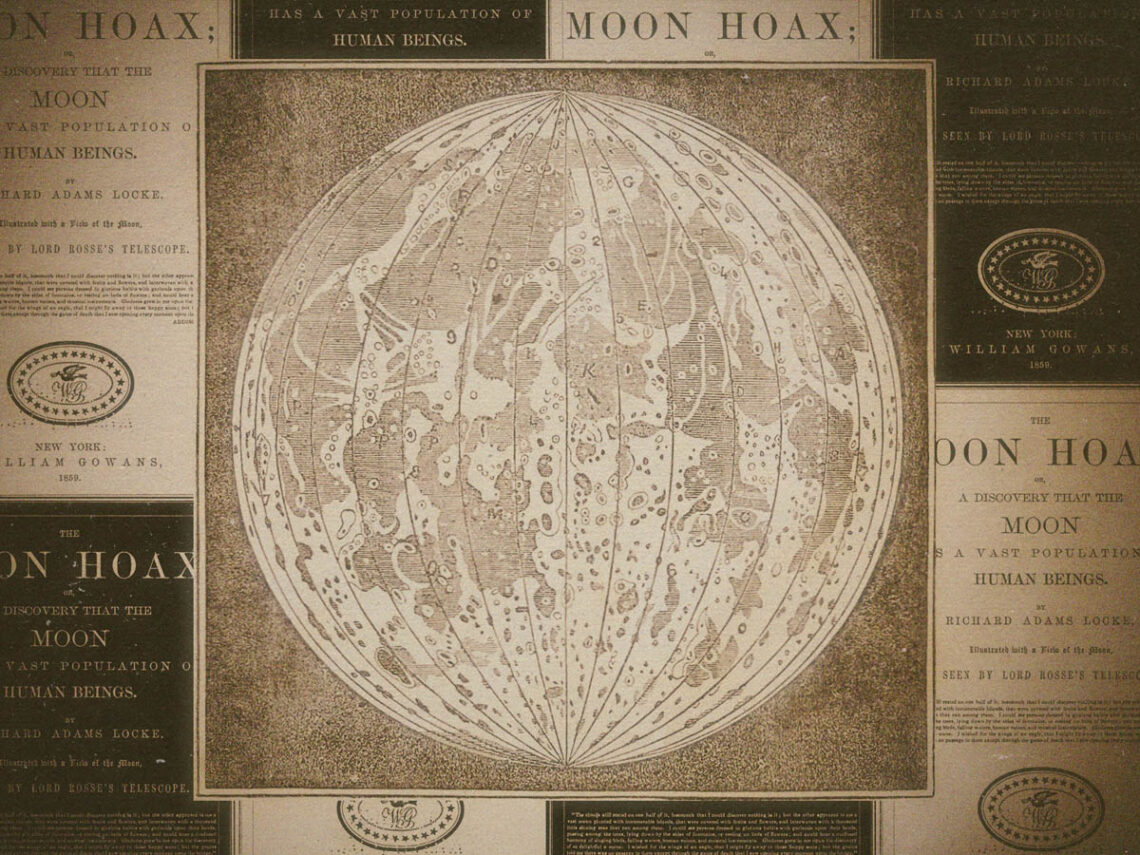
The Great Moon Hoax: how a satirical news story created science fiction
Throughout the whole of history, it’s human tendency to have always looked up at the stars, or, at the very least, the moon.
The very first stories that humans told each other, cooped up in caves while the world raged outside, more terrifying than anything we can imagine today, were about what we’d know today as space. Those stories explained why a giant, glowing ball sat in the sky to give them light and heat, before being replaced by a smaller, softer orb that glowed a paler light when everything else got dark. A nightlight for the world.
Speculating about the nature of what lies among the stars is a tradition as old as speculation itself. If that’s not science fiction, then I don’t know what is. Science fiction is a medium that doesn’t begin with Star Wars, or Lovecraft, or even the works of HG Wells. In fact, it can be dated back to 1835, and a set of articles in the New York newspaper The Sun (not that one).
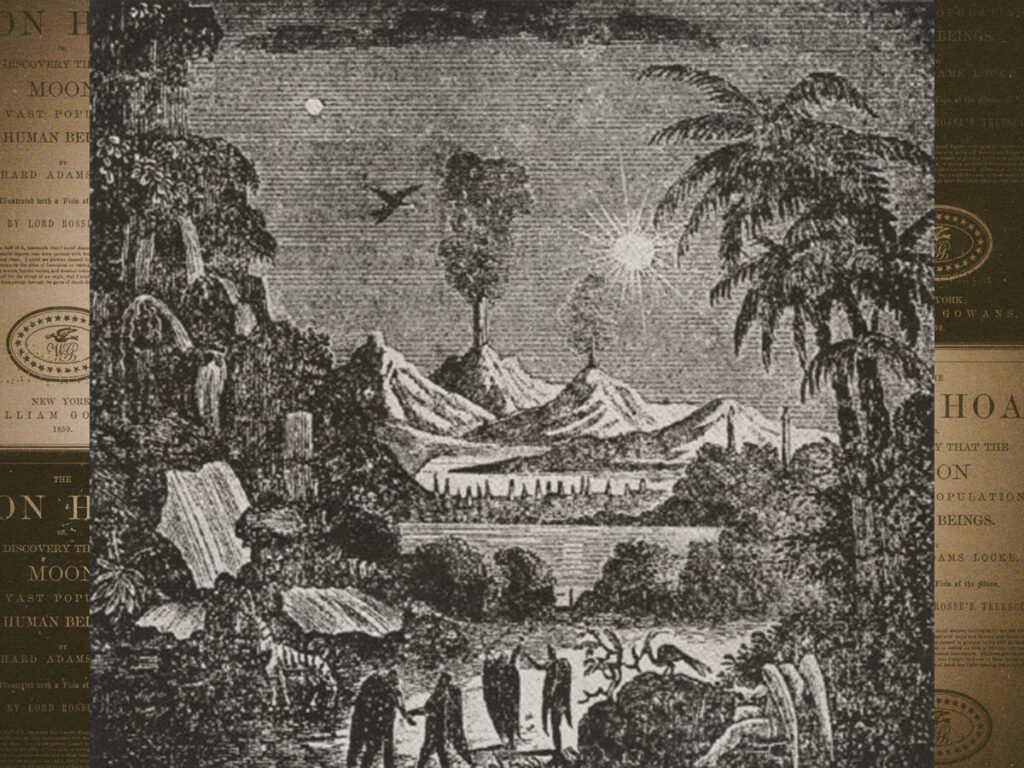
The drawings catch the eye first. An incredible, almost gothic vista that claims to be the surface of the moon. A replication of descriptions from two people who’d seen it first-hand, courtesy of Sir John Herschel and his fictional sidekick, Andrew Grant. Frolicking among flowing rivers and drooping, willow-like trees are creatures, the likes of which the readers of the time would barely have been able to imagine. Demonic figures standing at seven feet tall with the wings of a bat.
The kind that wouldn’t just let the readers of The Sun (not that one) know that they’re not alone, but also make them wish that they were.
So why did they publish this story about the moon?!
That is a very good question, because this is clearly cobblers. Not just to our eyes in 2026 either. We may have sent people up there to check whether there are any seven-foot-tall bat-men flying about on the surface of our constant companion, but even back then, people would have been able to say that they were having their leg pulled. So what was the deal? Was this just a blatant case of lying to a readership to sell papers? Because that’s exactly what happened.
The readership of The Sun of New York skyrocketed after the first article was published, leading to a further six articles in the next week of papers. Each issue matched the phenomenal sales of the last, which suggests it was a stunt to sell papers. But, in fact, it was a satirical comment on the way that other papers were doing exactly that at the time. No less a writer than Edgar Allen Poe himself had recently had a story published in The Southern Literary Messenger about a friend of his who’d supposedly travelled to the moon and back.
That wasn’t the only load of cobblers made up to cash in on a newly formed wave of interest about whether there was life on other planets, either. So, The Sun published the article as a comment on how ludicrous those other stories were.
However, the issue was that barely anyone took the story for what it was intended to be. As a result, a small percentage of their readership panicked that the moon was filled with bat creatures with a taste for human flesh, and a bigger percentage was outraged that the paper was trying to lie to them so bare-facedly.
Turns out that satire has always been nigh on impossible to get right. Who knew?!