


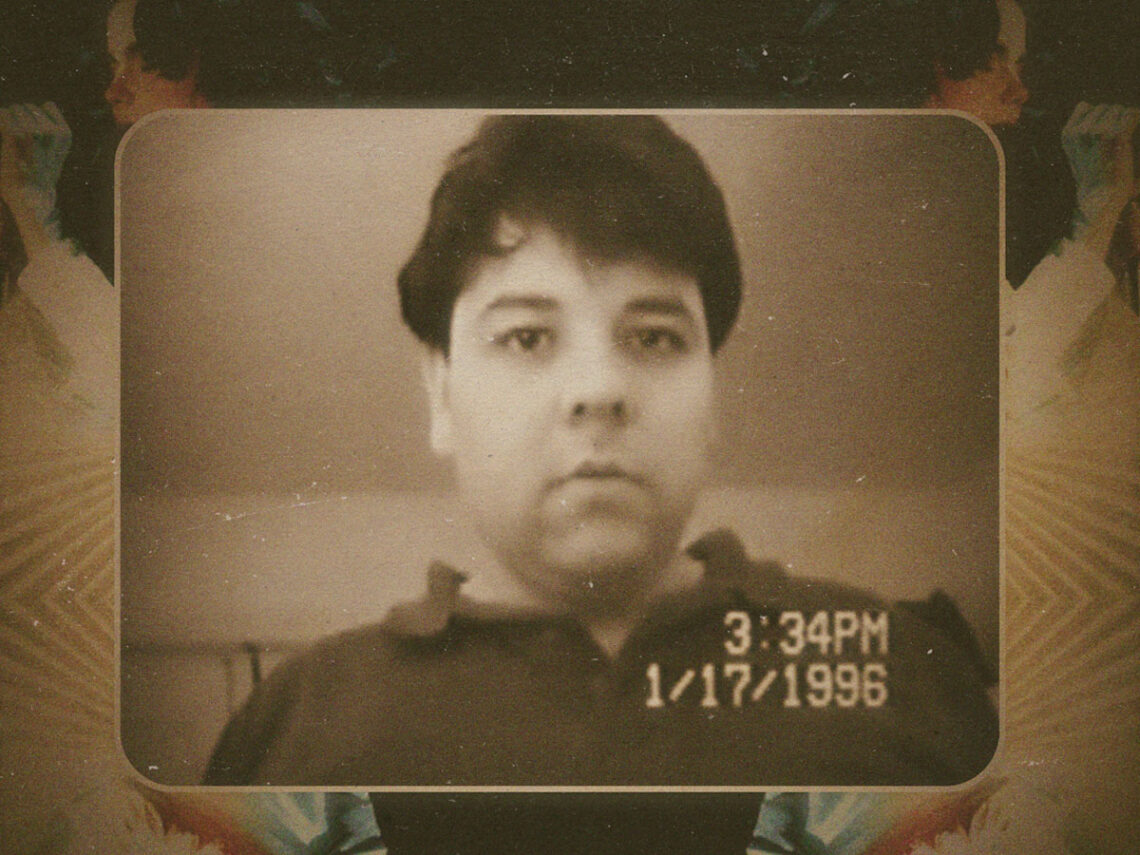
The Björk Stalker: the fucked up story of a parasocial relationship
The idea of the parasocial relationship is a meme these days.
People are aware enough of it to joke about it and make a show of how they understand the separation between them and the celebrities whose work they adore. “Not to be parasocial or anything, but your new album slaps!”
It’s a good joke. Not just because they can be quite funny, but because it’s very easy to fall into the trap of identifying more with a celebrity than with anyone in your real life. Especially today, when modern media essentially lives and dies by how accessible its creators feel to their fans. To be clear, it’s not that all parasocial relationships are bad. They can even be a genuine comfort if one knows what they’re doing.
The more people realise that, the better, though, because a parasocial relationship can go to some truly dark places. We all know the stories by now, but the majority of them are modern. Which makes sense considering it’s modern culture that seeks to market things based on cultivating parasocial relationships. The truth is, though, that one of the most horrifying stories about how toxic a parasocial relationship can be came 30 years ago.
Ricardo López was a troubled soul. An introverted young man who had few friends, and what few he did have were all other men. He was chronically shy and deeply sensitive about his appearance, so much so that when he dropped out of high school to pursue art, he managed to convince himself that people would reject him from art school due to the way he looked. Thus, he became a recluse. Supporting himself by intermittently working at his brother’s pest control business and retreating into a fantasy life otherwise.
This was a fantasy life marked by obsessions with celebrities. The first was reportedly with Geena Davies, but the next, and most infamous, was with the Icelandic singer-songwriter Björk.

How did his parasocial relationship get so toxic?
We know the intimate details of what made López’s obsession get so intense because he was a committed diarist, constantly writing out his feelings in a diary that got to over 800 pages by the end of his short life. It’s through this diary that we know how Björk became, for all intents and purposes, the sole thing in his life that gave him joy. He concocted fantasies about building a time machine and travelling back to the 1970s to befriend her as a child.
While he became convinced he was in love with her, there was no sexual element to his obsession: “I couldn’t have sex with Björk because I love her,” he wrote in his diary.
Which actually points to the moment where his obsession became something he couldn’t turn back from. In the mid-1990s, news broke that Björk had started a relationship with jungle producer Goldie. The fact that Björk was in a relationship with a black man infuriated López, and he started a plot to get his revenge. This is when he started keeping a video diary for his plot against her.
López began conspiring to mail her a package containing a bomb, one that would either maim or kill her outright. One way or another, López reasoned, he would become intertwined with her for all time. Over three months, he created a bomb containing sulphuric acid and put it in a book that would detonate if it was opened.
Shockingly, he sent the bomb off to Björk’s London home from his local post office, then returned home and, rather than wait for his inevitable arrest, he took his own life. His last words before shooting himself were “This is for you”.
The bomb never made it anywhere close to Björk. It was intercepted by the Metropolitan Police long before it got anywhere close to her label offices, let alone her home. A young man was still dead at the age of 21, simply because he developed a toxic, parasocial relationship with someone he didn’t know. You can act like this guy was simply a maniac; there’s more than enough evidence to support that. I’m not quite so sure.
Around a year after López’s death, Björk discussed the incident, briefly revealing how such a thing could have impacted her life: “I was very upset that somebody had died,” she said. “I couldn’t sleep for a week. And I’d be lying if I said it didn’t scare the fuck out of me. That I could get hurt and, most of all, that my son could get hurt.”
With enough isolation, self-loathing and obsession, any one of us could have been Ricardo López.