


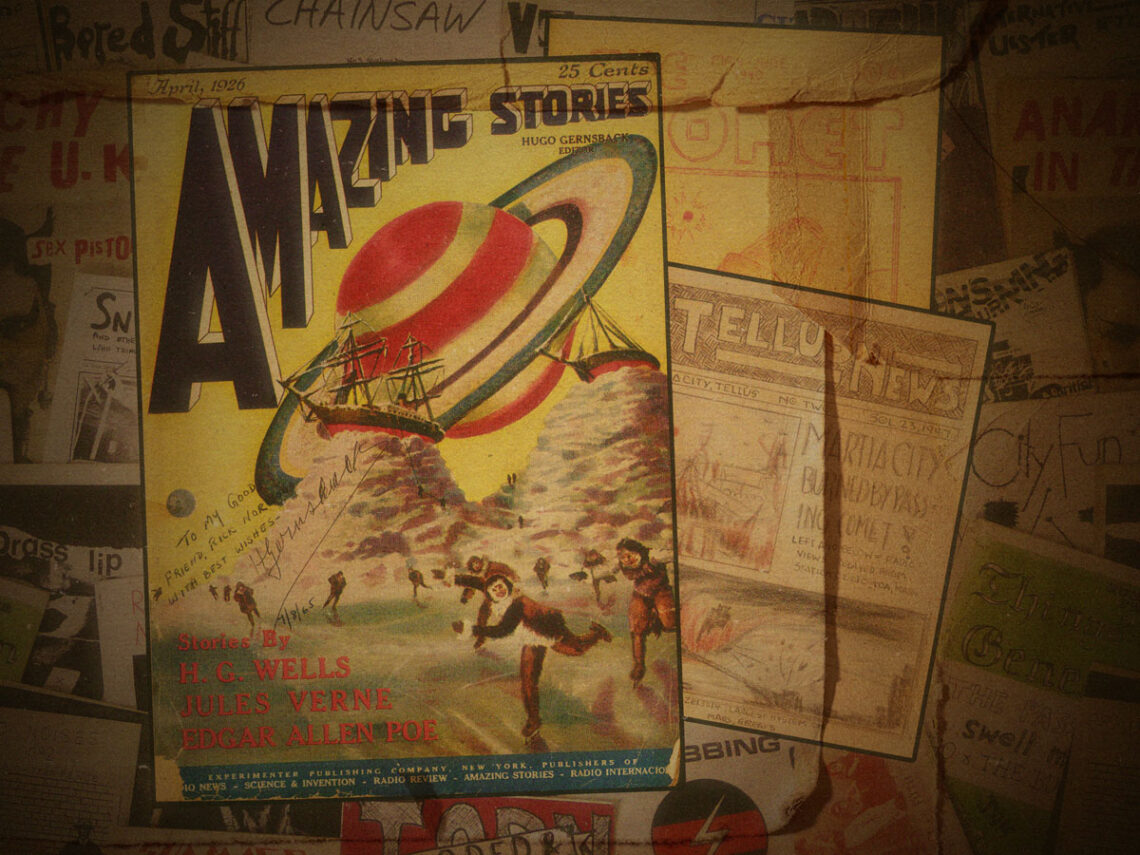
What was the first pop culture fanzine?
Pop culture is alive.
It’s an ever-changing, shapeshifting beast that has absolutely nothing to do with what we see on the mass-media purveyors of the day, whether that was newspapers and television shows of bygone eras, or phones and computer screens of the modern day. While the pieces of media we fall for may come from those sources, the culture that creates them, propagates them and influences the next generation of them happens on the ground level, in fandom circles.
It’s easy to assume that fandoms are a modern phenomenon. The advent of the internet age has made fandom culture more accessible than it ever has been. That, combined with the fact that the most relevant fandoms are for projects that are currently active, means that people are under the impression that fans care about media more today than they ever did. That they’re more likely to express their devotion to a film, TV show or musician today than ever before.
This is categorically not true. For as long as mass media have existed, people have been weird out by it. Publicly showing their love for the things that make them feel alive long before the internet existed. Take the publication of Arthur Conan Doyle’s first attempt to end the Sherlock Holmes saga, The Final Problem. Swarms of what we’d now call Sherlockians spent the month after its publication wearing mourning armbands in tribute to the famed (and lest we forget, fictional) consulting detective.
Thus, we can see fan communities have been springing up for as long as there has been popular media to be fans of. For years before the internet age, though, the way that these fandoms came together was via independently published magazines. The kind of publications that sought to distinguish themselves from official sources by dubbing themselves fanzines, which in turn led directly to the rise of zine culture in the 1980s and 1990s.

How did fanzine culture begin?
As with many things in fandom, the beginning of zine culture came from the world of sci-fi. In the 1920s, magazines printing sci-fi short stories like Amazing Stories were the precursor to comic books. One of the many ways they predated comics culture was by having a letters page in the back for fans to write in and discuss their favourite writers and stories. Eventually, the regular writers to their letters page decided to cut out the middleman entirely and converse directly with each other.
Two of the most regular contributors to this letters page were Raymond A Palmer and Walter Dennis, who became friends before starting what they dubbed the ‘Science Correspondence Club’ to help other fans do as they did, and make connections based on their shared love of science fiction. This grew from a simple fandom group into something much bigger within months, as Palmer and Dennis decided to start their own sci-fi magazine from the ground up.
In May 1930, the first issue of Palmer and Dennis’ new magazine, The Comet, was published. At first, the idea was to have a magazine devoted to science as a field of study, almost as a more grown-up alternative to the science fiction stories Palmer and Dennis had bonded over. By the second issue, though, they’d reverted to type, publishing sci-fi stories and articles about the culture of early science fiction. Three years and 17 issues later, The Comet, having freshly changed its name to Cosmology, shut down.
However, the ripple effects from The Comet would go far. Many other independent sci-fi magazines were set up in The Comet‘s wake. By 1955, a category at the legendary sci-fi and fantasy institution, the Hugo Awards, was added for ‘Best Fanzine’, a mere two years after the awards were set up. Before long, many different mediums had zine scenes of their own, from art and fashion to music and comedy, along with everything in between.
By setting up their own magazine, Palmer and Dennis democratised access to the thing they loved. Whether that was a good or bad thing can be argued for just as long as fanzines have existed, possibly even longer. However, one thing’s for sure. They changed fandom forever and thus changed pop culture forever.
