


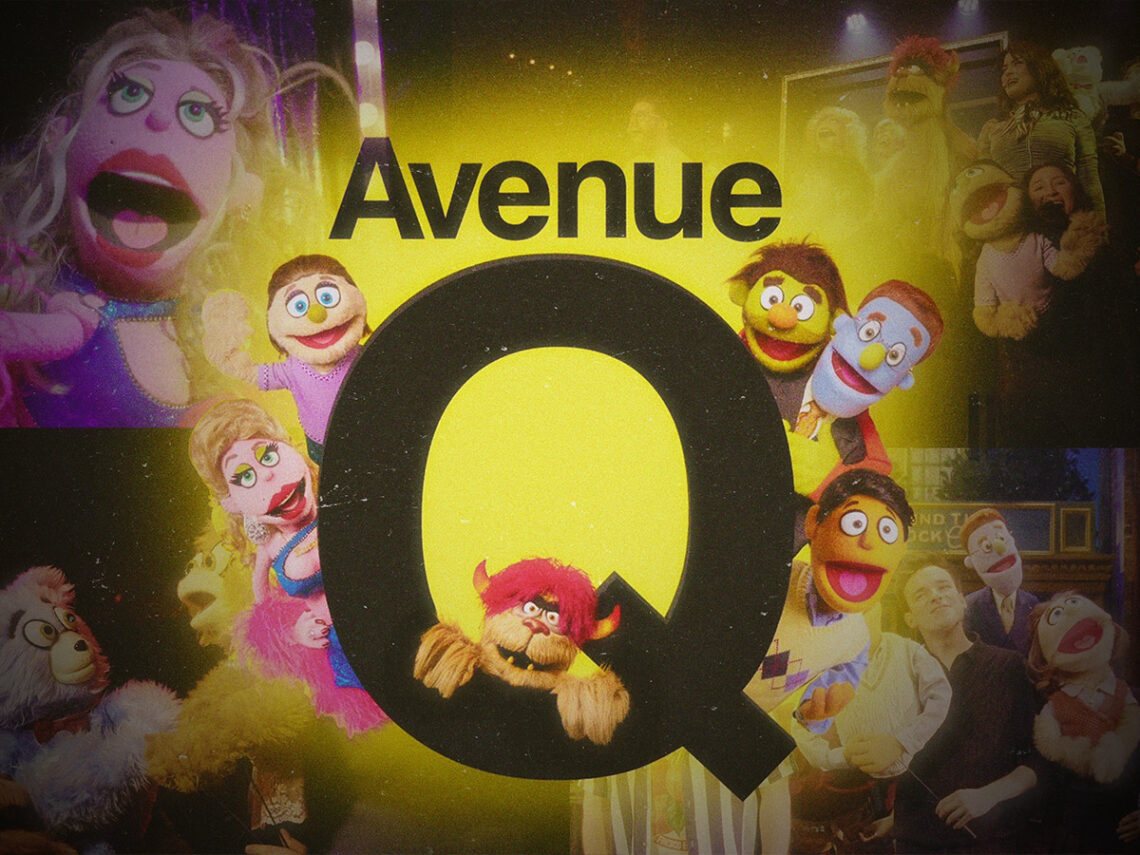
The X-rated take on ‘Sesame Street’ that became a raunchy Broadway smash
If you take the most cursory glance at the promotional material for Avenue Q, before heading out to the theatre, you might have an idea of what to expect, but it’d be wide of the mark.
It’s puppets, it’s a street in New York, let’s get the kids there and hope they shut up for a few hours. Then the first F bomb is dropped within the first five minutes, and suddenly, everything changes. Suddenly, the kids are being hurried out of the theatre, and you can be damn sure the venue manager will be hearing about it.
It would take one cursory glance to miss the fact that Avenue Q has an enormous Parental Advisory sticker on pretty much every poster. Because that’s what Avenue Q is – the basic idea of the piece is that if Sesame Street is life lessons for kids, shouldn’t there be a version that’s life lessons for young adults?
For 20-somethings who need more preparation for adulthood than, say, a BA in English, where instead of learning about shapes, colours and why your new friend might not have a mummy, you instead learn about how to live with a difficult roommate, what to do when you get wasted and sleep with a friend, and above all, precisely what the internet was invented for.
It’s a cute idea. One that a fair few people have tried variations of for as long as there has been media for children. It’s the kind of show you can imagine going down a treat at the Edinburgh Fringe Festival, or a particularly wonderful prompt on Whose Line Is It Anyway… It can’t be much more than that – what sort of mainstream audience is there for a musical that mainly stars puppets and has songs called ‘Everyone’s A Little Bit Racist’, ‘The Internet is for Porn’ and ‘You Can Be as Loud as the Hell You Want (When You’re Making Love)’?
A much, much larger one that anyone would have ever guessed, as it turns out.
How big a hit was Avenue Q?
The show began with the meeting of the show’s songwriters, Robert Lopez and Jeff Marx. The two were taking a songwriting class at the BMI Workshop and decided to team up for a class project. The project was to write songs for a speculative Muppet movie titled Kermit, Prince of Denmark, and Marx and Lopez wrote by far the best songs of the entire class. Encouraged by the response of their classmates, the duo decided to write a few more songs and, crucially, find a way of performing them with a puppet.
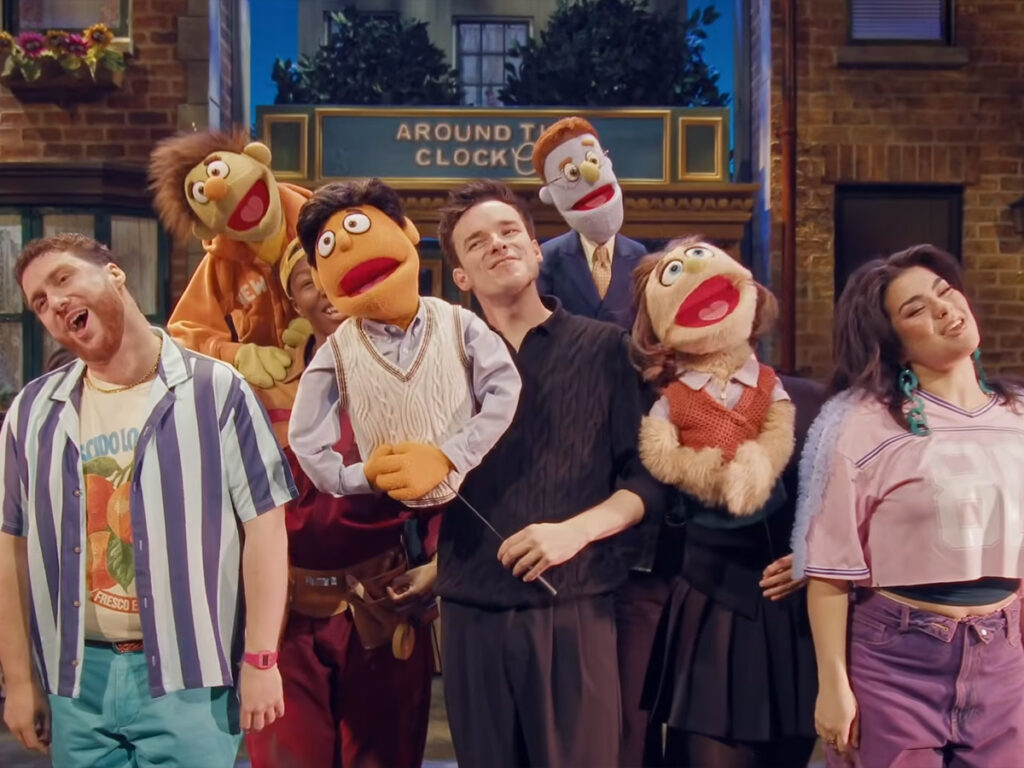
After trying to find a way of getting the song performed adequately with the puppeteer (who would also be singing) hidden, the duo decided to veto that idea. Instead, they drew on techniques cribbed from Bunraku, a form of Japanese puppet theatre that doesn’t try to hide the puppeteer, so when they hired an actor to perform their songs to the class and had him operate the Kermit puppet in clear view of their audience, they had no idea they’d just defined the visual style of a show they hadn’t even started writing yet.
They eventually finished the pitch for Kermit, Prince of Denmark, then took it to the Jim Henson Company, which turned it down. This was a blessing in disguise, however, as they went back to the drawing board searching for a new idea that could still work with their new ideas for puppetry. Their brainstorming led to the idea of a parody of Sesame Street, and work on what would eventually become Avenue Q began. The more work on the show continued, though, the more investors began seeing the show and realising something very important.
The show was good. Very, very good, in fact. This was no crass parody show with nothing but bawdy jokes about puppets bumping uglies. It was smart, empathetic, grounded and could speak to generations of theatre-goers. From people who were currently going through the young adult woes like the show’s central characters, all the way to people who had gone through those tribulations decades ago. And also it had bawdy jokes about puppets bumping uglies. What more could you want?
Thus, the producers began pitching the show not as a flash-in-the-pan novelty, but as the next great American musical. The show ran off-Broadway for a little over a month before producers on the Great White Way proper began making plans for it to transfer to the big leagues. In July 2003, the curtain rose on Avenue Q on Broadway, and the response was better than anyone could have possibly imagined, so much so that it emerged as a dark horse contender for ‘Best Musical’ at the 2004 Tony Awards.
In a field that included Caroline, Or Change and, most infamously, Wicked, it won the biggest award in theatre in one of the biggest upsets in the history of the ceremony. Not bad for a show about puppets saying ‘fuck’, is it?