Medieval super ship remains found in Danish waters
Maritime archaeologists have uncovered the towering remains of a medieval super ship off the coast of Copenhagen, Denmark.
The vessel has been hidden for more than six centuries. It has now been identified as the largest known medieval cargo ship in history.
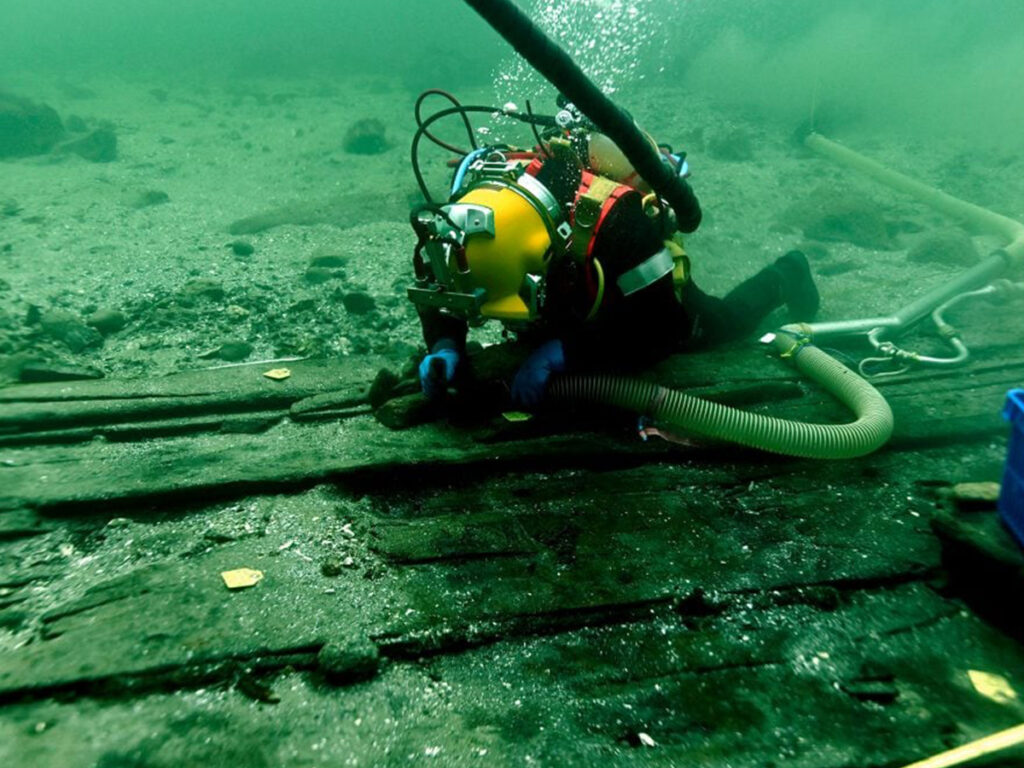
It was discovered in the murky depths of the water in the Øresund, or the Sound, a strait between Denmark and Sweden, more than 40 feet below surface level.
Archaeologists from Denmark’s Viking Ship Museum, amid seabed surveys for Copenhagen’s forthcoming Lynetteholm district, unearthed the magical artefact.
The team swept away several layers of sand and silt to uncover the ship. ship, The vehicle is known as a cog, and measures about 91 feet long, 29 feet wide, and 19 feet high, with a cargo capacity of 300 tons.
Now, it has been named Svælget 2 after its find location, the 15th-century craft represents the largest cog ever unearthed. Somewhat dramatically, the museum has deemed it a “medieval super ship.”
In a statement about the excavation, maritime archaeologist Otto Uldum shared, “It is extraordinary to have so many parts of the rigging.”
Uldum continued, “We have never seen this before, and it gives us a real opportunity to say something entirely new about how cogs were equipped for sailing.”
Uldum also noted excitedly that “Svælget 2 is a tangible example of how trade developed during the Middle Ages.” Via dendrochronological analysis, researchers have dated Svælget 2 to around 1410.
Everyday objects, such as shoes and combs, cooking pots and ceramic bowls, were found aboard the cog.
Additionally, one of the ship’s surviving features is a stern castle; according to Uldum, these castles, or sheltered decks, were only known to researchers through illustrations. Svælget 2, therefore, offers not just “archaeological proof,” said Uldum, but “20 times as much material” to study.