


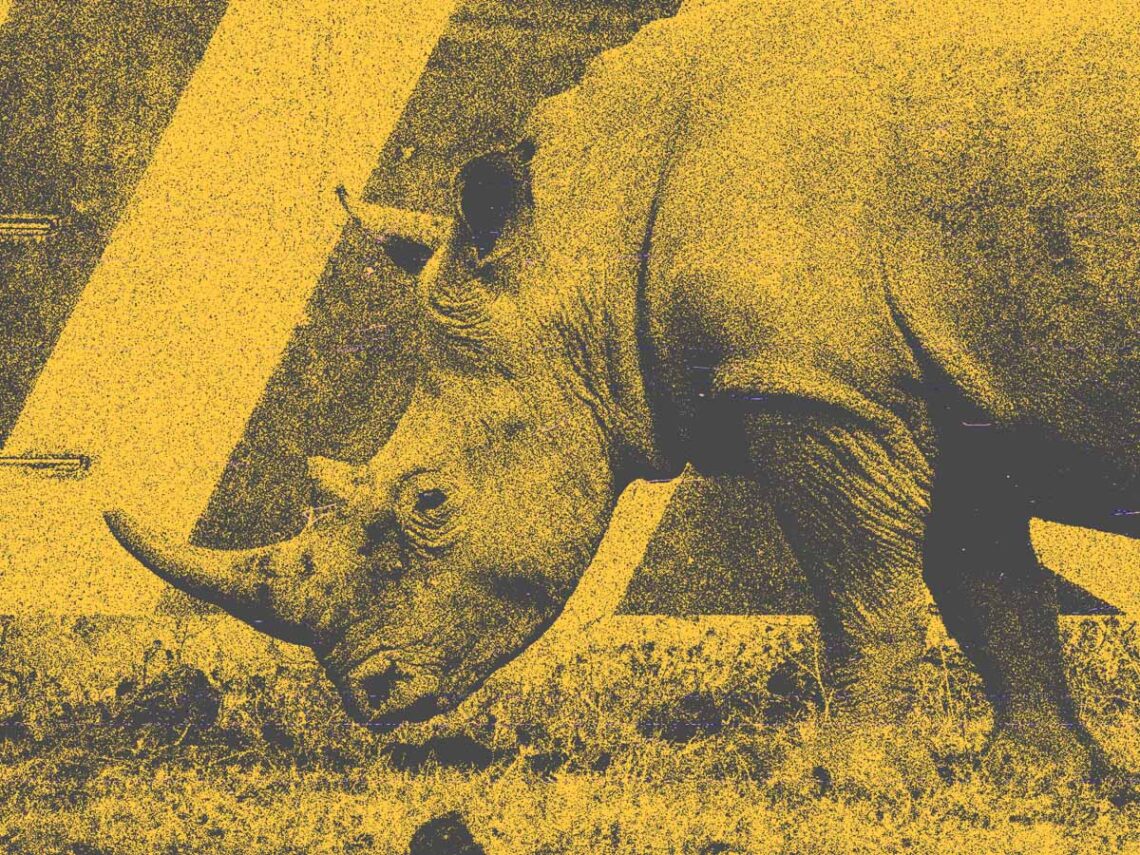
South African scientists turn rhinos radioactive in a bid to stop poaching
Scientists in South Africa have started injecting rhino horns in a bid to make them radioactive as part of a new initiative against poaching.
The University of the Witwatersrand, nuclear energy officials, and conservationists are behind the collaborative scheme. It’s hoped that injecting rhino horns with radioactive isotopes, which they claim to be harmless to animals, will decrease poaching, as customs agents at airports will detect it and therefore, poachers will be put off from carrying out the illegal activity.
So far, the initiative is very much in its infancy, and only five rhinos were injected last week. However, if it is successful, the scientists hope it will be rolled out on a large scale across South Africa in the near future.
Last year, 20 rhinos were injected with radioactive isotopes as part of a trial scheme, which scientists say provided concrete proof that the procedure did not harm the animals.
James Larkin, chief scientific officer at the Rhisotope Project, said: “We have demonstrated, beyond scientific doubt, that the process is completely safe for the animal and effective in making the horn detectable through international customs nuclear security systems.”
Larkin continued: “Even a single horn with significantly lower levels of radioactivity than what will be used in practice successfully triggered alarms in radiation detectors.”
The rhino population has been heavily depleted, and now stands at just 27,000, mainly due to the demand for rhino horns on the black market. In comparison, there were 500,000 rhinos at the beginning of the 20th century.
South Africa has the majority of the world’s rhino population, with 16,000. However, the number is decreasing at an alarming rate due to poachers and over 420 were killed in 2024 alone.
According to Rhino conservation charity, SORAI (Save Our Rhino Africa India), the radioactive injection also “renders the horn toxic for human consumption, stripping it of its appeal on the black market, where it’s falsely believed to have medicinal value.”