


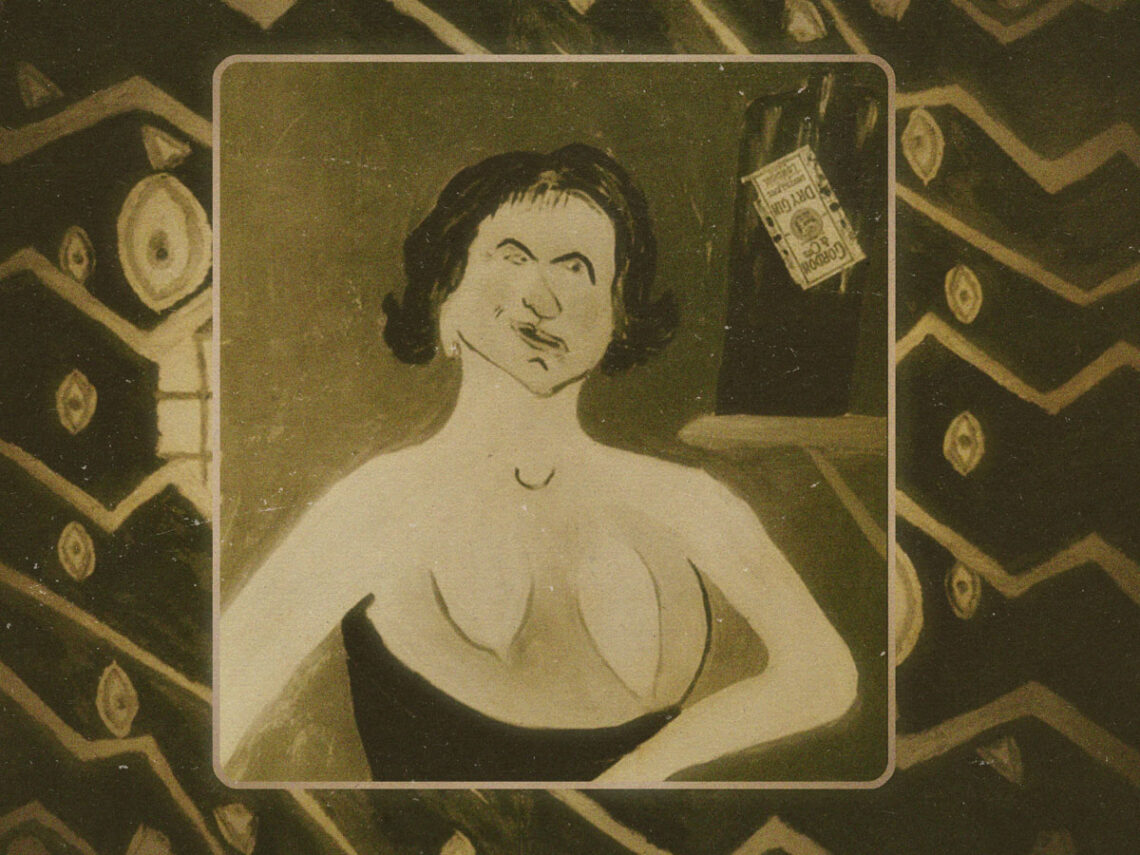
Disumbrationism: the art movement with a dark secret
One of the truly exciting things about the world of art is that the next great movement can spring out of absolutely nothing.
There truly is no telling what’s coming next. Which unmissable vision will take the art world by storm and end up inspiring the next generation of painters, sculptors, photographers, you name it. I mean, think of it this way, if you’d explained to someone in the 1960s that 30 years down the line, someone would become the toast of the art world thanks to a shark in formaldehyde, who among them would believe you? Hell, I’m sure if you’d told people about Damien Hirst’s amphibious stunt ten years prior, it would have been greeted with scepticism.
Granted, not all of them turn into money-spinners the way Hirst and his Young British Artists did, but that’s not and has never been the point of art. In fact, there’s a convincing argument to be made that the real proof that an artistic movement is legitimately shaking up the system is if it doesn’t turn into the kind of movement that parasitic rich folks latch onto for “safe investments”. Where the true joy of the movement is merely the art itself and not the clout or riches generated by it.
I’m talking about movements like Disumbrationism, haven’t you heard of it? That checks out, not a lot of people have.
Disumbrationism is a movement that took the art world by storm in the early 1920s. One that sought to “break the shackles of womanhood”, as the key mind behind it, Pavel Jerdanowitch, said of one of his four masterpieces, Exaltation. It was a truly exciting vision. One that embraced a child-like simplicity and a radical use of colour and impressionism, rejecting passé ideas of art as a recreation of existing images.
It was also complete bollocks, and no, this isn’t just me not knowing anything about art for a change.

Wait, was this so-called art movement a hoax?
Certainly was. It wasn’t even a hoax to get someone fame and fortune, either; it was to make a point about the facile nature of art criticism. At least half of it was. The other half was to get back at critics who had been mean about the art of someone they loved.
You see, at the centre of this hoax was “Pavel Jerdanowitch”, who didn’t really exist. In reality, he was the writer, pastor and lecturer Paul Jordan-Smith, who had a bone to pick with the art scene thanks to their criticism of the work of his wife, Sarah Bixby-Smith.
Bixby-Smith had exhibited a series of realistic still-life paintings that had been sneered at by an art exhibition jury. Her work was criticised for being “distinctly of the old school”, and Jordan-Smith had taken up a paintbrush (for the only time in his life) to show everyone just how little these critics knew what they were talking about. You remember Exaltation from earlier? Yeah, so the actual painting is a blurry, amateurly executed work depicting a Pacific Islander woman holding a banana over her head, having just killed a man and put his head on a stick.
It was intentionally patronising at best and outright racist at worst. Critics loved it. In 1925, Jordan-Smith submitted the work (alongside a suitably moody picture of himself as “Pavel Jerdanowitch”) to the same group of critics that had sneered at his wife’s work. Along with the painting, he wrote a few paragraphs of waffle about his work being representative of the new school, Disumbrationism. Immediately, he was praised as an exciting new vision and “Disumbrationism” was hailed as a movement to keep an eye on.
Over the next two years, Jordan-Smith found himself in an unlikely new career, spending an hour every few months throwing paint at a canvas until he finished the next masterpiece of Disumbrationism. Every single one of them is as objectively bad as the last. Every single one of them was hailed as an intriguing masterpiece until finally, he revealed his hoax in 1927. His interview confessed to his ruse, making the front page of the Los Angeles Times.
Something to think about next time the art you’re passionate about making falls flat. Try making utter shite. You never know what might happen!