


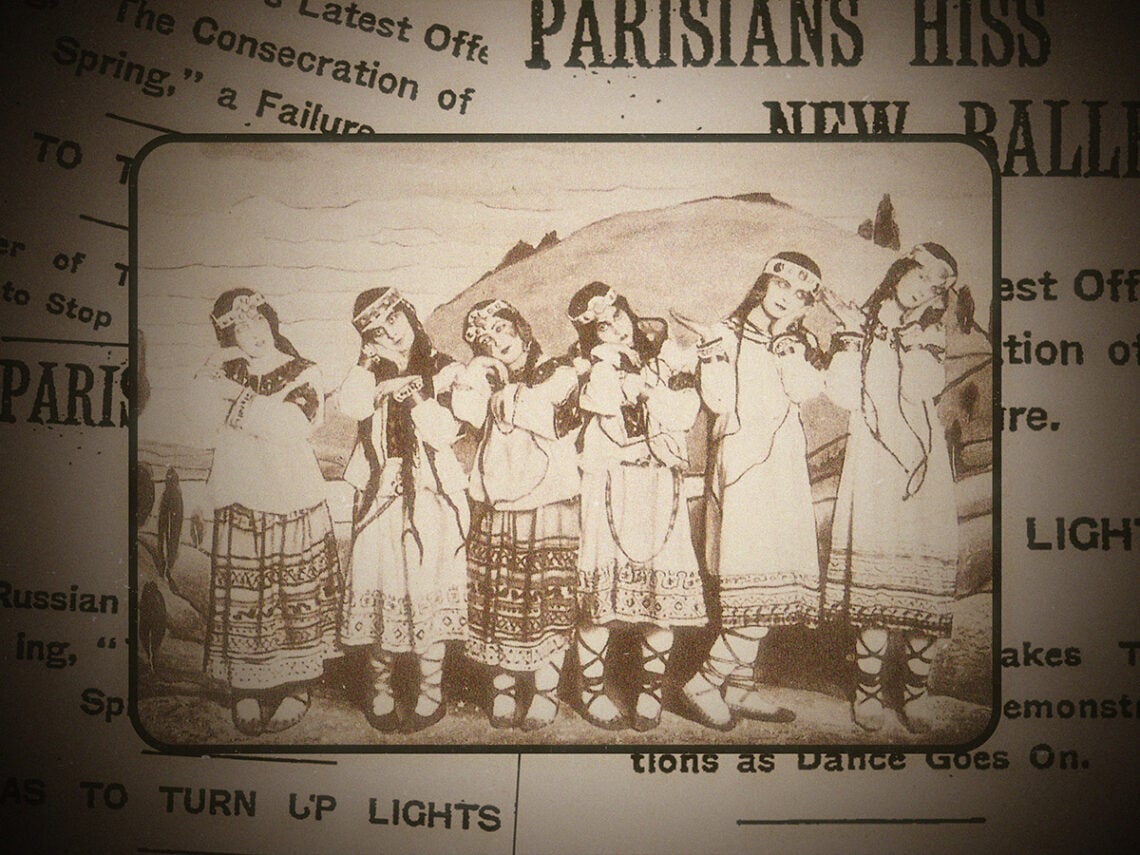
‘The Rite of Spring’: the ballet that caused a riot in 1913
The idea of a ballet causing a riot is a literal joke today. You might as well suggest that next season’s Dockers Derby between West Ham and Millwall could cause a spontaneous outbreak of Morris dancing. However, that’s not just because ballet is a rarified medium of art reserved for the rich today.
No, what makes this story so bonkers is the fact that even a century prior to the culture that surrounds ballet today, the idea of a fight breaking out at a ballet was inconceivable. Most of the time, forms of so-called ‘high culture’ like art, classical music and yes, to use the Chalamet parlance, ballet and opera haven’t always been like that. Opera, especially, was a working-class pastime that anyone could enjoy, being performed in both the most revered theatres in the land and the rowdiest of beer halls.
A ballet audience, on the other hand, can’t really be rowdy in the same way. How could it not be? The music is (broadly speaking) more delicate, and it lives and dies by how much attention the audience is willing to give it. It asks for the attention that opera demands via several extraordinary singers bellowing in the audience’s collective face. I know, of course, that there are several examples of ballets that reach decibel heights of trouser-flapping hugeness, but I’m talking in broad strokes here.
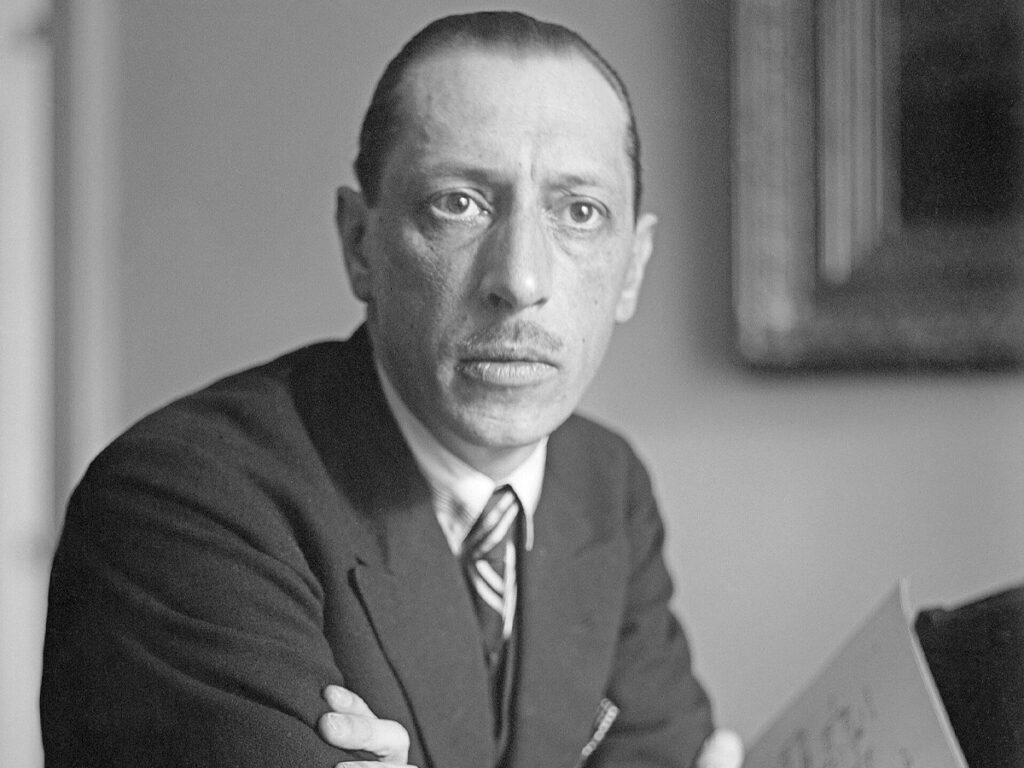
All this to say that when Igor Stravinsky premiered his masterpiece The Rite of Spring on May 29th, 1913, at Paris’ Théâtre de Champs-Elysées, the reaction sent shockwaves that we’re still feeling today. By 1913, Stravinsky was one of the most controversial and exciting composers of his day, yet absolutely no one was prepared for how progressive, uncompromising and daring The Rite of Spring was. For one thing, the music was unlike anything most ballet fans had heard at this level.
The music is still a chaotic listen today. Stark, staccato strings, deafening percussion, thunderous and unpredictable dynamic changes that fly in the face of the idea that ballet music should be as delicate and melodious as possible. However, that was only one part of the show’s raucous response. The other was the choreography itself. Not content with the show causing a stir by depicting a prehistoric Russian tribe conducting a pagan ritual, the surreal, slightly disturbing movements of the dancers set the audience on edge as much as the music.
This has gone down in history as the reason why there was a riot on the opening night of The Rite of Spring, especially when you take into account the surroundings in which the ballet was being performed. The Théâtre de Champs-Elysées was the home of French high culture, and the audience felt it was an act of disrespect for it to be hosting such a vulgar creation. Imagine The Last Night of the Proms being a surprise Knocked Loose gig, and you’ve got an idea of what kind of audience was there.
However, there was another, more complicated side to the audience’s response to The Rite of Spring as well. At the time, Stravinski made no bones about how proud he was of his Slavic-Russian heritage. While Russian culture was immensely popular in Paris at the time, there were pockets of the city that expressed Anti-Russian sentiment due to their threats of expansion and acts that were treated as state-sponsored anti-semitism. Given that The Rite of Spring is explicitly about a dark tradition from Russia’s ancient history, it stands to reason that some people weren’t just upset about it but were moved to heckle Stravinsky (who was in attendance) directly.
This caused the first act of The Rite of Spring to descend into chaos. The story has been romanticised since, and it wasn’t the bloodbath some claim it was, but there were heckles, whistles, arguments, and a few small scuffles between the upper crust half of the audience, scandalised by what they saw and the bohemian class, who were overjoyed by it. However, after the first act finished and a few of the offending audience members were removed, the second act went off without as much event.
By the following spring, The Rite of Spring was being hailed as the masterpiece we know it to be today, despite it causing such a ruckus in an environment that, even at the time, was the picture of high-class calm.