The erotic art of the enema: Weird history, taboo rituals, and modern fringe
Mel Brooks was once a guest on Michael Parkinson’s chat show sometime in the early 1980s, where he described the opening scenes to his proposed next movie. Brooks explained he wanted his film to begin like Stanley Kubrick’s 2001: A Space Odyssey, but instead of apes, he wanted to show a neanderthal standing upright for the first time.
His spiel went something like this…I’m gonna paraphrase, so deal with it: It’s early morning, just before dawn. The sun is slowly igniting the horizon. A band of gold appears as the theme from Thus Sprach Zarathustra begins to play under the picture. As the sun rises, a group of neanderthals huddle together fearfully, watching this magical giant disc rising up like a god. As the music swells, a beam of pure golden light radiates across the landscape.
The neanderthals are scared and cower away from this approaching light, all except one who climbs on all fours towards the top of the mountain. As this inquisitive figure moves forward, the sun rises. The sky is now fire bright.
The golden orb continues to rise, and the neanderthal reaches out to grasp it. He begins to rise up on two legs. First one, then the other arm reaches out towards the sky. As the music reaches its dramatic climax, the neanderthal is standing teetering on tiptoe, arms raised. The neanderthal looks up at the sun. Then slowly at his arms, at his hands, then down at his feet. He has risen up like the sun and now stands upright for the very first time. This creature has liberated his arms to create, to produce and to help him shape a new world.
His fellow neanderthals scurry away in fear. As a new day begins the first homo erectus looks at his hands—mesmerised by his fingers, by their potential to grip and move, to adapt and change. He lowers his arms and looks down at them, contemplating his new power and the potential now opened to him. The music finishes as this first proto-human looks down, considering the significance of his actions. It’s a powerful moment in human evolution. He looks again at his hands—he’s free to use them to help others, to change the world.
And that’s when he starts masturbating.
Human evolution – the progression towards self-gratification
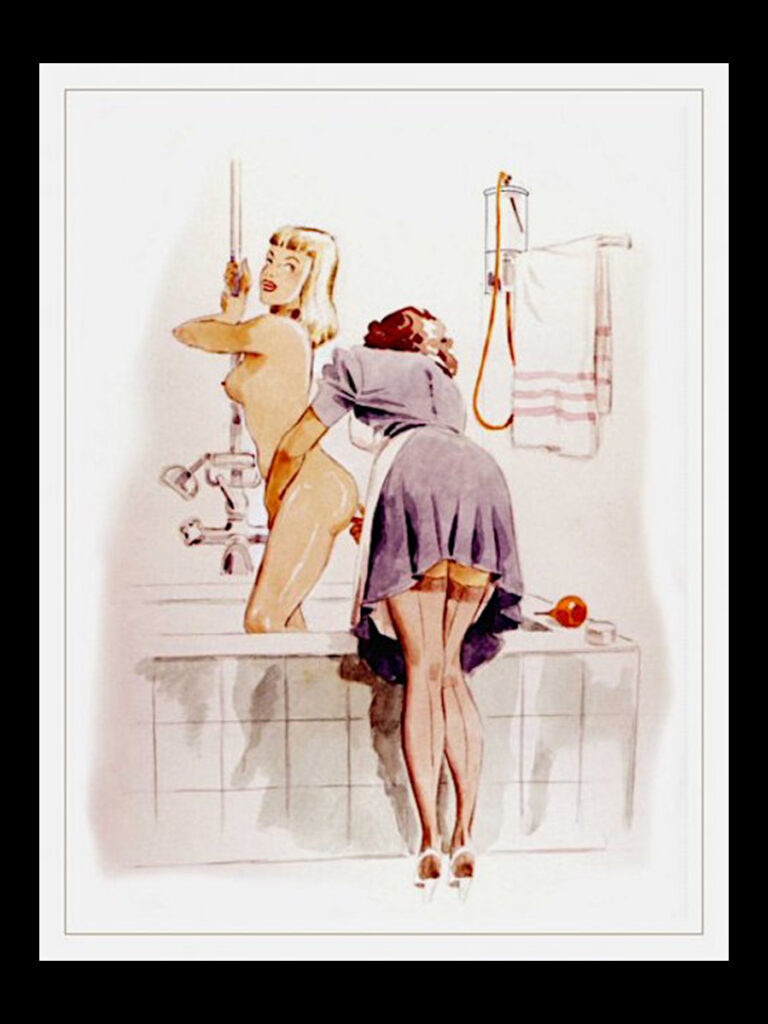
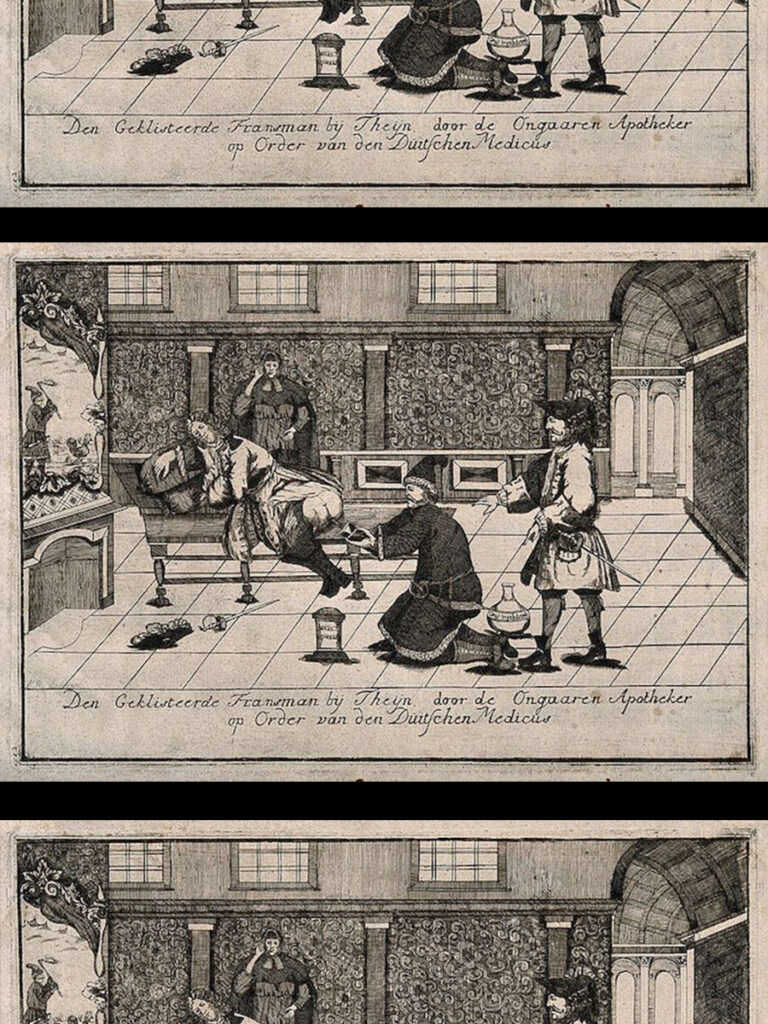
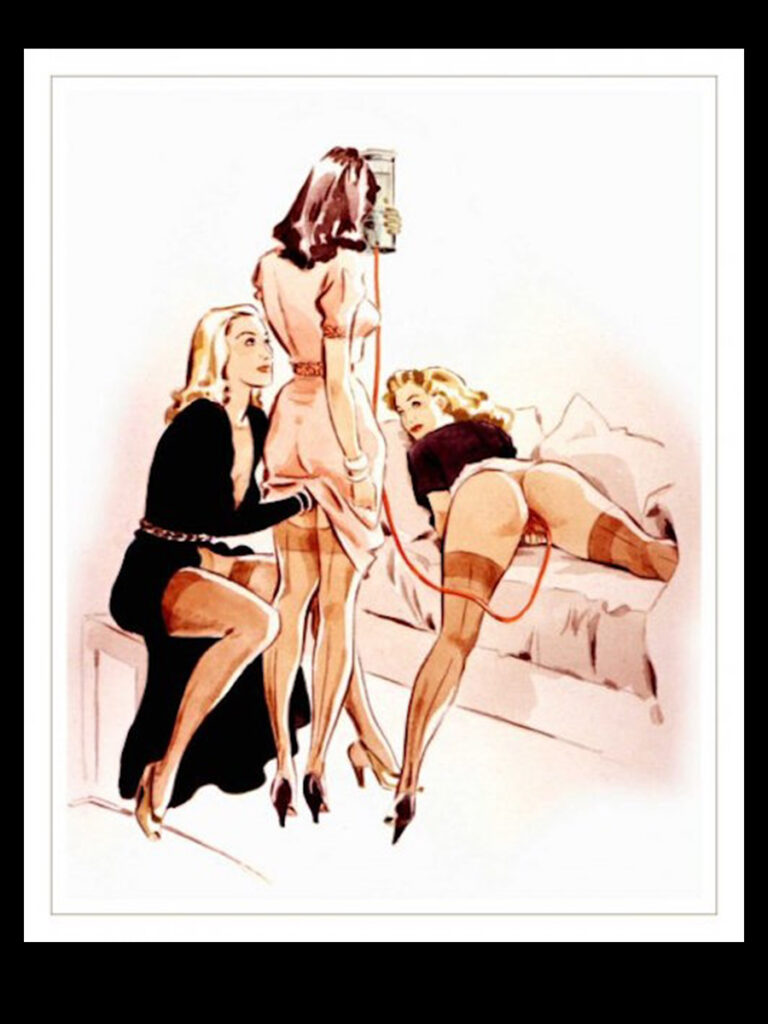
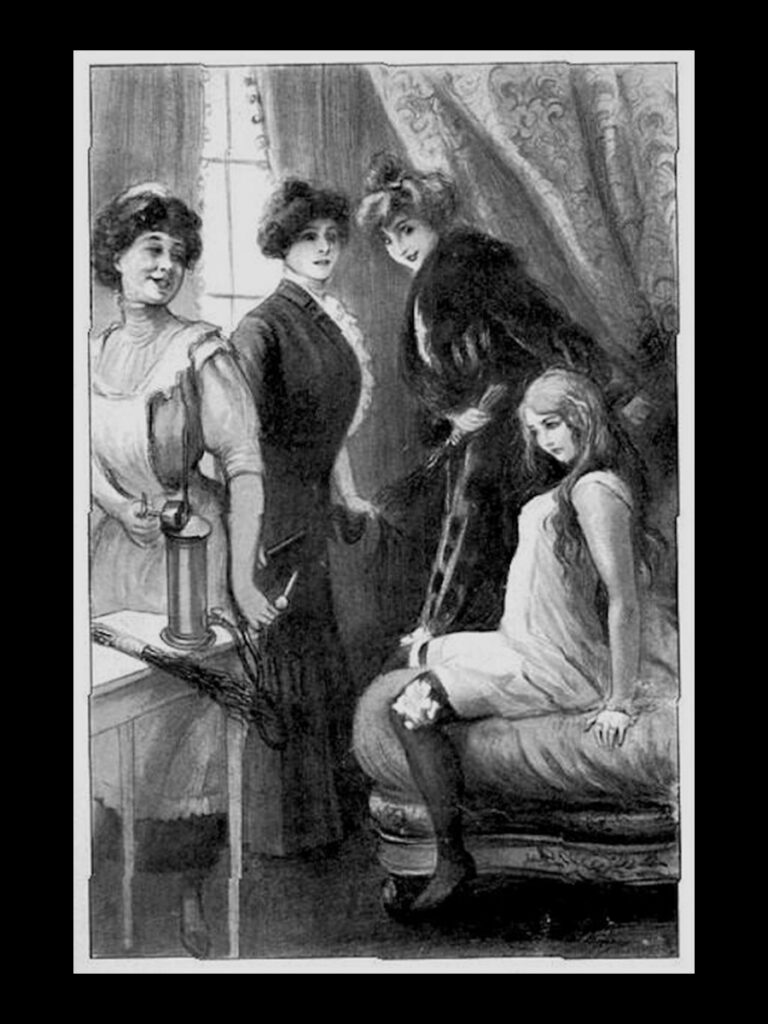
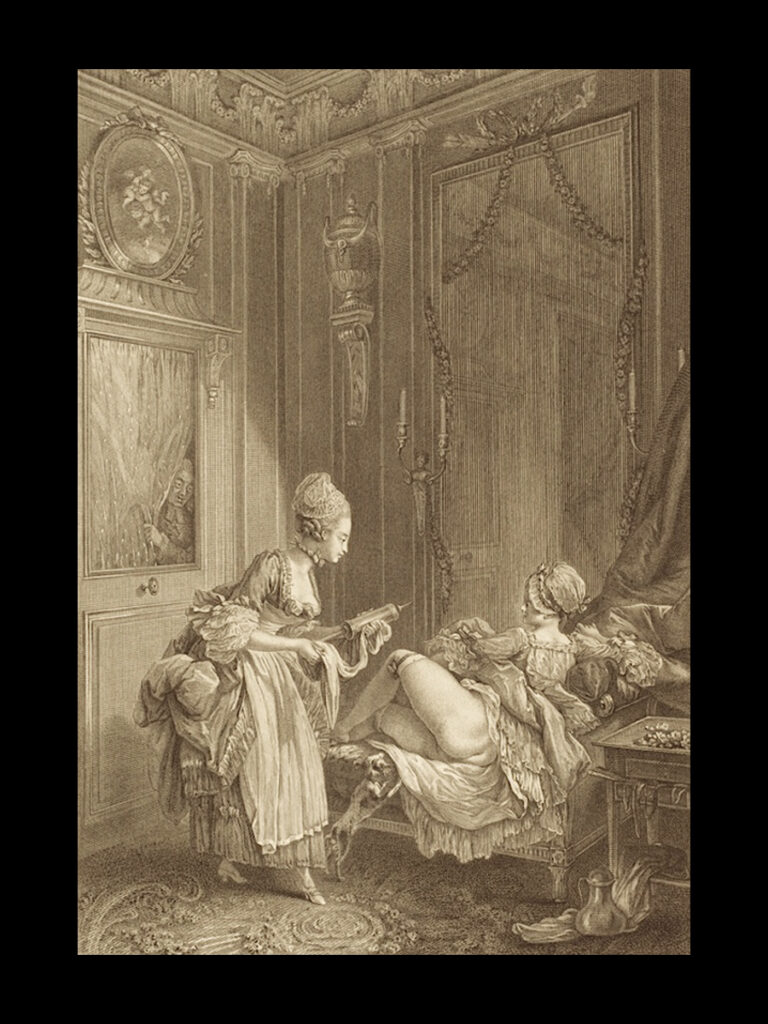
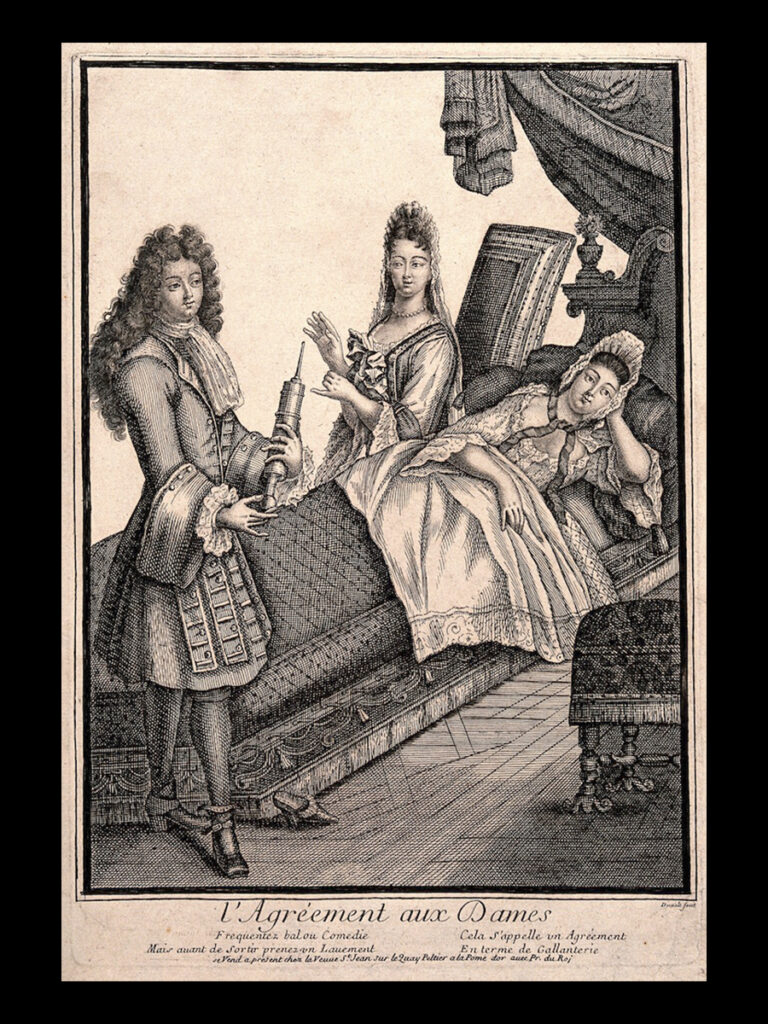
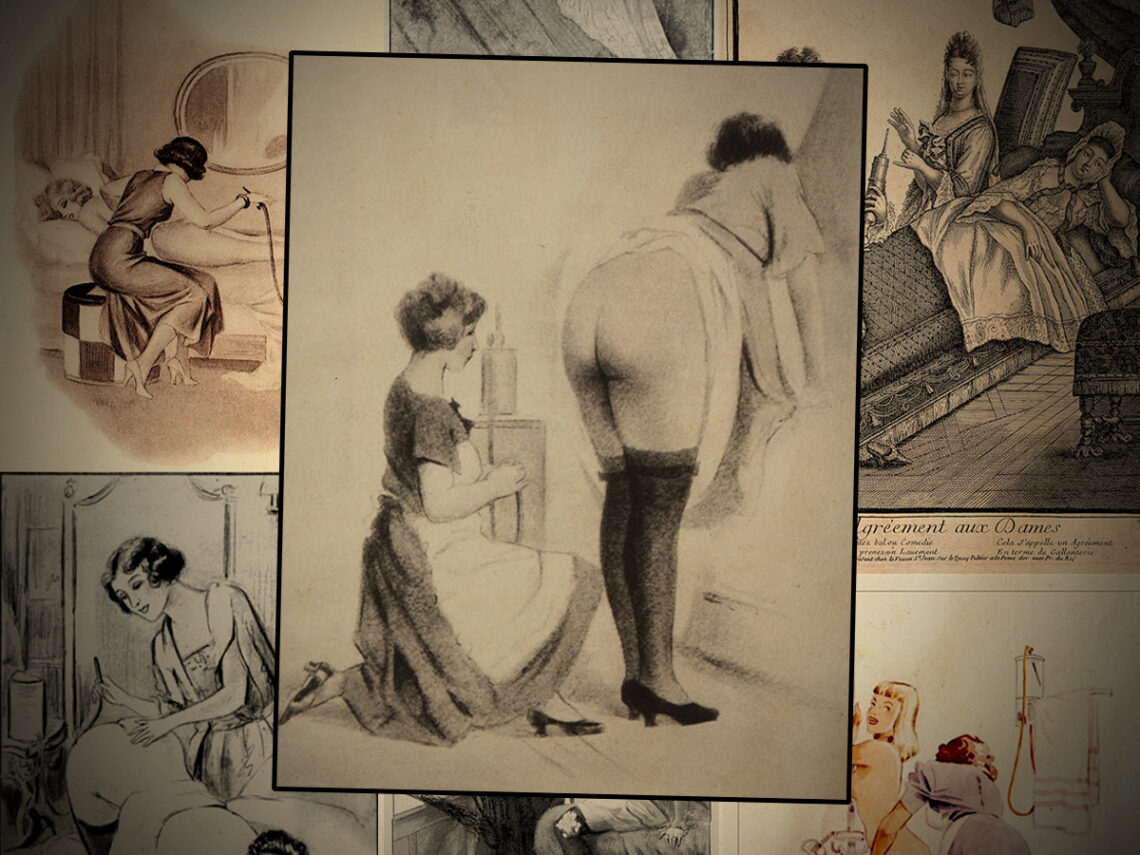
Which brings us, in roundabout fashion, to these historic and seemingly erotic images depicting the use of the enema in medicine and sex. What begins as a series of etchings, often satirically showing women and men seeking much-needed relief for their “night soil”, evolves into more recent imagery where the enema is used primarily for sexual gratification. It is apparent that humanity has an unbridled ingenuity for finding gratification from almost anything—vegetables, furniture, household appliances and even medicinal treatments.
The drawings and paintings from the 20th century were produced by various artists who made small changes, producing illustrations for various editions of erotica. Some names are aliases – most notably Julie Delcourt, who may or may not be the pseudonym for Richard Hegemann, a German artist who also worked under the names A Hegemann, A Hegener and P Rollmann. Hegemann excelled in depicting matronly women thrashing supplicant men and badly behaved boys and girls in sailor suits who seemingly relished the whack of their teacher’s belt. Many of Julie Delcourt’s other paintings (not included here) are decidedly NSFW and rather questionable.
An individual who derives pleasure from receiving enemas is called a klismaphiliac. The term klismaphilia was only coined fairly recently by Dr Joanne Denko in 1973, which tends to make it seem as if klismaphilia is only a modern practice. But as can be seen by these illustrations from the 18th century and more recently the 1920s and 1930s, klismaphilia has a much longer history.
Of course, the deeper you dive into these strange, almost comic tableaux of intimate hygiene, the more you realise just how creative humanity has always been when it comes to pleasure disguised as medicine. Look at the dainty court ladies in powdered wigs delicately receiving their ‘treatments’, or the 1920s housemaids gleefully administering their own high-pressure therapy sessions in stockings and suspenders. What started as a supposedly clinical practice became, quite inevitably, a gleeful theatre of kink. It’s all there – power, submission, ritual, transgression – dressed up in silk gowns and rubber tubing.
You could almost hear Mel Brooks cackling somewhere: “It took millions of years of evolution to get opposable thumbs… and we invented this.”