


The 1943 murder mystery that proves graffiti is the ultimate form of folk art
The last form of true folk music is football chants. This may sound strange, but it reflects a reality that we’ve somewhat lost in the modern day. Which was that for millennia, all forms of art, from graffiti to poetry, were made more for utility than for self-expression.
Folk music hasn’t always meant sensitive boys in cardigans warbling about their bonny lass over the ocean on stage in front of a paying audience. In a way, the paying audience part is another key thing that makes today’s folk music fundamentally different from what the art form used to represent. The most important thing about traditional folk music, however, was spreading and responding to news. Y’know how football chants don’t have one designated writer, but are spread by a community and evolve and respond to new developments? That used to be how folk music worked in general.
Now, to be clear, this was the utility of folk art in the Middle Ages. Mass media has made the need for spreading the word on things through song slightly superfluous. However, if 2026 has taught us one thing, it’s that there is still power in word spreading from person to person, and not via a corporation acting as a middleman. Music may have become self-expression and gained more power. However, there is still a form of art that flows directly from person to person via the walls of the city.
A lot of very powerful people really, really don’t like graffiti. You can tell not only by how much they’ve tried to outlaw it, but also how they’ve tried to redirect it into the much more pleasant-sounding avenue of street art.
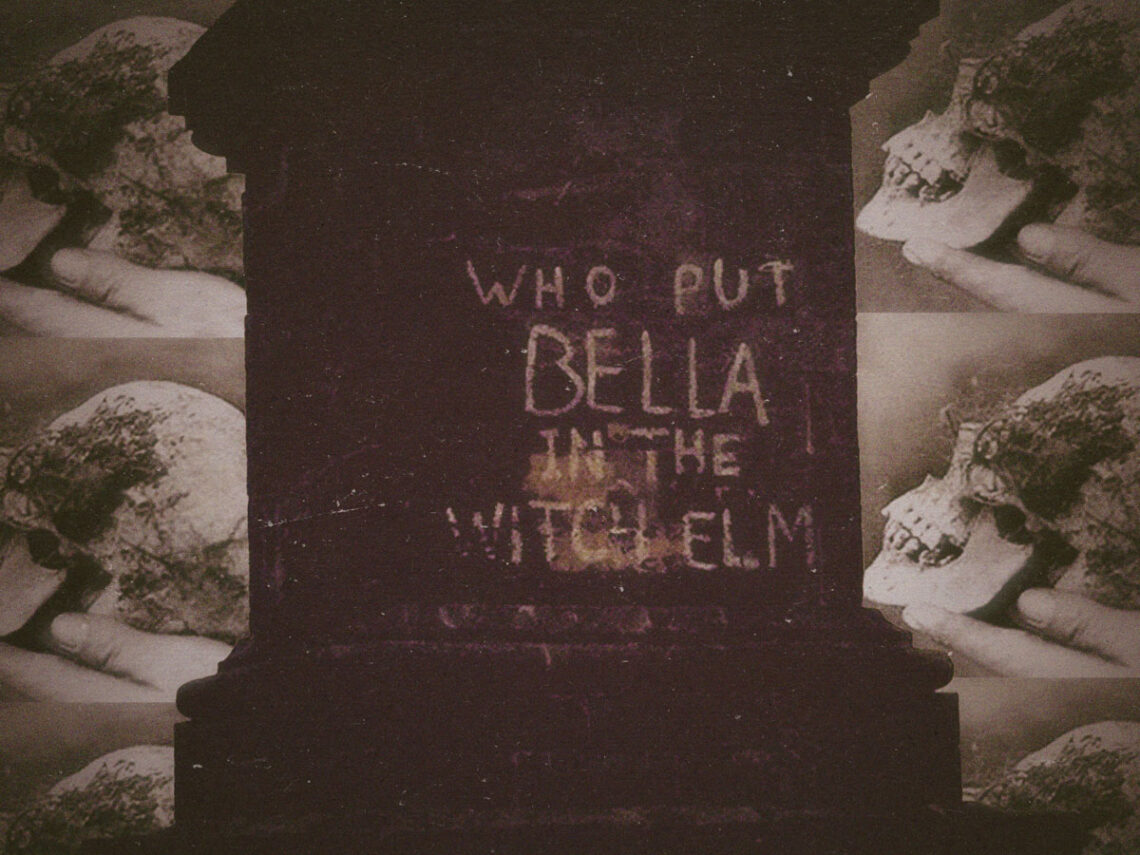
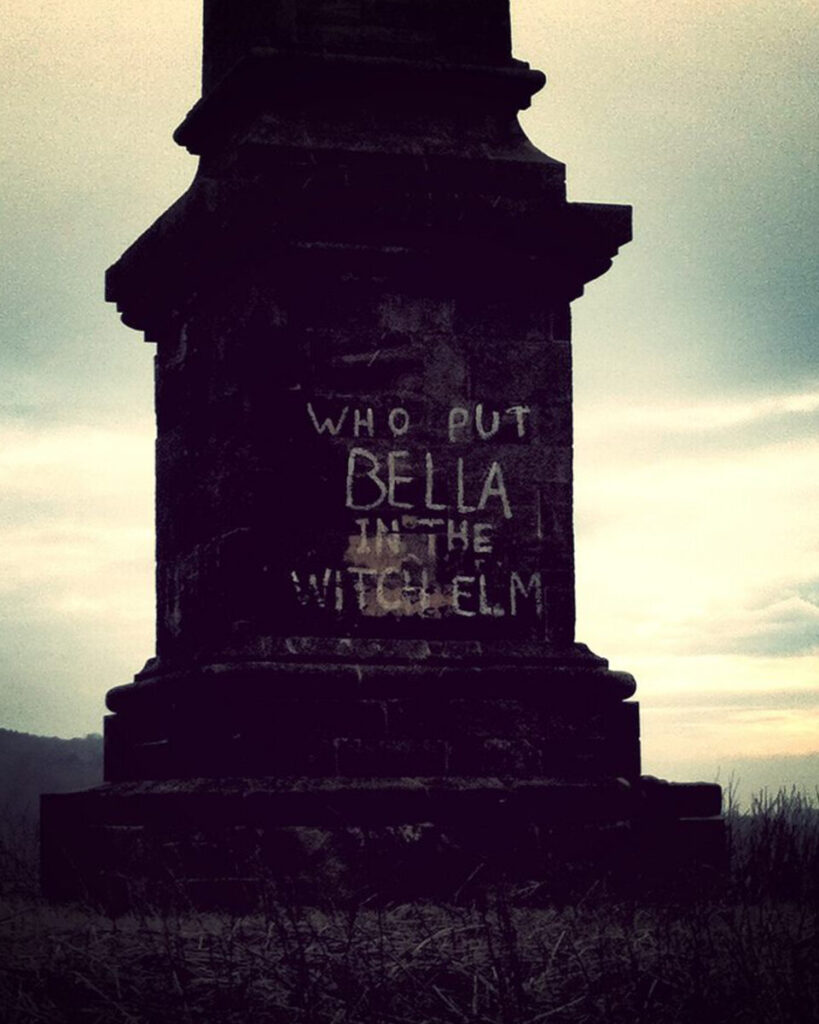
To be clear, murals that cover months of work are incredible sights, but sometimes the right sentence can go down in history due to enough people writing it. ‘Kilroy Woz Ere’. ‘Clapton is God’. ‘Pay No Tax’s and the one that we’re talking about today, ‘Who put Bella in the wych elm’.
An entire murder mystery that was spread through the medium of graffiti. The story begins on April 18th, 1943. Four boys local to Hagley in Worcestershire were out bird-nesting in some woods on the outskirts of their town, and when climbing a large wych elm tree to scout for nests, one of the boys, Bob Farmer, looked down and saw that the tree trunk was hollow – what’s more, it had what looked like an animal skull poking out the top. Farmer took a closer look and saw that it wasn’t an animal skull. It was a human skull.
The boys scarpered quickly. While what they were doing was technically illegal, another of the boys, Thomas Willetts, eventually alerted the authorities to what they found. A full skeleton was found in the tree trunk, and while many post-mortem tests were conducted on it, all that could be discovered was that this was a woman who’d died about 18 months ago. She’d also most likely been killed very shortly before being placed in the trunk, as rigor mortis would have meant she wouldn’t have fit otherwise.
After that, nothing. No identity confirmed, no perpetrator found, no justice. Then, a year after her discovery, a strange bit of graffiti started popping up. The first iteration of it was in Old Hill, near Dudley in the West Midlands, and it asked a simple question. “Who put Luebella down the wych elm?” A variation of it popped up again in Birmingham, asking, “Who put Bella down the wych elm, Hagley Wood?”. The boys who discovered the remains were ruled out as culprits due to the locations the graffiti was found in, so who was asking for justice and, more importantly, who knew the poor girls’ names?
This led to a number of people coming forward with explanations for who she was and what happened to her. There was even a man who claimed to have been responsible for it, saying that he’d seen a woman pass out drunk at a pub in Hagley, then he and a friend put her into a tree trunk as an attempt to scare her straight. Considering that this was only reported a decade after the event was reported, this seems unlikely.
Other claims were even more far-fetched. The girl was the moll of a German spy; she was the victim of a coven of witches who sacrificed her in a ritual, but in 2014, the writer Steve Punt wrote a radio program about the case that might have actually identified the victim.
Punt said that in 1944, a Birmingham sex worker had filed a report to the Birmingham police about a friend of hers who had gone missing three years previous.
This places her disappearance in 1941, around 18 months before she was discovered by Farmer and his friends. Her turf had been Hagley Road, near where she was found, and the smoking gun was her name. The very same one that had been painted all over the walls of the Midlands in a desperate attempt to bring some justice. Her name was Bella.
Had the police put two and two together on their own terms, then perhaps some justice could have been done. However, one can’t trust modern justice systems to put much worth in a missing sex worker, thus, the word had to be spread from person to person. Which is exactly what graffiti can do at its best.