


The Battle of Castle Itter: would you trust a Nazi in 1945?
For a moment, put yourself in the shoes of American World War Two tank commander Captain John C Lee. You’ve led a reconnaissance unit of four tanks into Kufstein, Austria, and almost immediately, you’re met with a high-ranking Nazi official flying a white flag of surrender, asking, seemingly sincerely, for help regarding the nearby Castle Itter. What on Earth do you do?
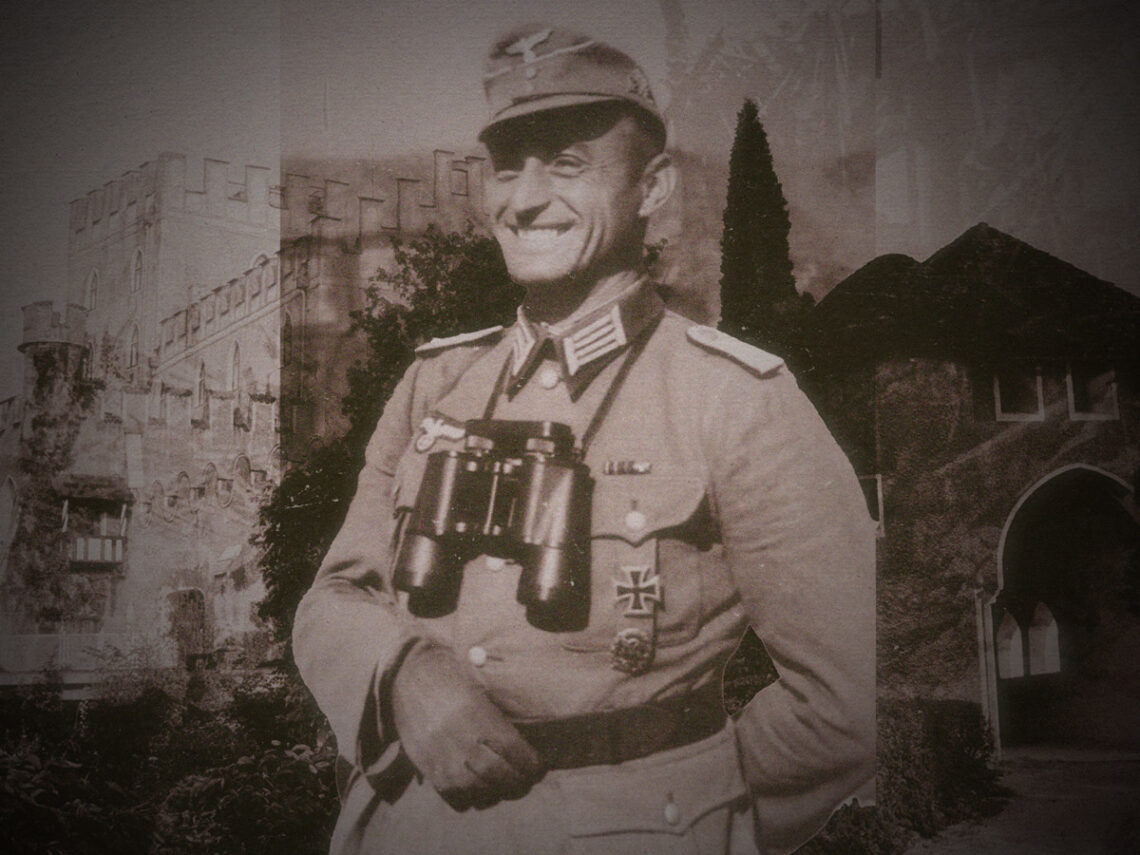
Because sure, he’s flying a white flag, and he seems to know what it looks like for a Nazi commanding officer, a Major of the Wehrmacht no less, to be asking for help from an American soldier. Especially when he’s asking for help in capturing a nearby prisoner of war camp from his countrymen. His story does check out, though. His name is Major Josef Gangl, and he got so disillusioned with Nazism that he’s been working with the Austrian resistance for months, feeding them intelligence before fully defecting with his battalion.
Part of his intelligence was that the nearby Castle Itter, repurposed as a prison for high-value targets of the Reich, had been liberated after the soldiers guarding it abandoned their posts. The problem was that now the SS were advancing to destroy the castle and everyone in it. Gangl needed all the help he could get to defend the castle from his countrymen and save the prisoners being held there. Something that Lee could help with.
After all, he’d led a reconnaissance team, and was in town waiting for the 36th Infantry Division to arrive, and if he could hold the SS off long enough, it would be exactly the kind of fighting force that would drive the SS back for good. However, all he’d have to do is take the word of someone who has fought and killed for the Nazis at face value and in good faith. Could you do it? I’m not certain I could, and I’d be suspicious of anyone who said they could.
Which is probably why I’m not a member of the armed forces, because Lee said yes without question.
Lee called in for permission from his headquarters, who left the final decision up to him. He and Gangl led his force of 14 men and five tanks up to Castle Itter, where they prepared to fight alongside the 100-strong team of French prisoners and Gangl’s 20-strong unit. Men who, mere days previously, Lee’s company would have blown to pieces without thinking and would have been right to do so… They were still greeted warmly, but there was still a slight disappointment with the small size of the defending force.
Nonetheless, it was as good as it was going to get, and it was just as well they did turn up when they did – a hundred-strong SS force arrived soon after, pre-empted by a reconnaissance force trying to break into the castle and engage with the prisoners, who Lee had ordered to stay in the castle but shouldn’t take no for an answer, fighting trained soldiers with whatever they had to hand. Inspiring stuff, but not particularly practical. Despite their heart and Lee’s crack team of tank troopers, nothing was stopping the SS advance, and the defence was in dire need of assistance.
Lee managed to send a distress signal out to the 142nd Infantry Regiment, who the 36th Division had sent to assist them, but wasn’t able to give any details about what the 142nd would find when they arrived. That’s when a prisoner at the Castle, tennis star Jean Borotra, offered to vault the Castle wall, run the gauntlet of SS strongholds and deliver the message to the 142nd in person. Out of options, Lee gave him permission, and the mad bastard actually did it, delivering the message before requesting an American military uniform to join the 142nd’s later attack.
Borotra was far from the most important prisoner in Castle Itter, however. The most important, ironically enough, was living proof that Gangl was legitimately done with Nazism and wasn’t just aware of which way the tide of the war had turned. Gangl took a bullet for one particular prisoner and thus was the only Allied casualty of the Battle of Castle Itter. The prisoner he died defending was no less than the former prime minister of France, Paul Reynaud.
Thanks to their heroics, the defending force held out until the 142nd arrived and ended the battle. Because sometimes stories of wartime heroics aren’t just fairytales, and even the very worst people in the world can change for the better – what do you do with them afterwards… That’s a whole other question.