


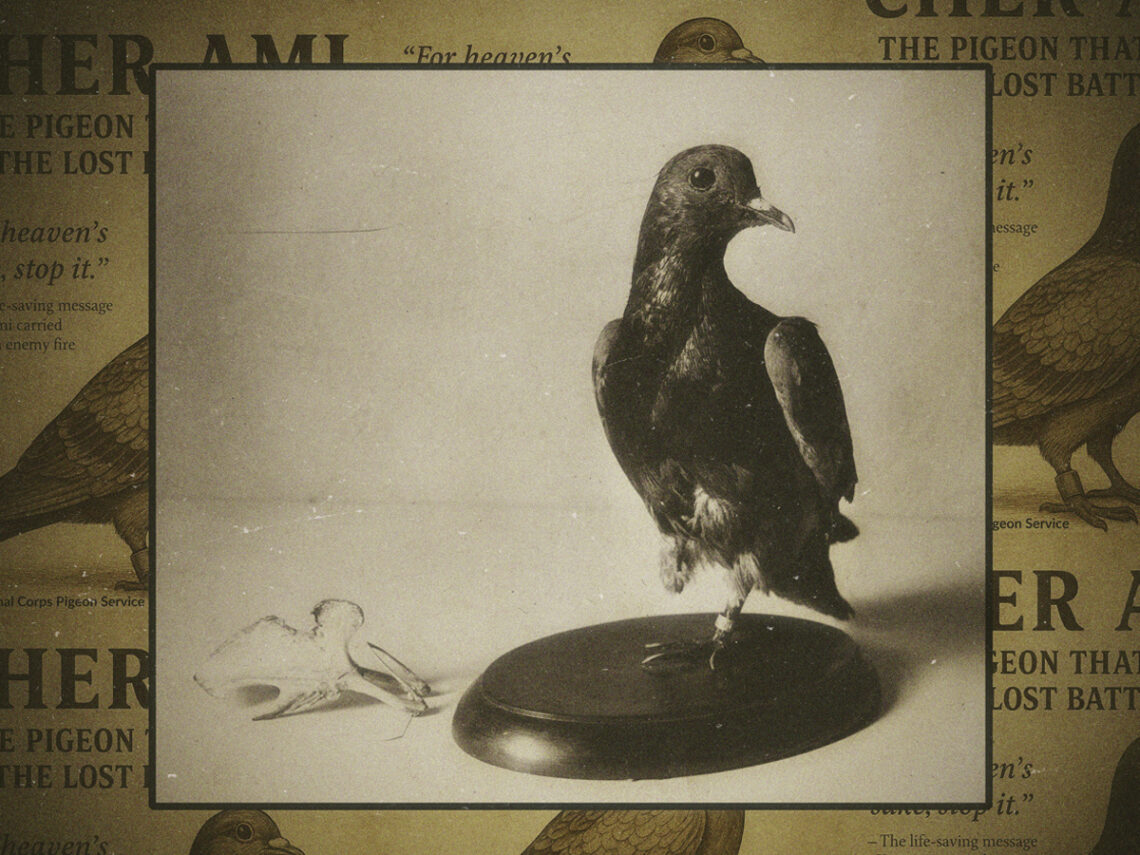
Cher Ami: The most decorated pigeon in military history
It’s not often that I completely buy into a social media talking point, but the one that’s popped up over the last year advocating for a great reversal of the way we think about the pigeon is one that I wholeheartedly love.
They’re not rats with wings, they’re not vermin, they’re not pests. They’re beautiful, surprisingly intelligent creatures whose enormous populace comes from the fact that, for centuries, they were the lifeline of our very communication system. Pigeons were kept in captivity for their almost supernatural ability to return to somewhere they know, and thus, people used them to send and receive letters. Once postal services were set up, there was no need for them in the same way, yet thousands of them were still around, and thus, they bred.
In the grand scheme of things, this is a fairly recent development. So much so that you can see the poor beasts still haven’t really got the hang of building nests. In fact, as recently as the last century, pigeons were still being used to carry messages, just not in any normal circumstance. No, as recently as the Second World War, pigeons were still being used to carry messages in times of conflict, and that use in the military has led to a strangely heartwarming phenomenon.
You see, anyone, or indeed anything, that serves in the military can be considered for awards in the line of duty. This includes the legions of animals that have been conscripted into military use. Dogs are the famous example, but any animal that has been used by the military can have their valour recognised by a shiny medal. Thus, I know I’m being a sucker here and that this is nothing more than a PR stunt to give the military a friendly face, but I can’t deny how happy it makes me that there are pigeons that are decorated heroes of war.
At least something has been giving urban doves the flowers they richly deserve.
Who is the most decorated pigeon in military history?
It’s not simply for PR either. Pigeons were used extensively in the First World War, in particular as a speedy, covert way of sending messages between the fronts.
At the time, it was still a more secure option than the primitive forms of radio they were using, but they were still asking these pigeons to fly across enemy lines where everything from snipers to anti-aircraft guns would be deployed to bring them down.
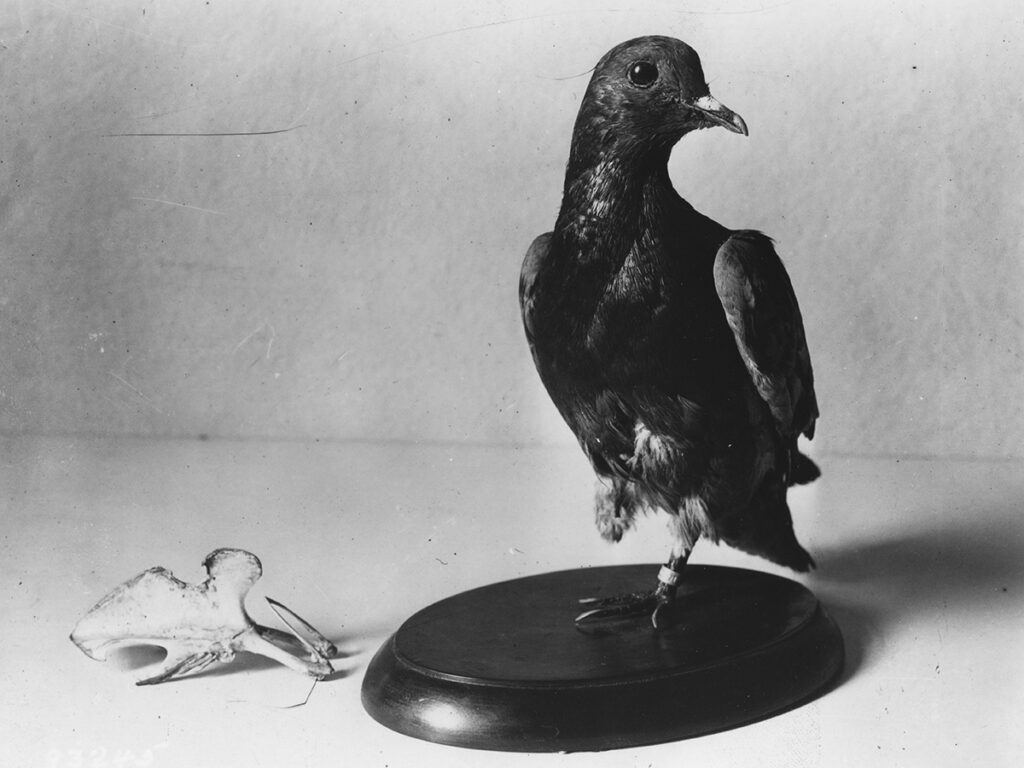
This may sound like a lot of effort to take out just one pigeon, but the intelligence they were carrying could be vital. Whether it was intercepted or merely prevented from reaching its destination, either option could be devastating. The best examples of this are the information that was supposedly entrusted to the pigeon Cher Ami in the Argonne Forest in France. His division, the 77th Infantry, was stranded in the forest and under heavy fire from an oncoming German force. To make matters worse, a catastrophic communication error while planning a retreat meant that they were also under heavy fire from allied forces too.
Everything rested on getting a message to them to divert their artillery to… Well, anywhere else but towards the Germans would probably be best. Cher Ami was picked as the last resort and was sent into the sky. A sky he was almost immediately shot out of by German rifle fire. You can’t keep a good pigeon down, though. The leg carrying the message may have been hanging by a tendon, but Cher Ami rose again and delivered the message successfully. The shelling was diverted, and the 77th Infantry was able to retreat safely.
A team of army medics was able to save Cher Ami’s life, and for his valour, he was awarded the Croix de guerre for Valor in battle. An award richly deserved.